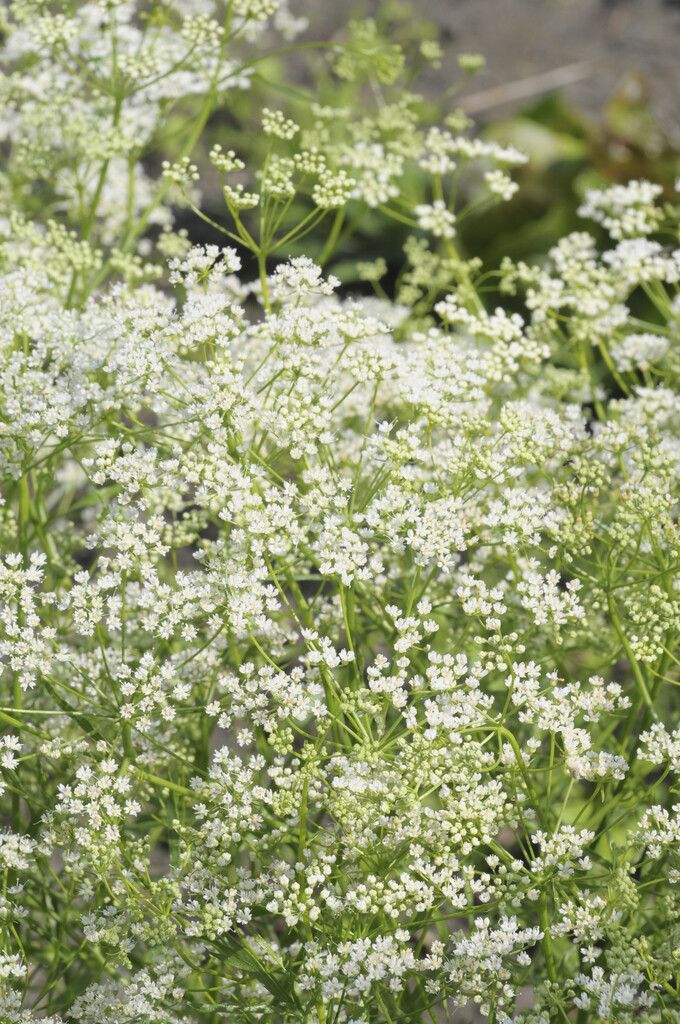
Pimpinella anisum

RHS Plant Profile
aniseed

Other common names

amny, sweet cumin, anise

Annual Biennial

A bushy annual to around 60cm high, with finely divided, fern-like green leaves that are aromatic when crushed. Broad, dome-shaped heads of tiny white flowers are produced in summer, followed by long pods of seeds which can be used as a spice in cooking

Position

Full sun

Soil Types

Chalk, Clay, Loam, Sand

Max Height

0.5-1 metres

Max Spread

0.1-0.5 metres

Size

Time to Maturity
1 year
Max Spread
0.1-0.5 metres
Max Height
0.5-1 metres

Growing Conditions

Chalk Clay Loam Sand
Moisture
Moist but well–drained or Well–drained
pH
Acid or Alkaline or Neutral

Position

Full sun
Aspect
South–facing or West–facing
Exposure
Exposed or Sheltered
Hardiness
H3

Colour & Scent

Fragrance Foliage
Season Stem Flower Foliage Fruit
Spring
Summer
Autumn
Winter

Botanical Details

Family
Apiaceae
Native to GB/Ireland
No
Foliage
Deciduous
Habit
Bushy
Genus
Pimpinella can be annuals, biennials or herbaceous perennials with simple or pinnately divided leaves and branched umbels of tiny flowers
Name Status
Correct

How to Grow

Cultivation

Thrives in a sunny position in fertile, moist but well-drained loamy soil. Plants may need staking to keep seed pods off the ground (see staking perennials)

Propagation

Propagate by seed, ideally sown in situ after risk of frosts has passed, as plants dislike transplanting and root disturbance. In areas where the season is not long enough for seeds to ripen, plants may be started under glass in individual pots, though it is best to sow extra to allow for losses in planting out

Suggested planting locations and garden types

  • Patio and container plants

Pruning

No pruning required

Pests

May be susceptible to aphids, slugs, snails and mice

Diseases

May be susceptible to powdery mildews and downy mildews