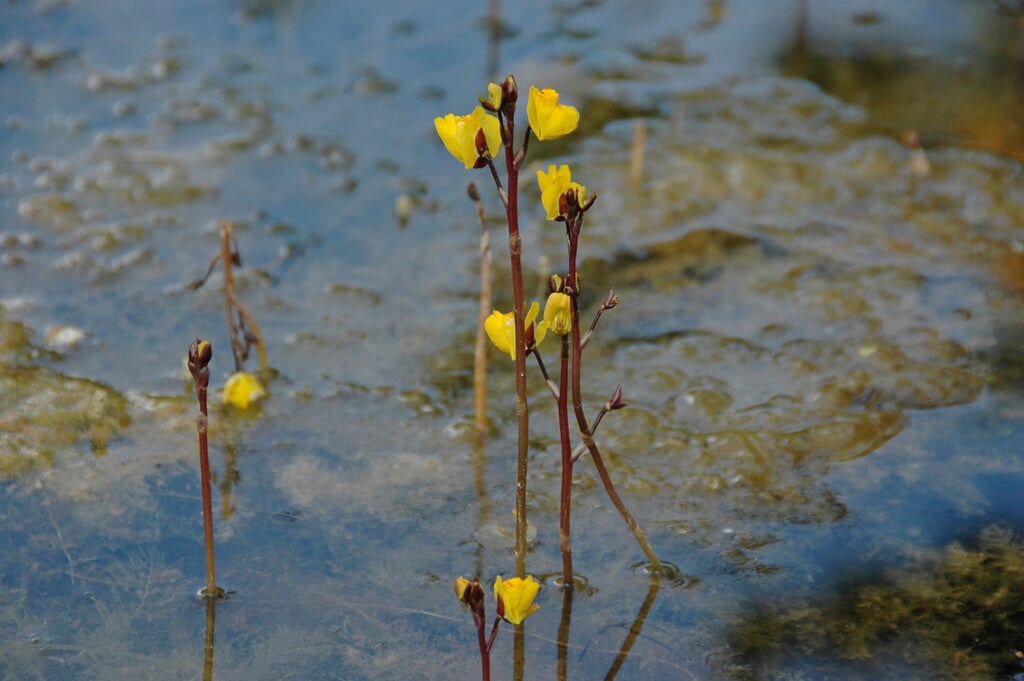
Utricularia vulgaris

RHS Plant Profile
greater bladderwort
greater bladderwort visionspictures.com

Other common names

common bladderwort, popweed

Bogs

A vigorous, rootless, tiny-leaved, insectivorous plant, trapping minute prey in waterlogged soil by means of bladder-like traps. Some of its leaves float on the surface of the water and some are submerged. It is cultivated for its snapdragon-like yellow flowers which are borne on wiry flowerstalks from April through to August

Position

Full sun

Soil Types

Sand

Max Height

0.1-0.5 metres

Max Spread

0.1-0.5 metres

Size

Time to Maturity
1–2 years
Max Spread
0.1-0.5 metres
Max Height
0.1-0.5 metres

Growing Conditions

Sand
Moisture
Poorly–drained
pH
Acid

Position

Full sun
Aspect
South–facing or East–facing or West–facing
Exposure
Sheltered
Hardiness
H2

Colour & Scent

Season Stem Flower Foliage Fruit
Spring
Summer
Autumn
Winter

Botanical Details

Family
Lentibulariaceae
Native to GB/Ireland
Yes
Foliage
Deciduous
Habit
Matforming
Genus
Utricularia can be aquatic, terrestrial or epiphytic, insectivorous annuals or perennials with linear to kidney-shaped leaves bearing bladders to trap insects, and solitary or racemose, 2-lipped flowers held above water level
Name Status
Correct

How to Grow

Cultivation

Under glass grow in pots of peat substitute mixed with sand or perlite. Water using rain or pure water. Stand pots in a few centimetres of water to keep permanently moist. See carnivorous plant cultivation

Propagation

Propagate by division or propagate by seed

Pruning

No pruning required. Deadhead

Pests

Generally pest-free

Diseases

Generally disease-free