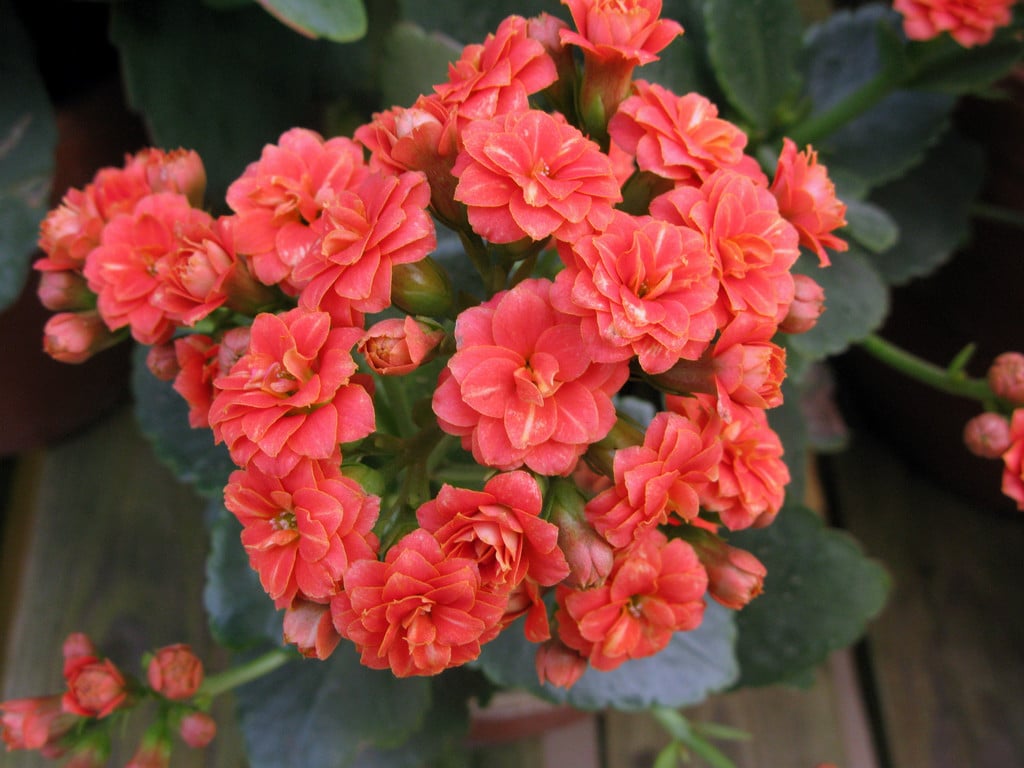
Kalanchoe blossfeldiana

RHS Plant Profile
flaming Katy
flaming Katy RHS

Other common names

panda plant

Award of Garden Merit
Conservatory Greenhouse Houseplants Cactus Succulent

A bushy, evergreen succulent perennial to 40cm, with fleshy, ovate green leaves. Terminal panicles of red tubular flowers with double-layered petals, which make them look like mini compact roses, appear in spring

Position

Partial shade

Soil Types

Loam, Sand

Max Height

0.1-0.5 metres

Max Spread

0.1-0.5 metres

Size

Time to Maturity
2–5 years
Max Spread
0.1-0.5 metres
Max Height
0.1-0.5 metres

Growing Conditions

Loam Sand
Moisture
Moist but well–drained or Well–drained
pH
Acid or Alkaline or Neutral

Position

Partial shade
Aspect
South–facing or West–facing or East–facing
Exposure
Sheltered
Hardiness
H1B
Drought Resistance
Yes

Colour & Scent

Season Stem Flower Foliage Fruit
Spring
Summer
Autumn
Winter

Botanical Details

Family
Crassulaceae
Native to GB/Ireland
No
Foliage
Evergreen
Habit
Bushy
Potentially harmful
Pets (dogs, cats, rabbits, rodents, caged birds): Harmful if eaten. For further information and contact numbers regarding pets, see the HTA guide to potentially harmful plants
Genus
Kalanchoe can be annuals, biennials, perennials, shrubs or trees, with succulent, simple or pinnately lobed foliage and tubular or bell-shaped flowers with four lobes
Name Status
Correct
Plant Range
NE Madagascar

How to Grow

Cultivation

Grow indoors in a peat-free, loam-based potting compost with added extra grit in bright filtered light. Water moderately when in growth, sparingly when dormant. Apply a balanced liquid fertiliser 2 or 3 times in the growing season. The photo shows Calandiva Series

Propagation

Propagate by seed or offsets in spring

Suggested planting locations and garden types

  • Patio and container plants
  • Cottage and informal garden

Pruning

No pruning required

Pests

May be susceptible to mealybugs and vine weevil

Diseases

Generally disease-free