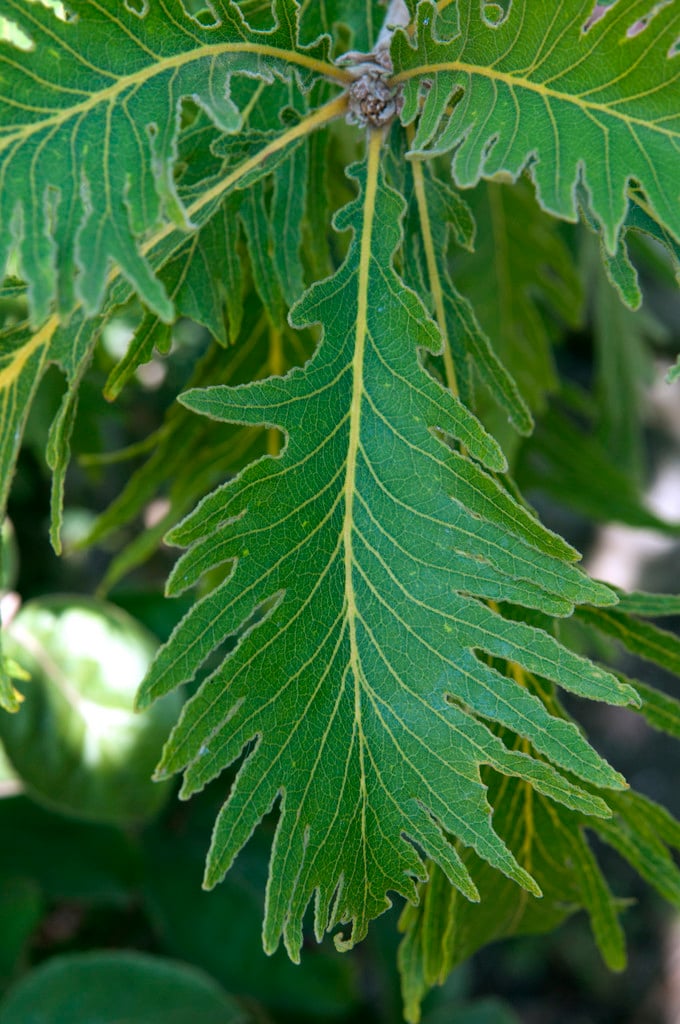
Quercus dentata 'Pinnatifida'

RHS Plant Profile
Daimyo oak 'Pinnatifida'
Daimyo oak 'Pinnatifida' RHS
Trees

'Pinnatifida' is an upright,deciduous, slow-growing tree to around 10m tall. Spreading branches with stout stems bear dark green, obovate leaves that are deeply cut into narrow and pointed lobes. Young leaves emerge edged pink in spring and turn shades of orange and yellow in autumn. Greenish-yellow catkins in spring are followed by clusters of brown acorns about 2cm long

Position

Full sun, Partial shade

Soil Types

Clay, Loam, Sand

Max Height

8-12 metres

Max Spread

4-8 metres

Size

Time to Maturity
more than 50 years
Max Spread
4-8 metres
Max Height
8-12 metres

Growing Conditions

Clay Loam Sand
Moisture
Moist but well–drained or Well–drained
pH
Acid or Alkaline or Neutral

Position

Full sun Partial shade
Aspect
South–facing or North–facing or West–facing or East–facing
Exposure
Exposed or Sheltered
Hardiness
H6

Colour & Scent

Season Stem Flower Foliage Fruit
Spring
Summer
Autumn
Winter

Botanical Details

Family
Fagaceae
Native to GB/Ireland
No
Foliage
Deciduous
Habit
Columnar upright
Potentially harmful
Pets (dogs): Harmful if eaten - for further information and contact numbers regarding pets, see the HTA guide to potentially harmful plants
Genus
Quercus can be deciduous or evergreen trees or shrubs, with entire, lobed or toothed leaves; flowers inconspicuous, followed by characteristic acorns; sometimes good autumn colour
Name Status
Accepted

How to Grow

Cultivation

Grow in deep, fertile, well-drained soil

Propagation

Propagate by grafting in mid-autumn or late winter

Suggested planting locations and garden types

  • Low Maintenance

Pruning

Pruning group 1

Pests

May be susceptible to oak processionary moth, aphids, caterpillars, leaf-mining moths and oak gall wasps

Diseases

May be susceptible to powdery mildews and honey fungus