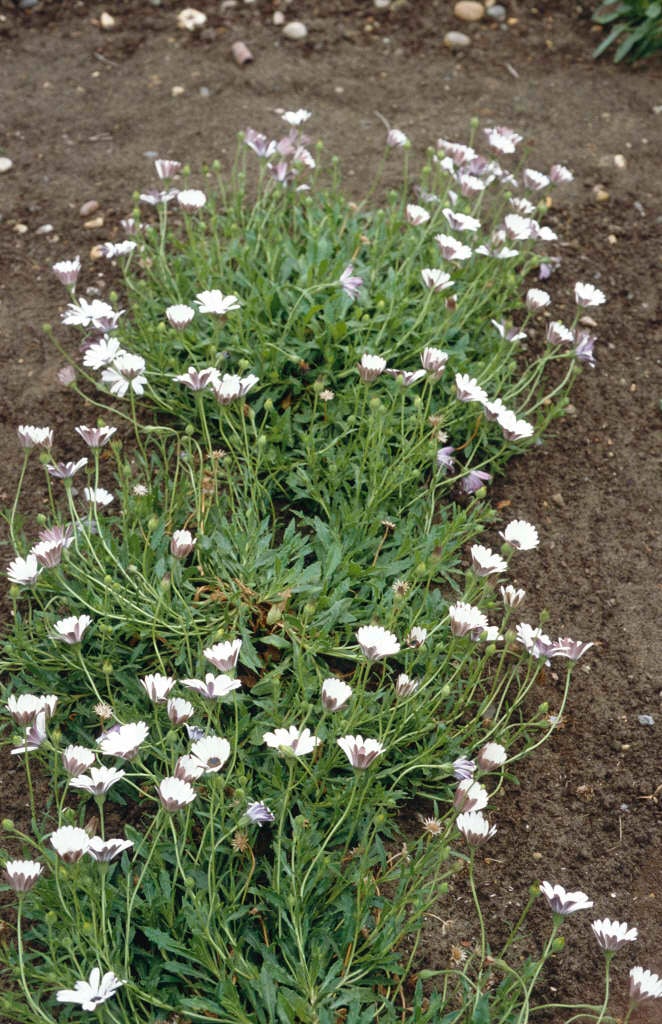
Osteospermum ecklonis var. prostratum

RHS Plant Profile
African daisy 'White Pim'
African daisy 'White Pim' RHS 1993

Synonyms

Dimorphotheca caulescens misapplied [1], Dimorphotheca ecklonis 'Prostrata', Osteospermum 'Cornish Carpet', Osteospermum 'Prostratum', Osteospermum 'White Pim', Osteospermum caulescens misapplied, Osteospermum ecklonis var. prostratum

Herbaceous Perennial

A prostrate evergreen subshrub forming a mat to 20cm in height, with oblanceolate leaves 6-8cm in length, and solitary daisy-like flowerheads 6cm in width, the rays florets white, tinged purple beneath

Position

Full sun

Soil Types

Chalk, Loam, Sand

Max Height

0.1-0.5 metres

Max Spread

0.1-0.5 metres

Size

Time to Maturity
2–5 years
Max Spread
0.1-0.5 metres
Max Height
0.1-0.5 metres

Growing Conditions

Chalk Loam Sand
Moisture
Well–drained
pH
Acid or Alkaline or Neutral

Position

Full sun
Aspect
South–facing or East–facing
Exposure
Exposed or Sheltered
Hardiness
H3

Colour & Scent

Season Stem Flower Foliage Fruit
Spring
Summer
Autumn
Winter

Botanical Details

Family
Asteraceae
Native to GB/Ireland
No
Foliage
Evergreen
Habit
Bushy
Potentially harmful
Pets (rabbits, rodents): Harmful if eaten. For further information and contact numbers regarding pets, see the HTA guide to potentially harmful plants
Genus
Dimorhotheca can be annuals or woody-based, evergreen perennials with simple, alternate leaves and large daisy-like flower-heads in summer and autumn
Name Status
Synonym

How to Grow

Cultivation

Grow in light, moderately fertile, well-drained soil in a warm, sunny position. In frosty areas overwinter cuttings under glass

Propagation

Propagate by softwood cuttings in late spring or semi-hardwood cuttings in late summer

Suggested planting locations and garden types

  • City and courtyard gardens
  • Coastal
  • Gravel garden
  • Cottage and informal garden
  • Patio and container plants
  • Mediterranean climate plants
  • Flower borders and beds

Pruning

No pruning required

Pests

May be susceptible to aphids

Diseases

May be susceptible to downy mildews and Verticillium wilt