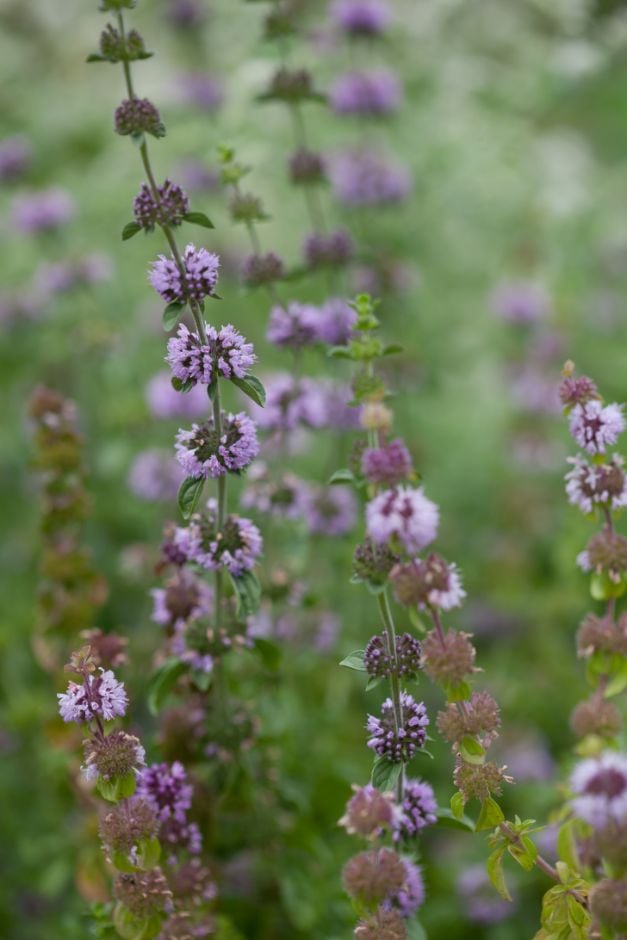
Mentha pulegium 'Upright'

RHS Plant Profile
pennyroyal 'Upright'
pennyroyal 'Upright' RHS

Other common names

upright pennyroyal

Herbaceous Perennial

A herbaceous perennial 30cm or more high with mostly upright stems and some prostrate spreading stems, narrowly elliptic to rounded, sharply aromatic, slightly toothed, bright green leaves, to 3cm long, and whorled spikes of lilac flowers in summer. This variety of mint is not edible

Position

Full sun, Partial shade

Soil Types

Clay, Loam, Sand

Max Height

0.1-0.5 metres

Max Spread

0.1-0.5 metres

Size

Time to Maturity
2–5 years
Max Spread
0.1-0.5 metres
Max Height
0.1-0.5 metres

Growing Conditions

Clay Loam Sand
Moisture
Moist but well–drained or Poorly–drained
pH
Acid or Neutral

Position

Full sun Partial shade
Aspect
South–facing or East–facing or North–facing or West–facing
Exposure
Exposed or Sheltered
Hardiness
H7

Colour & Scent

Fragrance Foliage
Season Stem Flower Foliage Fruit
Spring
Summer
Autumn
Winter

Botanical Details

Family
Lamiaceae
Native to GB/Ireland
No
Foliage
Deciduous
Habit
Clump forming
Potentially harmful
Harmful if eaten. Wear gloves and other protective equipment when handling
Genus
Mentha are aromatic, rhizomatous perennials with opposite, toothed leaves and small tubular flowers in spikes of whorls in summer
Name Status
Unresolved

How to Grow

Cultivation

Grow in sun or partial shade in rich, moist, and preferably sandy, acidic soil

Propagation

Propagate by division in spring or autumn, or by softwood cuttings, which will root at the nodes if placed in moist compost or water, during the growing season; it may be short-lived, so it is helpful to propagate reserve plants every year

Suggested planting locations and garden types

  • Wildlife gardens
  • City and courtyard gardens
  • Cottage and informal garden
  • Mediterranean climate plants
  • Banks and slopes
  • Underplanting of roses and shrubs
  • Flower borders and beds

Pruning

No pruning required

Pests

May be susceptible to caterpillars and leafhoppers

Diseases

May be susceptible to powdery mildews and mint rust