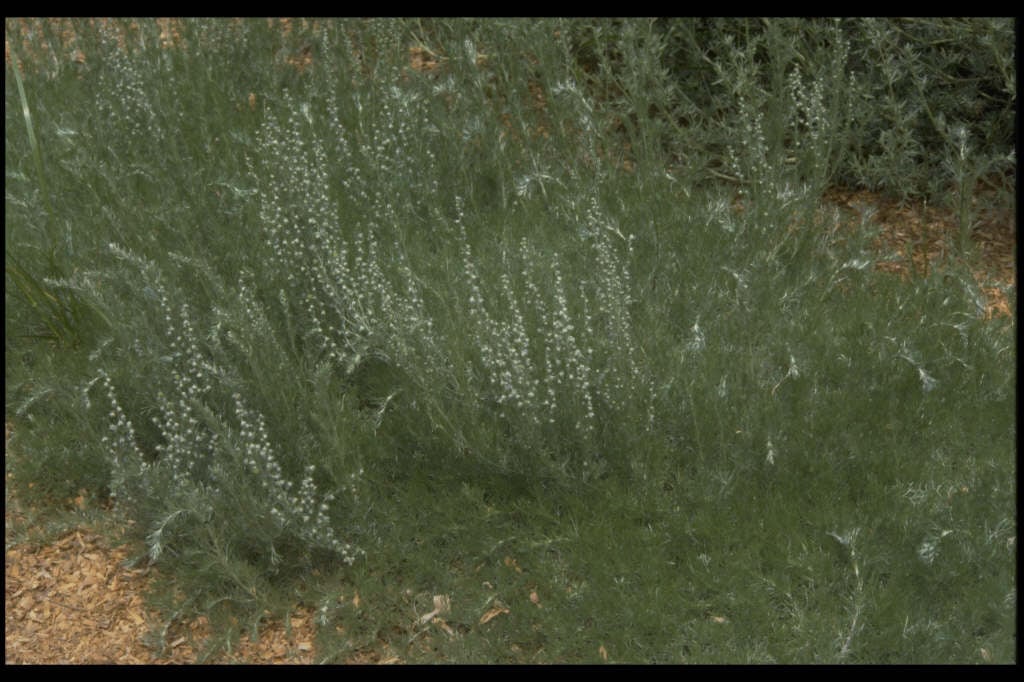
Artemisia frigida

RHS Plant Profile
Arctic sage
Arctic sage www.gardenworldimages.com

Other common names

pasture sagebrush, silky wormwood, mountain sage, wild sage

Alpine Rockery

A tufted perennial to 30cm, woody at the base, with semi-evergreen, silky, light grey leaves divided into thread-like lobes and small yellow flower-heads in panicles

Position

Full sun

Soil Types

Chalk, Loam, Sand

Max Height

0.1-0.5 metres

Max Spread

0.1-0.5 metres

Size

Time to Maturity
2–5 years
Max Spread
0.1-0.5 metres
Max Height
0.1-0.5 metres

Growing Conditions

Chalk Loam Sand
Moisture
Well–drained
pH
Acid or Alkaline or Neutral

Position

Full sun
Aspect
West–facing or South–facing
Exposure
Exposed or Sheltered
Hardiness
H5

Colour & Scent

Fragrance Foliage
Season Stem Flower Foliage Fruit
Spring
Summer
Autumn
Winter

Botanical Details

Family
Asteraceae
Native to GB/Ireland
No
Foliage
Semi evergreen
Habit
Bushy
Genus
Artemisia can be shrubs, perennials or annuals, evergreen or deciduous, with usually grey, aromatic, often divided foliage and rather insignificant flower-heads
Name Status
Correct

How to Grow

Cultivation

Grow in fertile well-drained soil in sun. Can die back in heavy, poorly-drained soil

Propagation

Propagate by seed, or by taking softwood, greenwood or semi-ripe cuttings using a free-draining, peat-free compost

Suggested planting locations and garden types

  • City and courtyard gardens
  • Cottage and informal garden
  • Gravel garden
  • Rock garden
  • Coastal
  • Patio and container plants
  • Flower borders and beds
  • Garden edging

Pruning

Remove any dead stems and shoots in spring

Pests

Generally pest-free

Diseases

May be susceptible to honey fungus