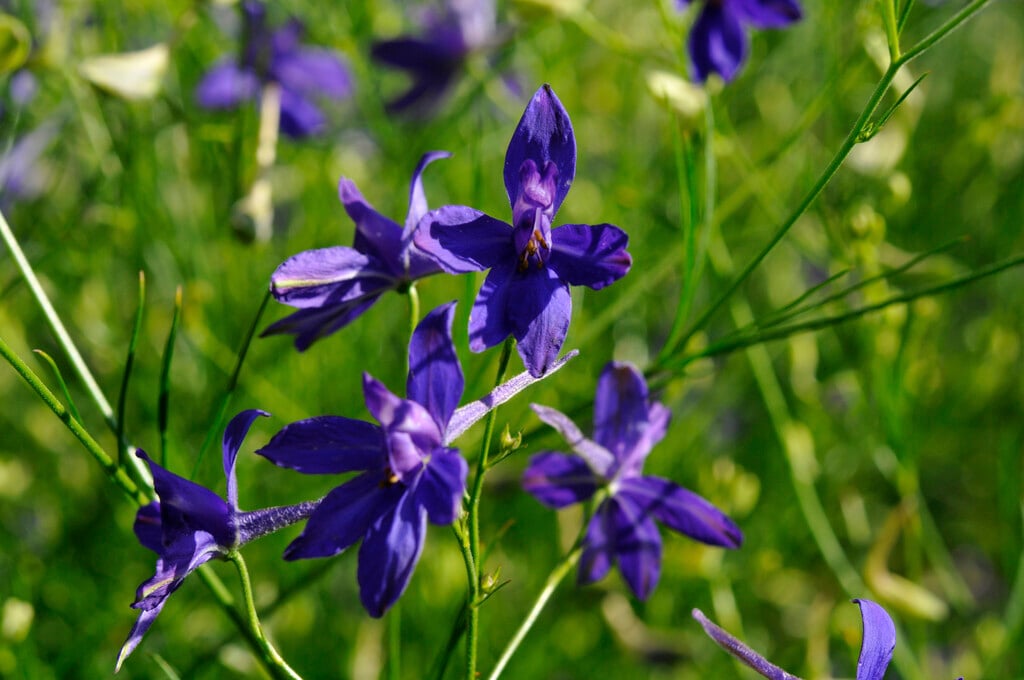
Consolida regalis

RHS Plant Profile
branching larkspur
branching larkspur visionspictures.com

Other common names

forking larkspur, king's consound, knight's spur, wild larkspur

Synonyms

Delphinium consolida

Annual Biennial

Upright, hairy, well-branched annual about 60cm tall, with ferny, palmate mid-green leaves, and loose spikes of darkest blue to purplish flowers from late spring through summer

Position

Full sun

Soil Types

Chalk, Sand, Loam

Max Height

0.5-1 metres

Max Spread

0.1-0.5 metres

Size

Time to Maturity
1 year
Max Spread
0.1-0.5 metres
Max Height
0.5-1 metres

Growing Conditions

Chalk Sand Loam
Moisture
Well–drained
pH
Alkaline or Neutral

Position

Full sun
Aspect
South–facing or West–facing or East–facing
Exposure
Sheltered
Hardiness
H6

Colour & Scent

Season Stem Flower Foliage Fruit
Spring
Summer
Autumn
Winter

Botanical Details

Family
Ranunculaceae
Native to GB/Ireland
No
Foliage
Deciduous
Habit
Columnar upright
Potentially harmful
All parts, including the seed, are harmful if eaten. Wear gloves and other protective equipment when handling
Genus
Consolida are upright annuals with deeply pinnately or palmately dissected leaves, and racemes or panicles of small, spurred, delphium-like flowers in summer
Name Status
Correct
Plant Range
Europe, Caucasia

How to Grow

Cultivation

Grow in well-drained soil in full sun; for cut flowers, cut when only the lowermost buds are open

Propagation

Propagate by seed: sow in early autumn and prick out in early spring, sow under cover in early spring, or sow outside in late spring

Suggested planting locations and garden types

  • City and courtyard gardens
  • Cottage and informal garden
  • Patio and container plants
  • Wildflower meadow
  • Bedding
  • Cut flowers
  • Flower borders and beds

Pruning

No pruning required

Pests

May be susceptible to slugs and snails

Diseases

May be susceptible to powdery mildews