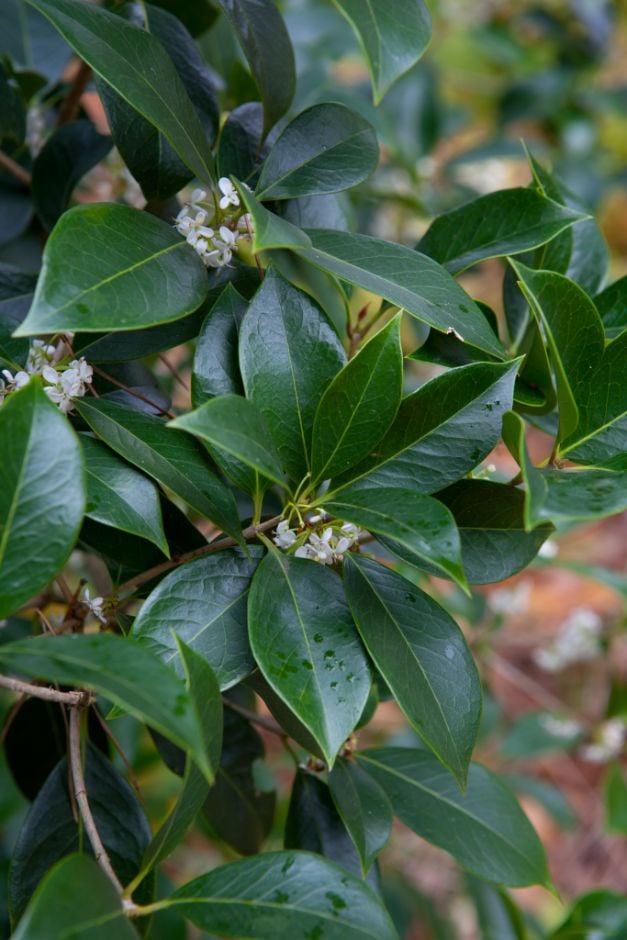
Osmanthus × fortunei

RHS Plant Profile
Fortune's osmanthus
Fortune's osmanthus RHS
Shrubs

A fairly vigorous shrub, usually only up to 2m high inland, but up to 6m high in mild coastal areas, with broad-ovate, leathery, glossy dark green leaves up to 10cm long; the leaf margins have spine-tipped teeth, but leaves towards the tops of mature plants are often entire. Clusters of intensely-fragrant white flowers, each about 1cm across, appear in autumn, only occasionally followed by black fruit

Position

Full sun, Partial shade

Soil Types

Chalk, Loam, Sand

Max Height

4-8 metres

Max Spread

4-8 metres

Size

Time to Maturity
10–20 years
Max Spread
4-8 metres
Max Height
4-8 metres

Growing Conditions

Chalk Loam Sand
Moisture
Well–drained
pH
Acid or Alkaline or Neutral

Position

Full sun Partial shade
Aspect
West–facing or South–facing
Exposure
Sheltered
Hardiness
H5

Colour & Scent

Fragrance Flower
Season Stem Flower Foliage Fruit
Spring
Summer
Autumn
Winter

Botanical Details

Family
Oleaceae
Native to GB/Ireland
No
Foliage
Evergreen
Habit
Bushy
Genus
Osmanthus can be evergreen shrubs or small trees with leathery, opposite leaves and small, usually fragrant, tubular white, yellow or orange flowers with 4 lobes, followed by ovoid blue-black fruits
Name Status
Correct

How to Grow

Cultivation

Grow in fertile, well-drained soil in sun or partial shade, with shelter from cold, drying winds

Propagation

Propagate by semi-ripe cuttings in summer with bottom heat, or by layering in autumn or spring

Suggested planting locations and garden types

  • City and courtyard gardens
  • Cottage and informal garden
  • Low Maintenance
  • Flower borders and beds
  • Banks and slopes
  • Hedging and screens
  • Wall side borders

Pruning

Pruning group 1 (little or no pruning of trees and shrubs) or pruning group 9 (late-flowering evergreen shrubs)

Pests

Generally pest-free

Diseases

May be susceptible to honey fungus