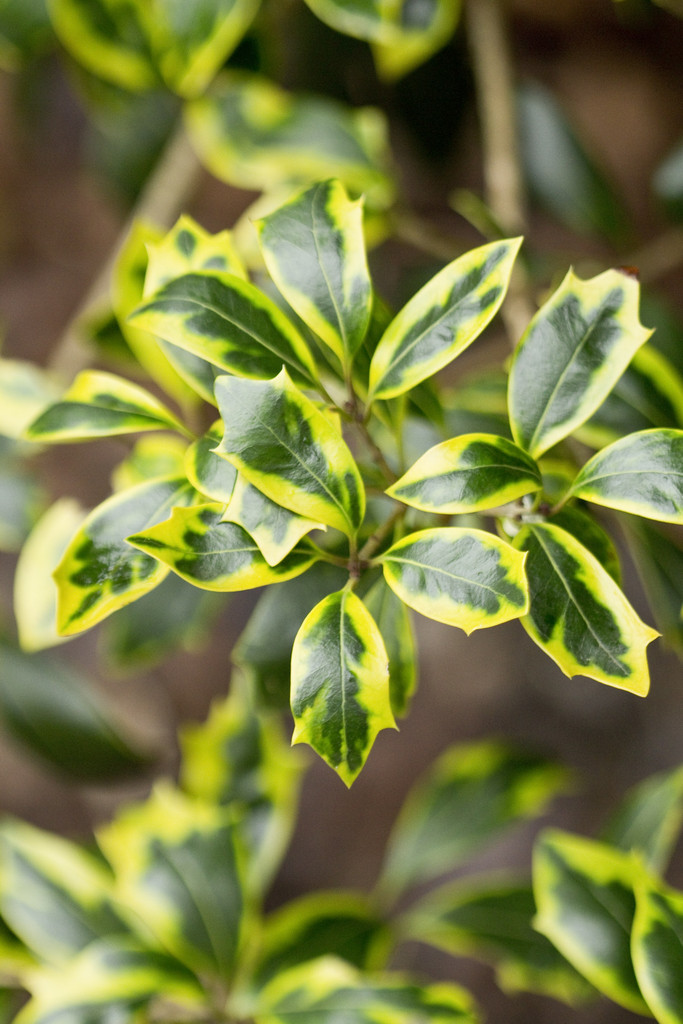
Osmanthus heterophyllus 'Aureomarginatus' (v)
holly olive 'Aureomarginatus'
A slow-growing, dense, evergreen shrub to 3m tall, with glossy, holly-like, dark green leaves broadly edged in deep yellow. Clusters of small white flowers are sweetly-scented, appearing from late summer to autumn, and are sometimes followed by ovoid blue-black fruits
Buy this plant
Size
Ultimate height
2.5–4 metresTime to ultimate height
10–20 yearsUltimate spread
2.5–4 metresGrowing conditions
Moisture
Well–drained, Moist but well–drainedpH
Acid, Alkaline, NeutralColour & scent
| Stem | Flower | Foliage | Fruit | |
| Spring | Green Variegated Yellow | |||
|---|---|---|---|---|
| Summer | White | Green Variegated Yellow | ||
| Autumn | White | Green Variegated Yellow | Black Blue | |
| Winter | Green Variegated Yellow |
Position
- Full sun
- Partial shade
Aspect
South–facing or West–facing or East–facing or North–facing
Exposure
Sheltered Hardiness
H5Botanical details
- Family
- Oleaceae
- Native to GB / Ireland
- No
- Foliage
- Evergreen
- Habit
- Bushy
- Genus
Osmanthus can be evergreen shrubs or small trees with leathery, opposite leaves and small, usually fragrant, tubular white, yellow or orange flowers with 4 lobes, followed by ovoid blue-black fruits
- Name status
Accepted
How to grow
Cultivation
Grow in fertile, well-drained or moist but well-drained soil in sun or partial shade, with shelter from cold, drying winds. A good hedging and woodland plant
Propagation
Propagate by semi-ripe cuttings in summer with bottom heat
Suggested planting locations and garden types
- City and courtyard gardens
- Cottage and informal garden
- Coastal
- Low Maintenance
- Hedging and screens
- Flower borders and beds
Pruning
Pruning group 9; prune hedges in spring
Pests
Generally pest-free
Diseases
May be susceptible to honey fungus
Get involved
The RHS is the UK’s gardening charity, helping people and plants to grow - nurturing a healthier, happier world, one person and one plant at a time.