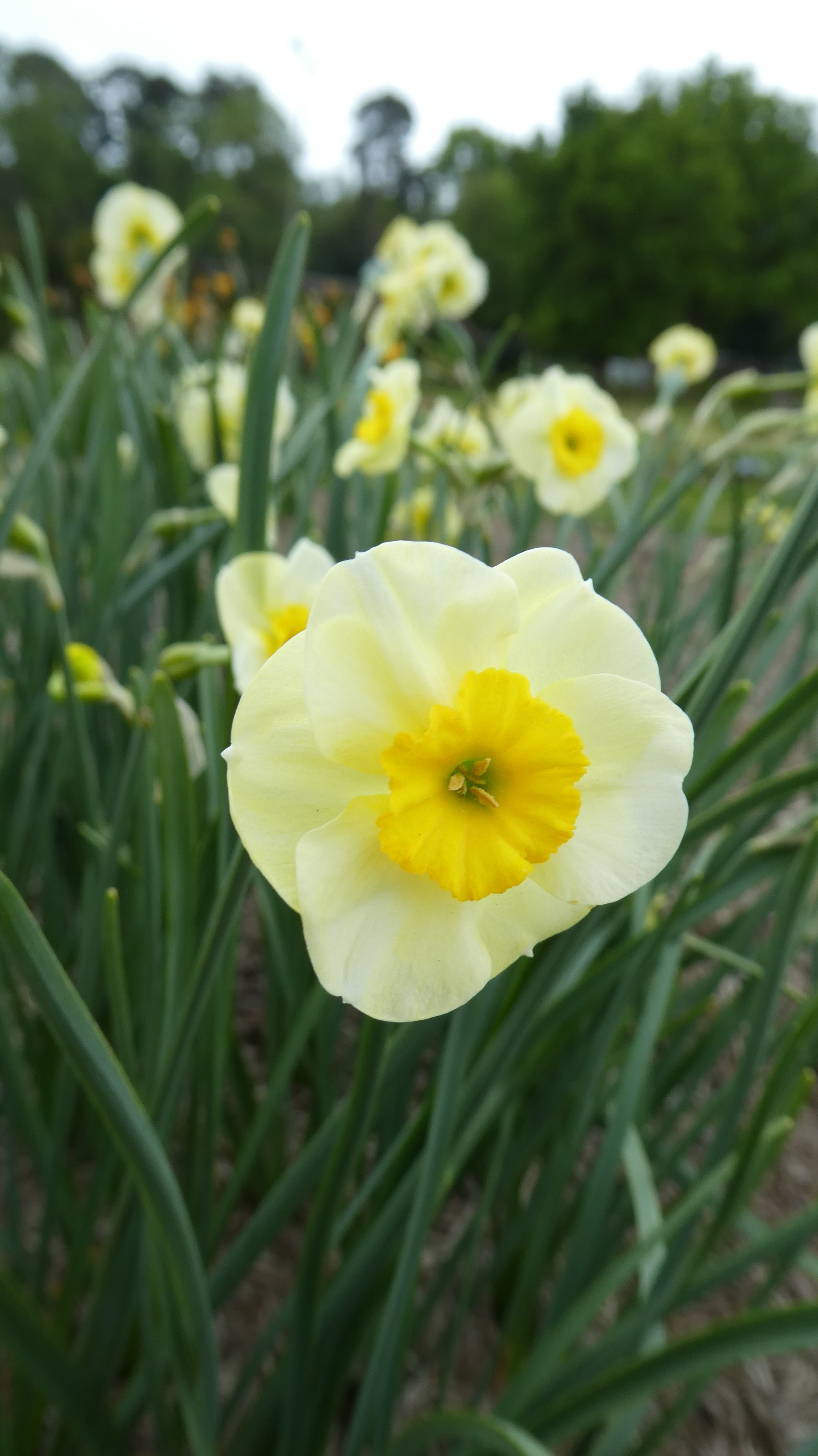
Narcissus 'Little Sentry' (7)

RHS Plant Profile
daffodil 'Little Sentry'
daffodil 'Little Sentry' RHS
Bulbs

A clump-forming, perennial jonquilla daffodil to 22cm high, with slightly glaucous, strap-shaped leaves. Perfectly proportioned, strongly fragrant circular flowers to around 3cm in width, with a flared corona, open golden yellow in the spring, fading to cream with age. Suitable for growing in containers or a rock garden

Position

Full sun, Partial shade

Soil Types

Chalk, Clay, Loam, Sand

Max Height

0.1-0.5 metres

Max Spread

0.1-0.5 metres

Size

Time to Maturity
2–5 years
Max Spread
0.1-0.5 metres
Max Height
0.1-0.5 metres

Growing Conditions

Chalk Clay Loam Sand
Moisture
Moist but well–drained or Well–drained
pH
Acid or Alkaline or Neutral

Position

Full sun Partial shade
Aspect
East–facing or North–facing or South–facing or West–facing
Exposure
Exposed or Sheltered
Hardiness
H6

Colour & Scent

Fragrance Flower
Season StemFlowerFoliageFruit
Spring Gold, Cream Green
Summer
Autumn
Winter

Botanical Details

Family
Amaryllidaceae
Native to GB/Ireland
No
Foliage
Deciduous
Habit
Clump forming
Potentially harmful
Harmful if eaten, skin irritant. Wear gloves and other protective equipment when handling. Pets (dogs, cats, tortoises): Harmful if eaten, skin irritant. For further information and contact numbers regarding pets, see the HTA guide to potentially harmful plants
Genus
Narcissus are bulbous herbaceous perennials with linear leaves and leafless stems bearing flowers, which may be solitary or in umbels, with 6 spreading perianth segments and a cup or trumpet-shaped corona
Name Status
Accepted
Horticultural Group
Jonquilla and Apodanthus daffodils have very narrow cylindrical leaves and stems with up to 5, usually fragrant, flowers per stem, with spreading perianth segments and a small cup

How to Grow

Cultivation

The planting depth should be equivalent to three times the bulb's height. Bulbs are best planted in autumn but can also be moved in the green in spring after flowering. They will tolerate most soils but prefer moderately fertile, well-drained soil that is constantly moist during the growing season. See daffodil cultivation for further advice

Propagation

Propagate by removing offsets as the leaves fade in early summer

Suggested planting locations and garden types

  • City and courtyard gardens
  • Coastal
  • Cottage and informal garden
  • Patio and container plants
  • Banks and slopes
  • Flower borders and beds

Pruning

No pruning required

Pests

May be susceptible to slugs, narcissus bulb fly, narcissus eelworm, and bulb scale mite

Diseases

May be susceptible to narcissus basal rot, narcissus leaf scorch or daffodil viruses