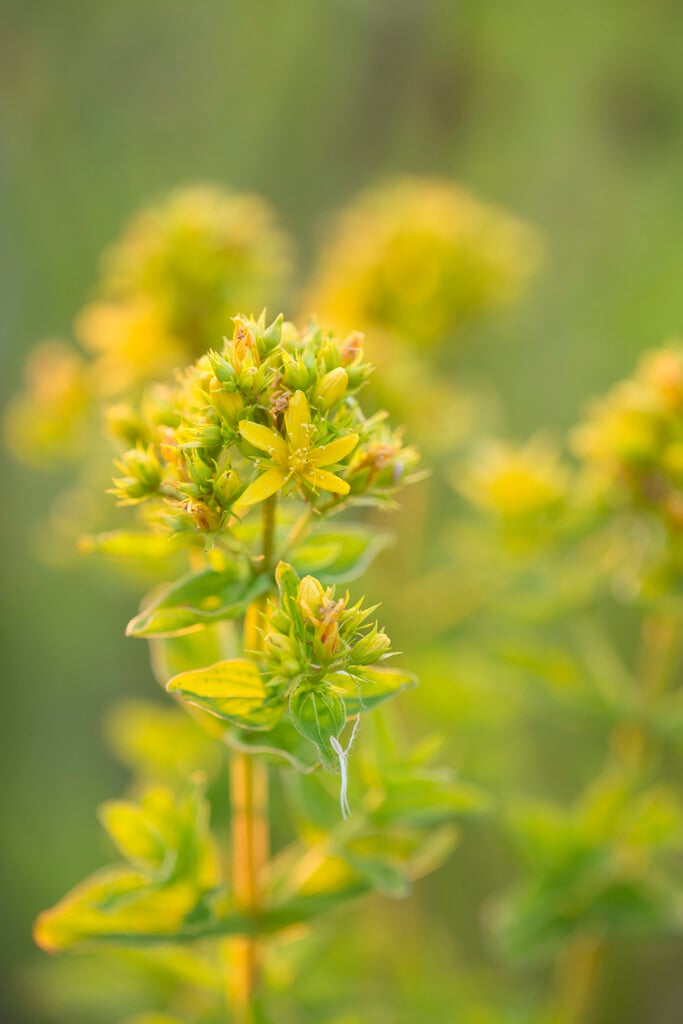
Hypericum tetrapterum

RHS Plant Profile
square-stalked St John's wort
square-stalked St John's wort visionspictures.com

Other common names

hard hay, spotted St John's wort, St Peter's wort, eurinllys pedrongl

Synonyms

Hypericum quadrangulum L.

Plants for pollinators
Herbaceous Perennial

An erect perennial to 70cm tall, with square stems, winged at the corners. In late summer to early autumn it produces domed clusters of yellow flowers to 1cm across. A British native wildflower common on damp grassland

Position

Full sun, Partial shade

Soil Types

Chalk, Clay, Loam, Sand

Max Height

0.5-1 metres

Max Spread

0.1-0.5 metres

Size

Time to Maturity
1–2 years
Max Spread
0.1-0.5 metres
Max Height
0.5-1 metres

Growing Conditions

Chalk Clay Loam Sand
Moisture
Moist but well–drained or Poorly–drained
pH
Acid or Alkaline or Neutral

Position

Full sun Partial shade
Aspect
East–facing or South–facing or West–facing
Exposure
Exposed or Sheltered
Hardiness
H6

Colour & Scent

Season Stem Flower Foliage Fruit
Spring
Summer
Autumn
Winter

Botanical Details

Family
Hypericaceae
Native to GB/Ireland
Yes
Foliage
Deciduous
Habit
Spreading branched
Potentially harmful
Fruit are ornamental - not to be eaten. Wear gloves and other protective equipment when handling. Pets: Fruit are ornamental - not to be eaten - see the HTA guide to potentially harmful plants for further information and useful contact numbers
Genus
Hypericum can be annuals, perennials, shrubs or trees, evergreen or deciduous, with usually paired leaves and showy yellow flowers with prominent stamens, followed by capsules, occasionally berry-like
Name Status
Correct
Plant Range
Europe, SW Asia

How to Grow

Cultivation

Grow in any poor to moderately fertile soil that does not dry out

Propagation

Propagate by seed

Suggested planting locations and garden types

  • Wildflower meadow
  • Wildlife gardens

Pruning

No pruning required

Pests

Generally pest-free

Diseases

May be susceptible to a rust and honey fungus (rarely)