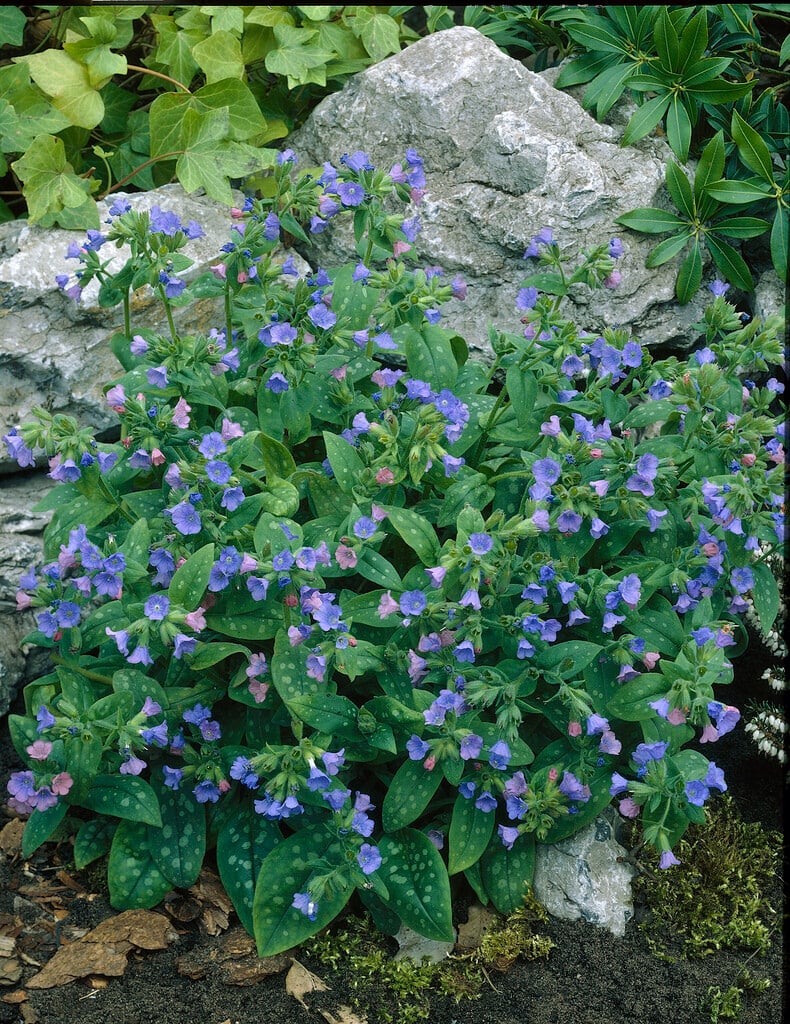
Pulmonaria saccharata

RHS Plant Profile
Bethlehem sage
Bethlehem sage visionspictures.com

Other common names

Joseph and Mary, soldier and his wife, blue and pink ladies, Jerusalem sage, lady's tears, soldiers and sailors

Synonyms

Pulmonaria saccharata 'Picta'

Plants for pollinators
Herbaceous Perennial

A clump-forming to spreading herbacious perennial, bearing bluish flowers from late winter to late spring. Considered one of the best pulmonarias for its foliage, the mid-green leaves are variegated and hairy to touch.

Position

Partial shade

Soil Types

Loam, Sand, Clay, Chalk

Max Height

0.1-0.5 metres

Max Spread

0.1-0.5 metres

Size

Time to Maturity
2–5 years
Max Spread
0.1-0.5 metres
Max Height
0.1-0.5 metres

Growing Conditions

Loam Sand Clay Chalk
Moisture
Moist but well–drained or Well–drained
pH
Neutral or Acid or Alkaline

Position

Partial shade
Aspect
West–facing or East–facing or North–facing
Exposure
Sheltered
Hardiness
H6

Colour & Scent

Season Stem Flower Foliage Fruit
Spring
Summer
Autumn
Winter

Botanical Details

Family
Boraginaceae
Native to GB/Ireland
No
Foliage
Deciduous
Habit
Clump forming
Genus
Pulmonaria can be herbaceous or semi-evergreen rhizomatous perennials with terminal clusters of funnel-shaped flowers in late winter or early spring, and often strikingly patterned leaves developing in summer
Name Status
Correct
Plant Range
Europe

How to Grow

Cultivation

For best results grow in moist but well-drained soil, in partial shade.

Propagation

Propagate by division

Suggested planting locations and garden types

  • Cottage and informal garden
  • Wildlife gardens
  • Flower borders and beds
  • Ground cover
  • Underplanting of roses and shrubs
  • Banks and slopes

Pruning

Remove any old faded leaves after flowering if required.

Pests

May be susceptible to slugs and snails early in the season.

Diseases

Generally disease-free