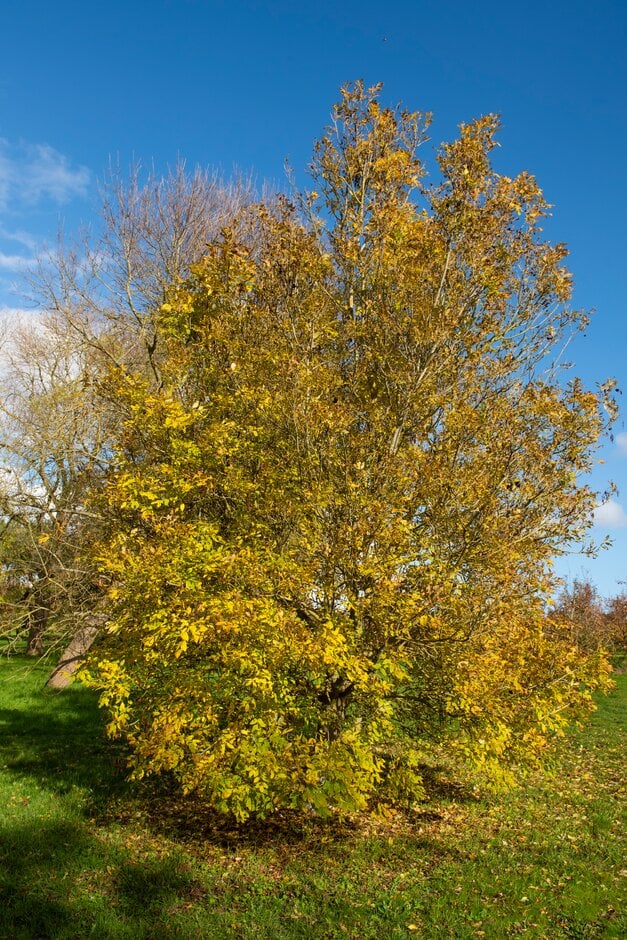
Fraxinus ornus 'Arie Peters'

RHS Plant Profile
manna ash 'Arie Peters'
manna ash 'Arie Peters' RHS / Joanna Kossak
Trees

A large, upright deciduous tree with smooth grey bark and a dense, rounded crown of dark green, oval serrated foliage which changes to yellow in the autumn. Creamy-white flowers appear from May until June. Suitable for large parks and gardens

Position

Full sun

Soil Types

Chalk, Clay, Loam, Sand

Max Height

4-8 metres

Max Spread

2.5-4 metres

Size

Time to Maturity
20–50 years
Max Spread
2.5-4 metres
Max Height
4-8 metres

Growing Conditions

Chalk Clay Loam Sand
Moisture
Moist but well–drained or Well–drained
pH
Alkaline or Neutral

Position

Full sun
Aspect
East–facing or North–facing or South–facing or West–facing
Exposure
Exposed or Sheltered
Hardiness
H5

Colour & Scent

Season Stem Flower Foliage Fruit
Spring
Summer
Autumn
Winter

Botanical Details

Family
Oleaceae
Native to GB/Ireland
No
Foliage
Deciduous
Habit
Columnar upright
Genus
Fraxinus are medium-sized to large, mostly deciduous trees with attractive pinnate leaves, sometimes conspicuous flowers and autumn colour, and distinctive winged fruits
Name Status
Accepted

How to Grow

Cultivation

Excellent for woodland and coastal gardens where there is an alkaline or neutral soil and full sun

Propagation

Propagate by seed or grafting

Suggested planting locations and garden types

  • Architectural
  • Low Maintenance

Pruning

Pruning group 1

Pests

Generally pest-free

Diseases

Ash dieback has recently been found in the UK. Restrictions have been put in place (from 29 October 2012) regarding both the importation of ash from abroad and the movement of ash within the UK. May also be susceptible to honey fungus