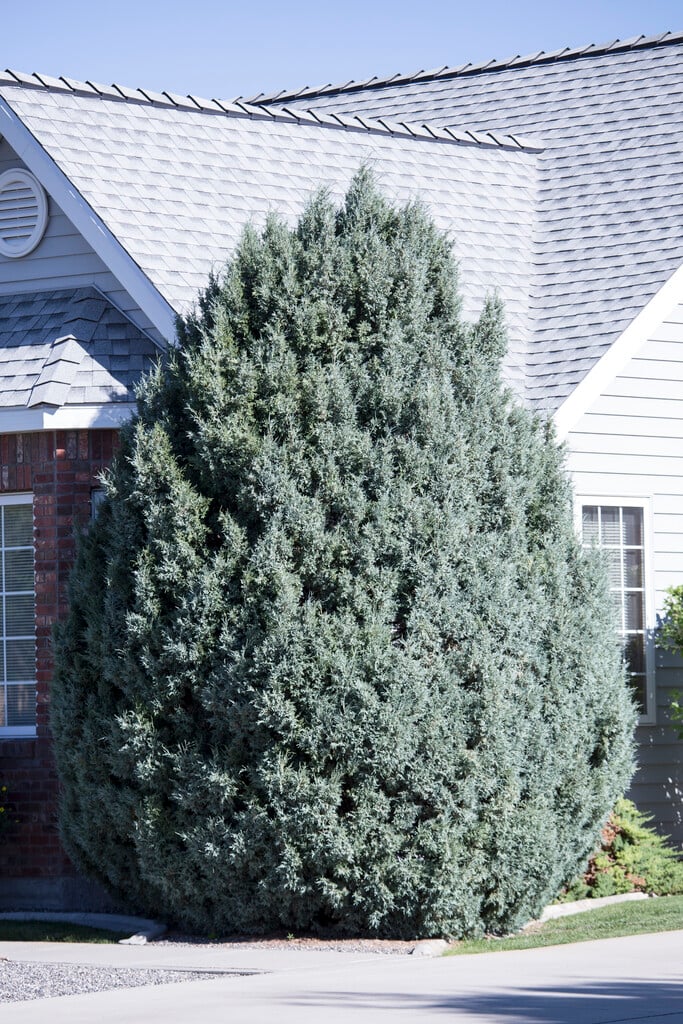
Juniperus scopulorum

RHS Plant Profile
Rocky Mountain juniper
Rocky Mountain juniper visionspictures.com
Conifers Trees

A pyramid-shaped evergreen conifer to a height of 15m with green-blue, scale-like leaves from which many garden cultivars have been bred. The bark is red-brown and the fruit is blue-black

Position

Full sun

Soil Types

Chalk, Clay, Loam, Sand

Max Height

Higher than 12 metres

Max Spread

4-8 metres

Size

Time to Maturity
20–50 years
Max Spread
4-8 metres
Max Height
Higher than 12 metres

Growing Conditions

Chalk Clay Loam Sand
Moisture
Well–drained or Moist but well–drained
pH
Neutral or Alkaline or Acid

Position

Full sun
Aspect
South–facing or West–facing
Exposure
Exposed or Sheltered
Hardiness
H6
Drought Resistance
Yes

Colour & Scent

Fragrance Foliage
Season Stem Flower Foliage Fruit
Spring
Summer
Autumn
Winter

Botanical Details

Family
Cupressaceae
Native to GB/Ireland
No
Foliage
Evergreen
Habit
Bushy
Potentially harmful
Harmful if eaten/skin allergen. Wear gloves and other protective equipment when handling
Genus
Juniperus can be prostrate or erect, evergreen shrubs or trees with aromatic, scale-like or sharply pointed awl-shaped leaves, and small globose fruits
Name Status
Correct
Plant Range
W. Canada to N Mexico

How to Grow

Cultivation

Grow in any well-drained soil. Junipers need little if any pruning. Useful in hot sunny sites

Propagation

Propagate by semi-hardwood cuttings

Suggested planting locations and garden types

  • Architectural
  • Wildlife gardens
  • Low Maintenance

Pruning

No pruning required

Pests

May be susceptible to aphids, juniper scale and caterpillars

Diseases

May be susceptible to phytophthora, canker and honey fungus. See also Conifers: brown patches