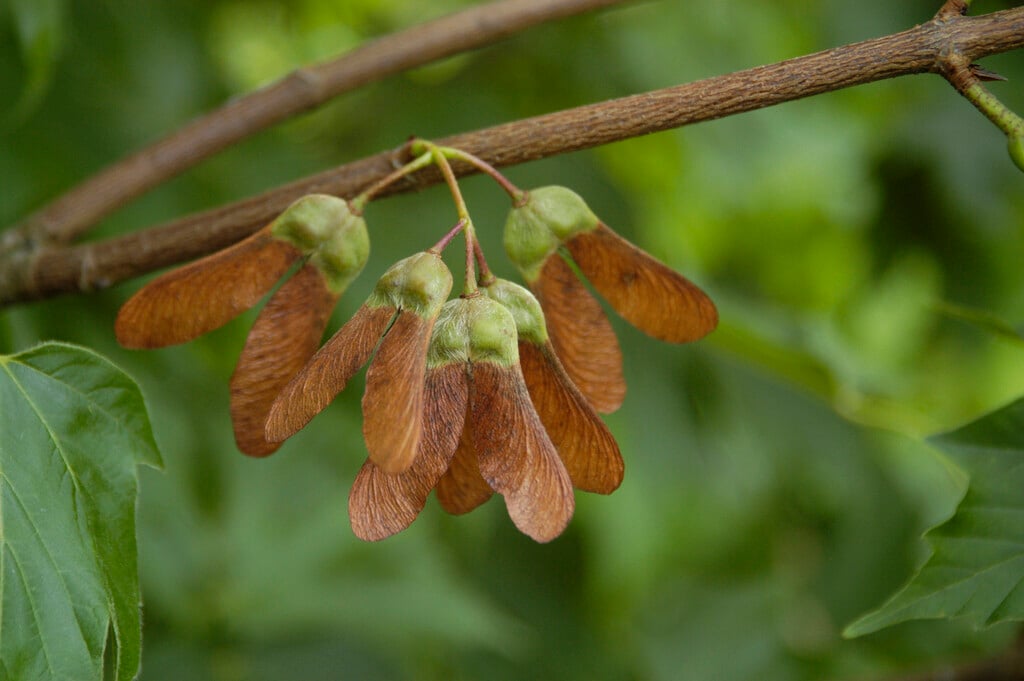
Acer diabolicum

RHS Plant Profile
horned maple
horned maple visionspictures.com

Other common names

horned maple

Trees

A deciduous tree to around 10m high, with large, five-lobed green leaves that are coarsely toothed at the tips. Pendent clusters of flowers, pale yellow on female plants and reddish-pink on male ones, are produced in spring, followed by bristly, winged fruits with distinctive small 'horns' (actually stigmas retained from the flowers) between the wings

Position

Full sun, Partial shade

Soil Types

Chalk, Clay, Loam, Sand

Max Height

8-12 metres

Max Spread

4-8 metres

Size

Time to Maturity
10–20 years
Max Spread
4-8 metres
Max Height
8-12 metres

Growing Conditions

Chalk Clay Loam Sand
Moisture
Moist but well–drained
pH
Acid or Alkaline or Neutral

Position

Full sun Partial shade
Aspect
East–facing or South–facing or West–facing
Exposure
Exposed or Sheltered
Hardiness
H6

Colour & Scent

Season Stem Flower Foliage Fruit
Spring
Summer
Autumn
Winter

Botanical Details

Family
Sapindaceae
Native to GB/Ireland
No
Foliage
Deciduous
Habit
Columnar upright, Spreading branched
Genus
Acer can be deciduous trees or large shrubs with paired, often palmately-lobed leaves and small flowers followed by characteristic winged fruits. Many have fine autumn colour, and some have ornamental stems
Name Status
Correct
Plant Range
Japan

How to Grow

Cultivation

Grow in moisture-retentive, well-drained soil in sun or part shade. As both male and female plants are needed to produce seed, this species can be useful for landscaping; using only male plants prevents unwanted self-seeding

Propagation

Propagate by seed in autumn or spring, or by softwood cuttings in summer

Suggested planting locations and garden types

  • Architectural
  • Cottage and informal garden

Pruning

Minimal pruning required; see pruning group 1. Prune from late autumn to mid-winter only

Pests

May be susceptible to aphids, gall mites and scale insects

Diseases

May be susceptible to coral spot, tar spot, Phytophthora root rot and Verticillium wilt