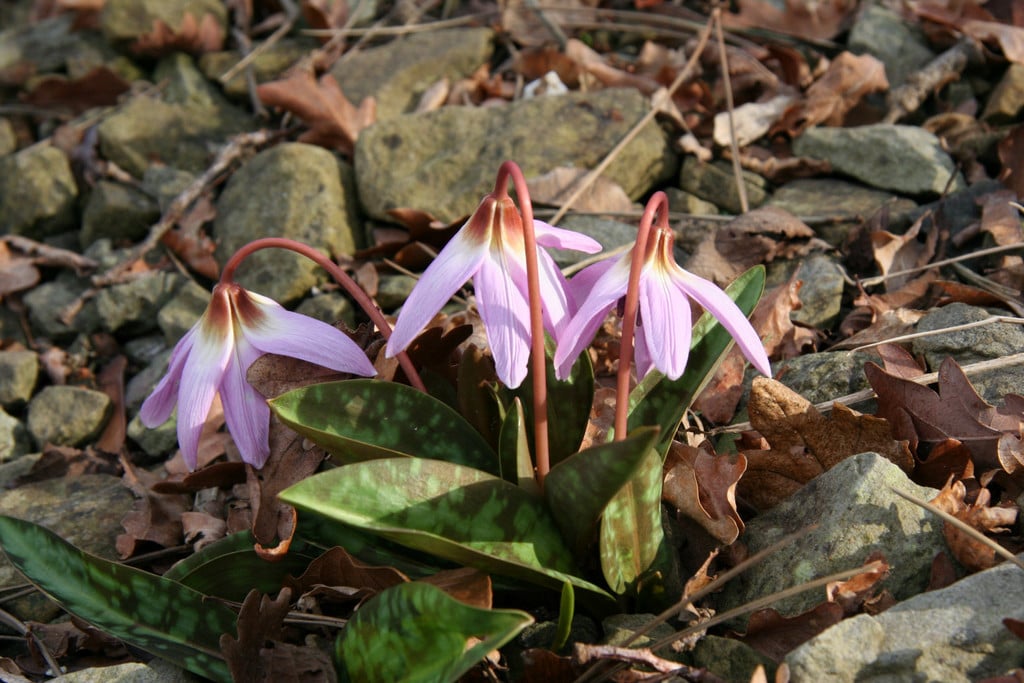
Erythronium dens-canis 'Pink Perfection'

RHS Plant Profile
dog's tooth violet 'Pink Perfection'
dog's tooth violet 'Pink Perfection' RHS
Bulbs

'Pink Perfection' is a bulbous herbaceous perennial up to 15cm high with elliptic-oblong, mid-green leaves, marbled with purplish brown, which die down in summer, dark red stems, and clear pale pink flowers, 3-5cm across, with purple anthers on white filaments, in early spring

Position

Partial shade

Soil Types

Chalk, Clay, Loam, Sand

Max Height

0.1-0.5 metres

Max Spread

0-0.1 metre

Size

Time to Maturity
2–5 years
Max Spread
0-0.1 metre
Max Height
0.1-0.5 metres

Growing Conditions

Chalk Clay Loam Sand
Moisture
Moist but well–drained
pH
Acid or Alkaline or Neutral

Position

Partial shade
Aspect
North–facing or West–facing or South–facing or East–facing
Exposure
Sheltered
Hardiness
H5

Colour & Scent

Season Stem Flower Foliage Fruit
Spring
Summer
Autumn
Winter

Botanical Details

Family
Liliaceae
Native to GB/Ireland
No
Foliage
Deciduous
Habit
Clump forming
Potentially harmful
Ornamental bulbs, not to be eaten. Wear gloves and other protective equipment when handling Pets: Ornamental bulbsnot to be eaten - see the HTA guide to potentially harmful plants for further information and useful contact numbers
Genus
Erythronium are bulbous perennials with paired, ovate or broadly elliptic leaves, and leafless stems bearing one or more nodding, star-shaped flowers with recurved petals
Name Status
Accepted

How to Grow

Cultivation

Plant 10cm deep in fertile, humus-rich, well-drained soil in partial shade that does not dry out. Bulbs in storage must be kept slightly damp. See bulb cultivation

Propagation

Propagate by division of established clumps after flowering; re-plant immediately to make sure the bulbs do not dry out

Suggested planting locations and garden types

  • Cottage and informal garden
  • Low Maintenance
  • Flower borders and beds
  • Underplanting of roses and shrubs

Pruning

No pruning required

Pests

May be susceptible to slugs

Diseases

Generally disease-free but may be susceptible to grey moulds and rust diseases