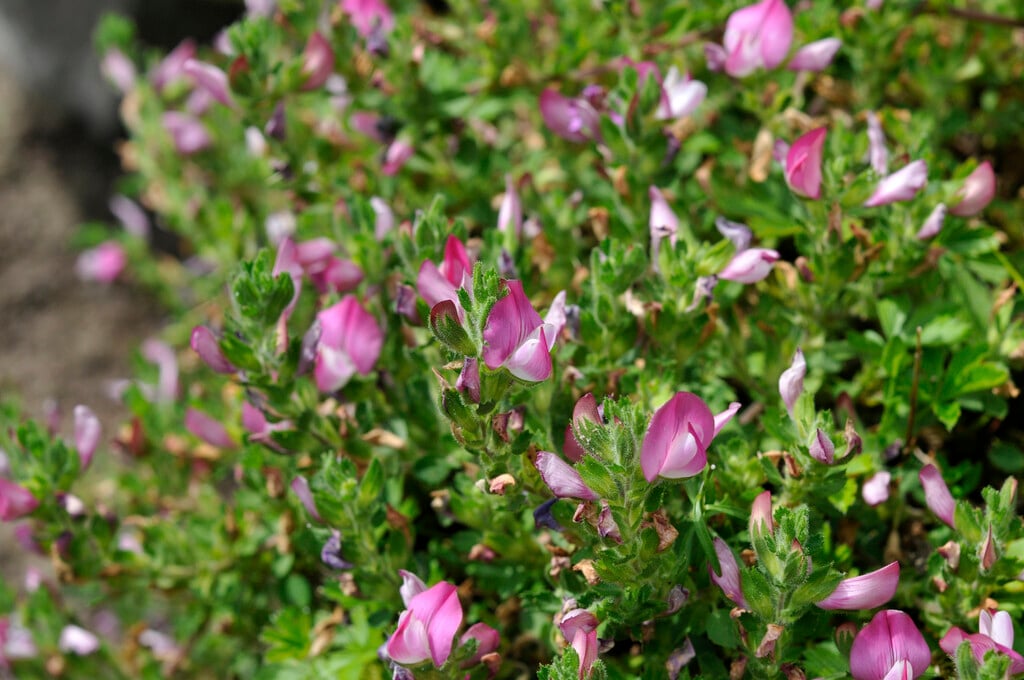
Ononis repens

RHS Plant Profile
common restharrow
common restharrow visionspictures.com

Other common names

creeping restharrow, fin, ground furze, land whin, stay-plough, cammock, petty whin, tagaradr

Plants for pollinators
Shrubs

A deciduous sub-shrub to 60cm tall, with a spreading or upright habit, often stem-rooting and softly spiny, bearing hairy, toothed palmate leaves composed of leaflets, and open leafy racemes of pea-like pink or purplish-pink flowers to 2cm long, produced through summer

Position

Full sun

Soil Types

Chalk, Loam, Sand

Max Height

0.5-1 metres

Max Spread

0.5-1 metres

Size

Time to Maturity
2–5 years
Max Spread
0.5-1 metres
Max Height
0.5-1 metres

Growing Conditions

Chalk Loam Sand
Moisture
Well–drained
pH
Acid or Alkaline or Neutral

Position

Full sun
Aspect
South–facing or West–facing
Exposure
Sheltered
Hardiness
H6

Colour & Scent

Season Stem Flower Foliage Fruit
Spring
Summer
Autumn
Winter

Botanical Details

Family
Fabaceae
Native to GB/Ireland
Yes
Foliage
Deciduous
Habit
Bushy, Spreading branched
Genus
A large genus of around 88 annual and perennial herbs and shrubs with hairy, toothed green trifoliate foliage and showy pink or yellow flowers. They are mainly found on wasteland, in wildflower meadows and are suited to alpine or rock gardens
Name Status
Correct

How to Grow

Cultivation

Grow in moderately fertile well-drained soil in a warm sunny position

Propagation

Propagate by softwood cuttings (greenwood) in early summer; may be short-lived so propagate regularly

Suggested planting locations and garden types

  • Cottage and informal garden
  • Rock garden
  • Wildlife gardens
  • Banks and slopes
  • Flower borders and beds

Pruning

No pruning required

Pests

May be susceptible to glasshouse red spider mite in a greenhouse or conservatory

Diseases

Generally disease-free