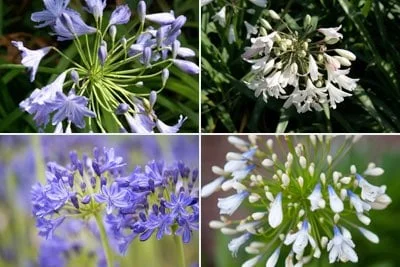
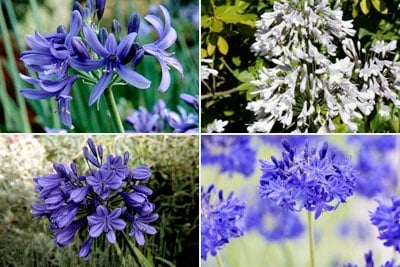
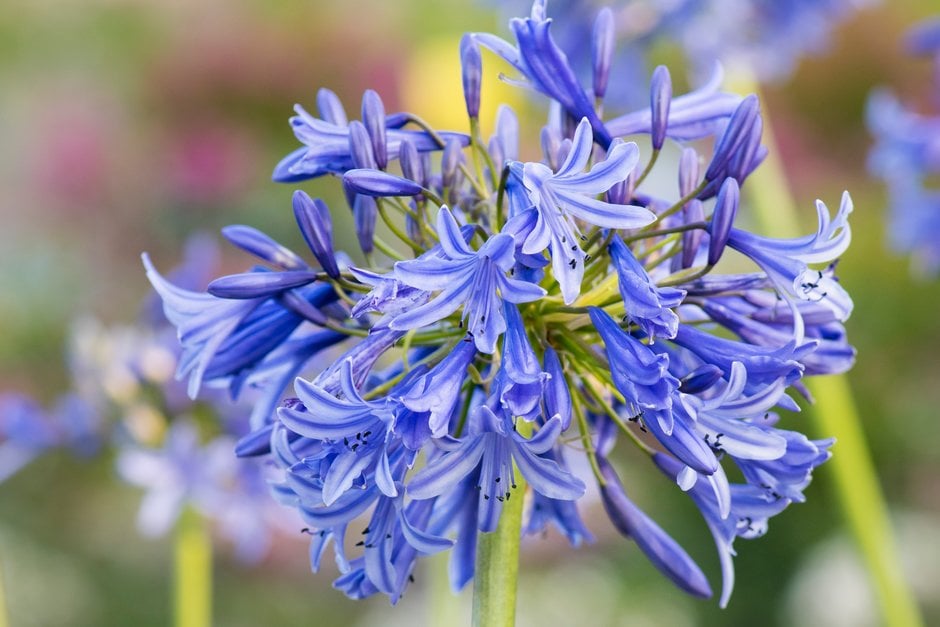
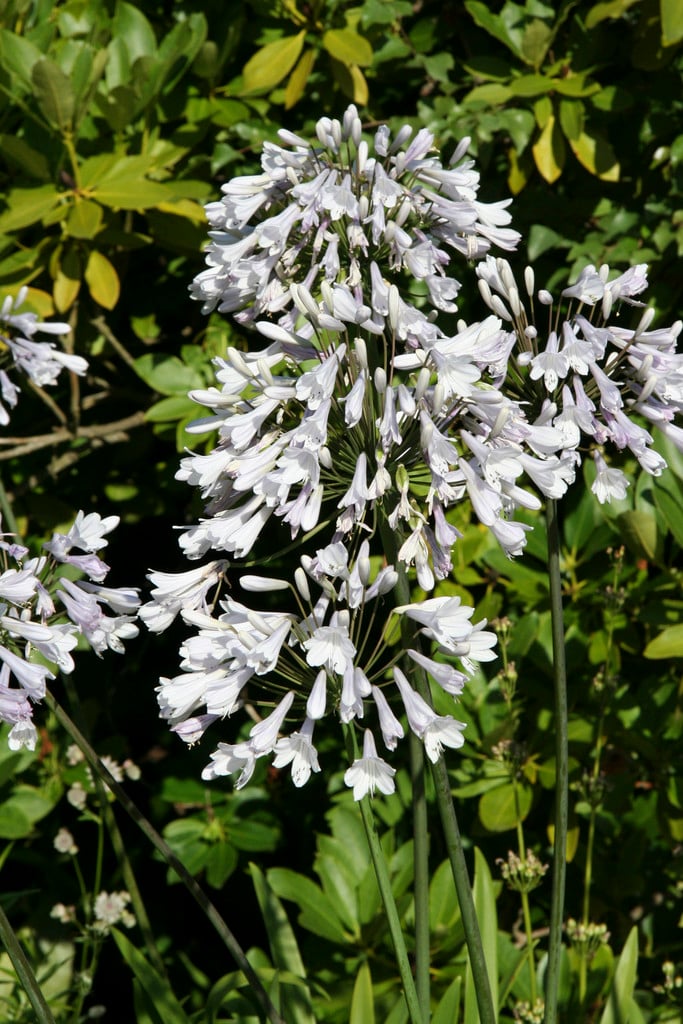
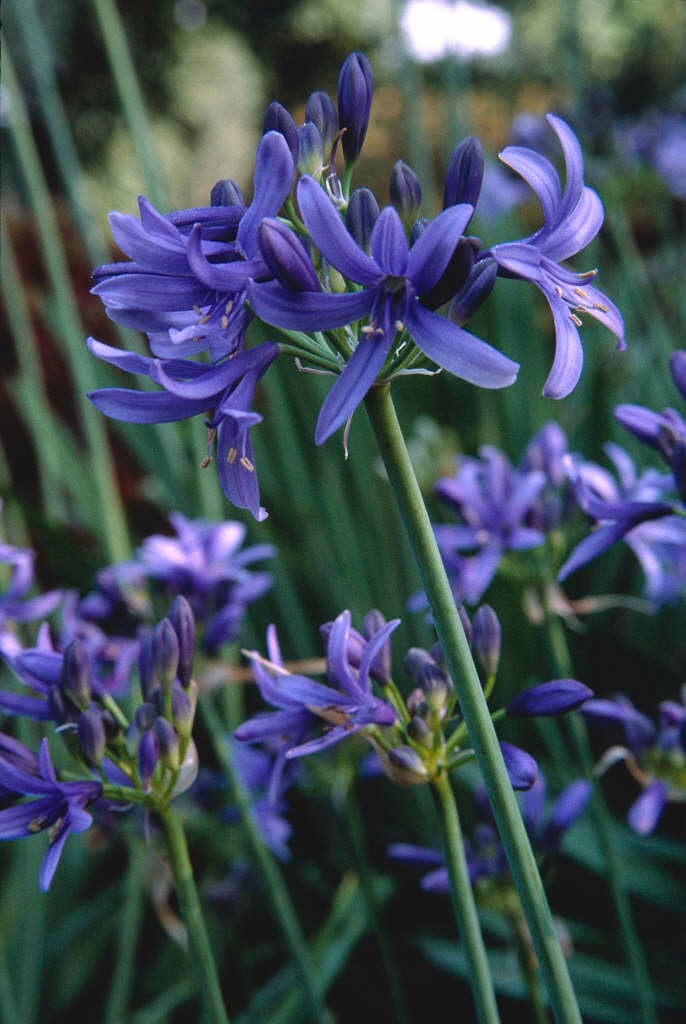
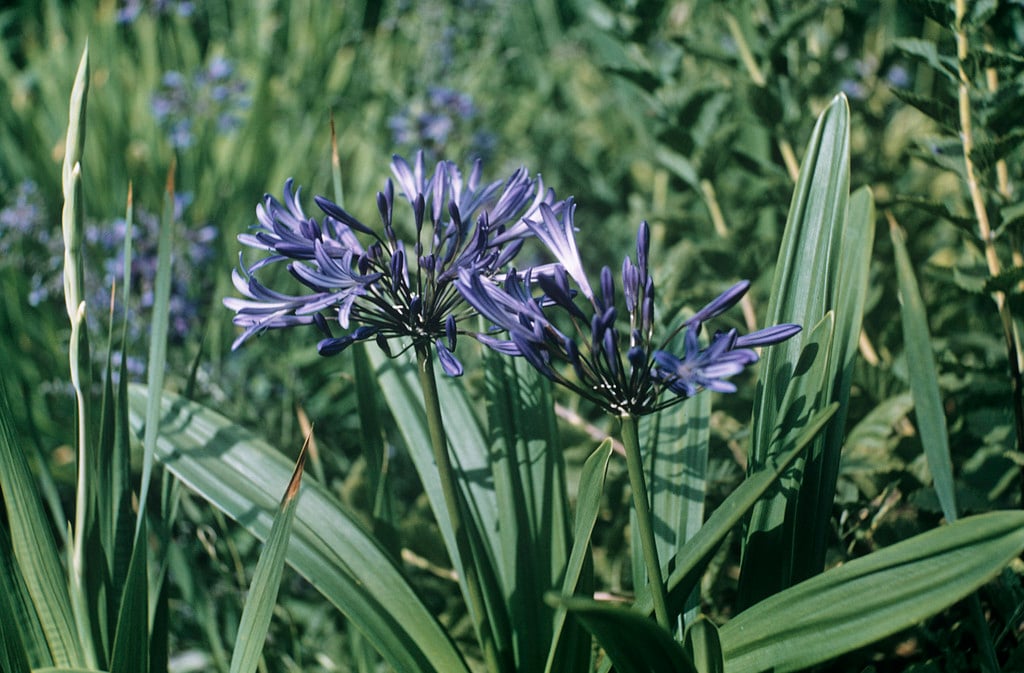
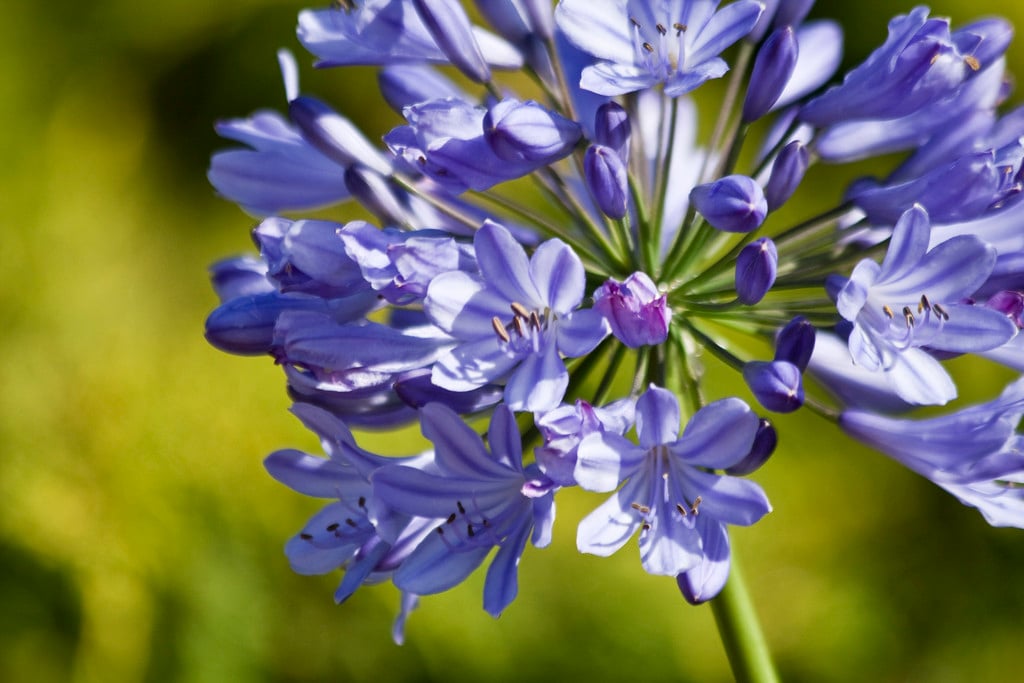
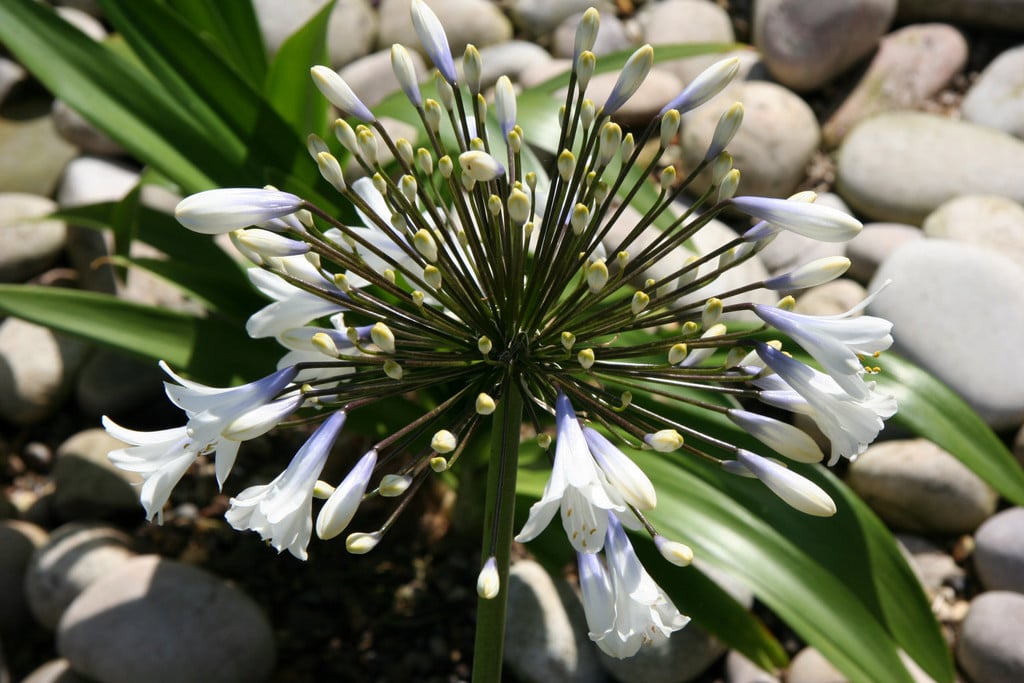
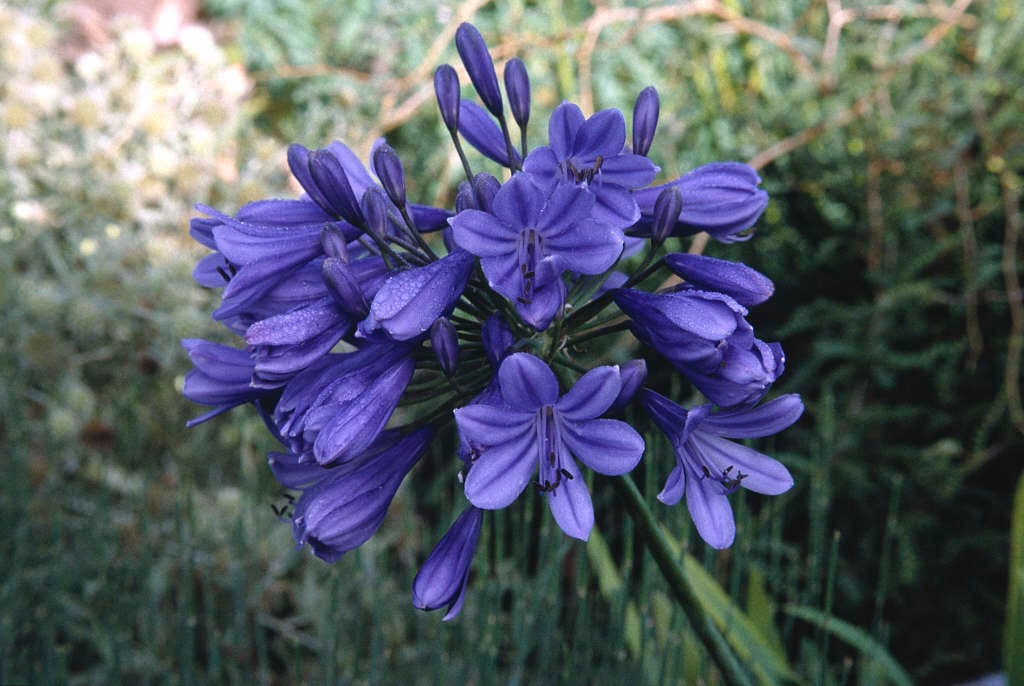
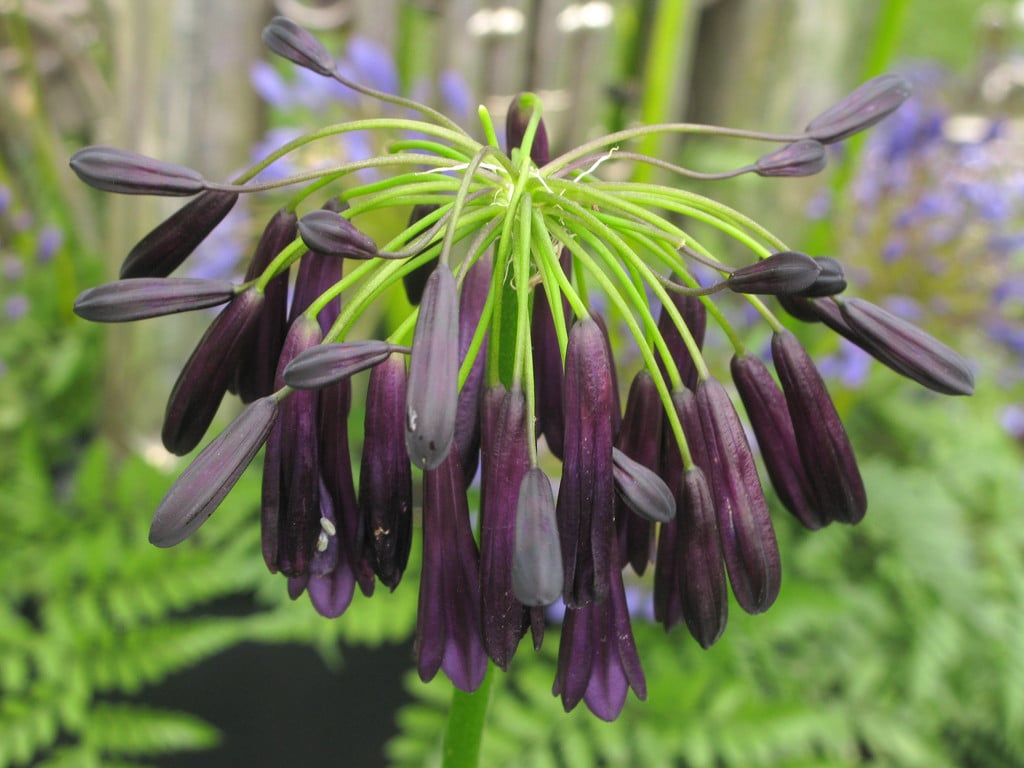
These dramatic flowers hail from South Africa and worship the sun. Treat them to the conditions they love and they’ll reward you with showy blooms for years to come.
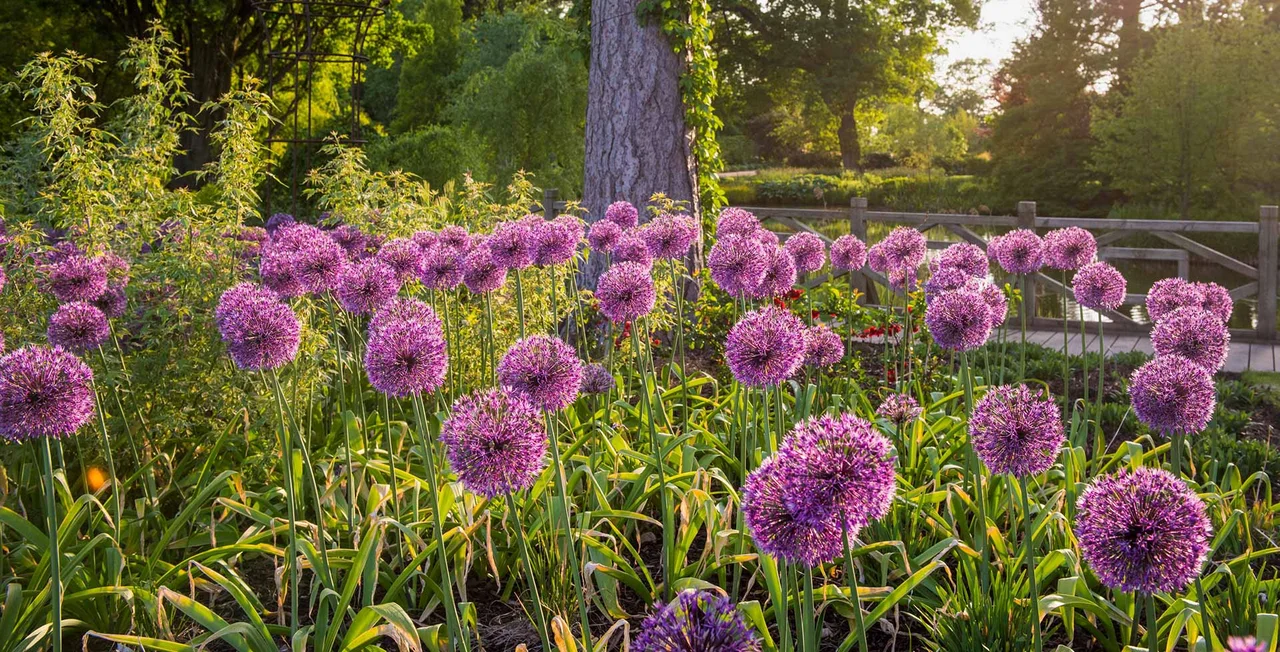
Agapanthus look great planted in drifts in borders. They also look stately when planted in containers, the large flowerheads providing an attractive focal point.
Creating the conditions to thrive
Agapanthus thrive in sunny spots and free-draining soil where they won’t be overshadowed by taller plants. As long as they have direct sunlight for some portion of day, these magnificent flowers will do well.
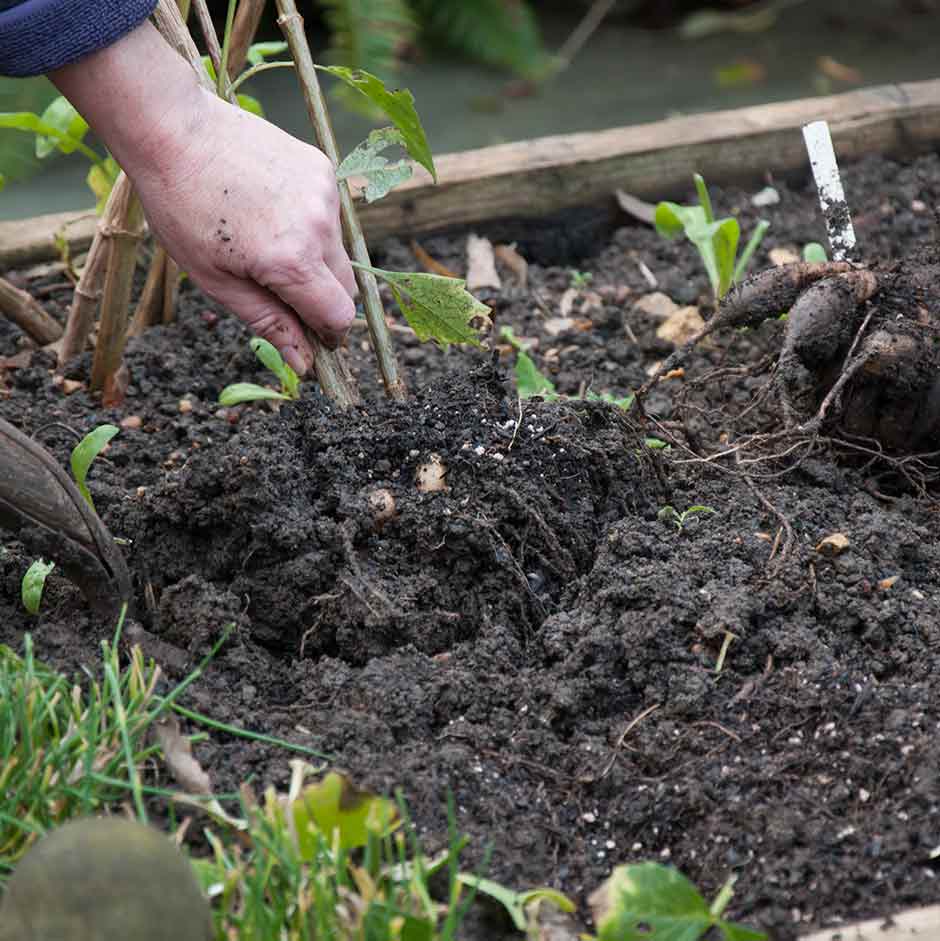
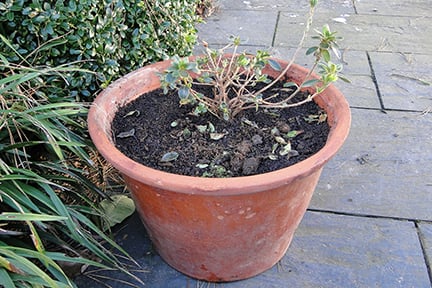
Agapanthus can even grow in deep shade in north-facing borders, though foliage and flowers may lean towards the light. Heavy soils will need additional organic matter digging in to improve its quality. You can improve the drainage of your garden soil by adding compost, grit or perlite. If you choose to grow agapanthus in pots, use a mix of two parts peat-free, multipurpose Can refer to either home-made garden compost or seed/potting compost: • Garden compost is a soil improver made from decomposed plant waste, usually in a compost bin or heap. It is added to soil to improve its fertility, structure and water-holding capacity. Seed or potting composts are used for growing seedlings or plants in containers - a wide range of commercially produced peat-free composts are available, made from a mix of various ingredients, such as loam, composted bark, coir and sand, although you can mix your own.
compost to one part fine grit or perlite.
Once established, they need little attention but appreciate being fed in the The period of time when an individual plant is in active growth. This will depend on the local climate and light levels, and can vary between different plants, although it is broadly from spring to autumn.
growing season with a high-potash fertiliser or specialised agapanthus food for the best flowers. Though they are drought tolerant, they still benefit from lots of water during the growing season if they’re to thrive. Water once or twice per week, particularly in dry periods.
Pot agapanthus on every two to three years to avoid congestion, and divide every five to six years.
Winter care
Most evergreen agapanthus are frost hardy to -5°C. In cold areas, they’re best grown in pots so they can be wrapped in Anything that can be decomposed by fungi, bacteria and micro-organisms, so it doesn’t persist indefinitely in the environment. Biodegradable plastics are usually made from plants, such as bamboo, rather than fossil fuels. Ideally, products that claim to be biodegradable should break down quickly and leave nothing harmful behind. However, they may need specific conditions in order to biodegrade successfully or may produce greenhouse gases such as methane in the process.
biodegradable or recycled fleece, or moved to a cold greenhouse. Most Deciduous refers to plants (mainly trees and shrubs) that lose their leaves seasonally, usually during autumn. This is a natural process triggered by the season's shorter days and lower temperatures and allows plants to conserve energy during the winter months.
deciduous agapanthus are hardy to -10°C and can be grown in a border and mulched with chip Bark is the outermost layer of woody plants (trees, shrubs and woody climbers). It is several cells thick and provides protection against physical damage, disease and environmental stresses. Bark comes in a wide variety of colours and patterns, and these can help gardeners when identifying plants. The fissures and crevices of bark on older plants also creates valuable habitat for many garden creatures as well as lichens and small plants.
bark in a particularly cold winter.
Evergreen or deciduous?
The RHS Advisory team receives many questions from members about whether plants are evergreens or not. Christopher J Young, Garden Manager at RHS Wisley says, “The evergreen species and cultivars, such as Agapanthus praecox, tend to be less hardy. You’ll know when you have one like this as they tend to have broader leaves, but also, when everything else in the garden seems to be dying down for winter, this type of agapanthus will be reluctant too. My personal favourite evergreen variety is A. ‘Peter Franklin AGM’, which has huge heads of pure white flowers held on lofty stems.”
Christopher’s top 5 Agapanthus for a colder climate: