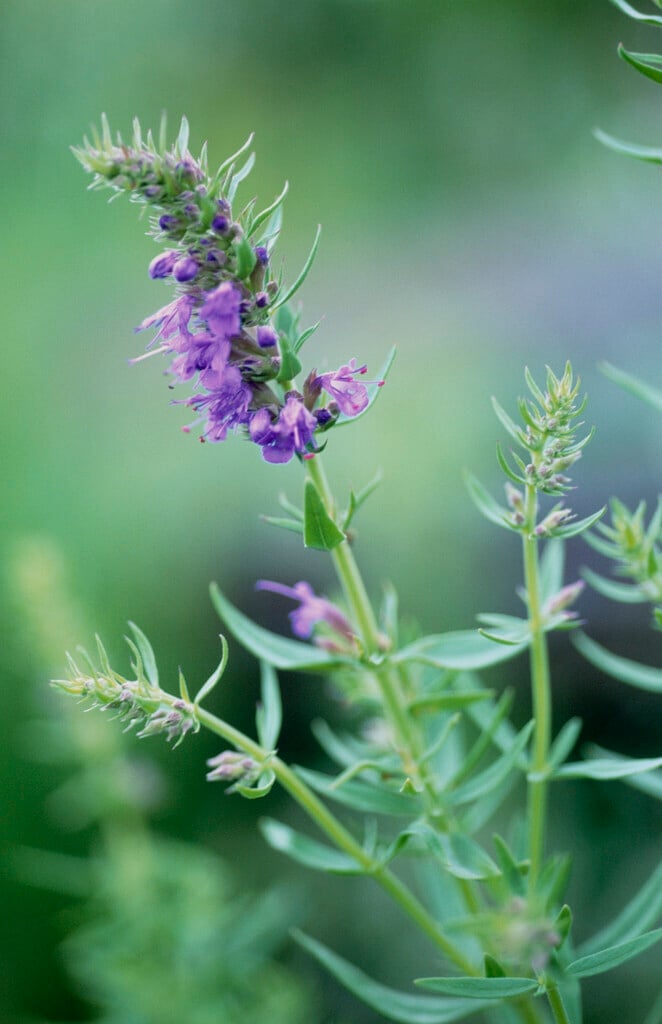
Hyssopus officinalis

RHS Plant Profile
hyssop
hyssop visionspictures.com
Plants for pollinators
Herbs - Culinary Herbaceous Perennial

A compact, spreading, semi-evergreen sub-shrub with erect shoots bearing aromatic, linear leaves and terminal spikes of whorled, 2-lipped, tubular blue flowers in summer and early autumn

Position

Full sun, Partial shade

Soil Types

Chalk, Loam

Max Height

0.1-0.5 metres

Max Spread

0.5-1 metres

Size

Time to Maturity
5–10 years
Max Spread
0.5-1 metres
Max Height
0.1-0.5 metres

Growing Conditions

Chalk Loam
Moisture
Moist but well–drained or Well–drained
pH
Alkaline or Neutral

Position

Full sun Partial shade
Aspect
South–facing or West–facing
Exposure
Exposed or Sheltered
Hardiness
H7

Colour & Scent

Fragrance Foliage
Season Stem Flower Foliage Fruit
Spring
Summer
Autumn
Winter

Botanical Details

Family
Lamiaceae
Native to GB/Ireland
No
Foliage
Semi evergreen
Habit
Bushy
Genus
Hyssopus can be herbaceous perennials or evergreen shrubs, with linear, aromatic leaves and whorls of tubular, 2-lipped flowers in spike-like inforescences
Name Status
Correct
Plant Range
Europe, Mediterranean, Iran

How to Grow

Cultivation

Grow in fertile, well-drained, alkaline to neutral soil in full sun

Propagation

Propagate by seed or softwood cuttings in summer

Suggested planting locations and garden types

  • Rock garden
  • City and courtyard gardens
  • Cottage and informal garden
  • Wildlife gardens
  • Ground cover
  • Flower borders and beds

Pruning

Pruning group 10 in mid-spring

Pests

May be susceptible to leafhoppers

Diseases

Generally disease-free