Quick Facts
An easy-to-grow herbaceous perennial
1
Flowers in summer
2
Enjoys a sunny site
3
It's a good idea to stake in windy gardens
4
Cut down the dead stems in late winter or spring
5
Planted clumps last many years
6
Make more plants by division or root cuttings
7


Before you get started
Choosing a border phlox
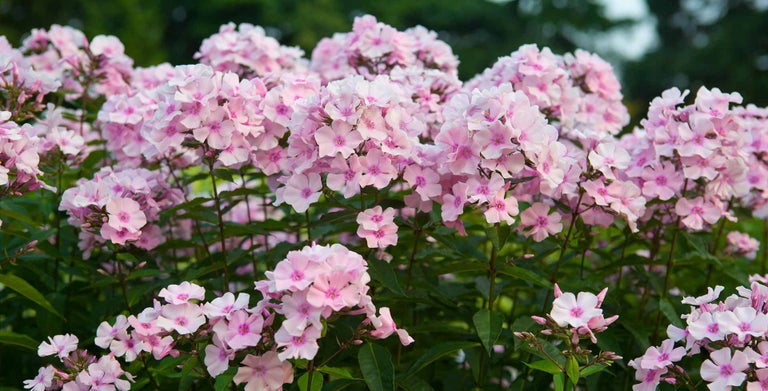
Flower colour is the main criteria for choosing all border phlox. They all flower in summer and are generally around 1-1.2m (3¼ft-4ft) tall. Go for the pastel colours or white if you like cottage gardens and classic borders. Phlox ‘White Admiral’ or P. ‘Monica Lynden-Bell’ would fit this bill. The brighter forms like P. ‘Prince of Orange’ or P. ‘Eva Cullum’,or those with foliage, fit in better in showier settings. They're prefectly hardy.
Buying a border phlox
You can buy border phlox as container-grown plants all-year-round from garden centres or nurseries. Alternatively bare-rooted plants are available from some nurseries via mail order in winter. Take a look in our Find a Plant.
Planting
When to plant
- Plant out container-grown phlox in spring or autumn ideally.
- Plant out or pot up bare root plants on arrival in winter (these will usually be send through the post, mail order).
Where to plant
Border phlox enjoy a place in the sun, although they will be ok in dappled shade. They won’t do well in too dry a setting, though. If your soil is sandy (so likely to be dry in summer), after planting mulch with organic matter such as well-rotted garden or manure to help retain moisture. Otherwise, planting is the same as other herbaceous perennials.
Most border phlox plants gradually make large clumps, but a few cultivars are a more brutish and their spread may need controlling by and dividing them. Leave a minimum of 60cm (2ft) between plants.
Ongoing Care
You may need to stake plants on windy sites.
Water your border phlox when newly planted to help the roots establish and in any dry spells in summer. On poor soils, feed them in spring with a general purpose fertilisers, such a Growmore at the rate of a handful per sq m (yd).
Phlox clumps are long-lasting. When they get too large, dig them up and divide them (see below for details) before replanting smaller pieces in early spring.
Pruning and Training
Cutting back to delay flowering
If you want to postpone flowering to fit in with other plants or to stagger the flowering within a clump, you can cut back the stems by up to half in late May. This is known as the Chelsea chop. Flowering is typically delayed by three or four weeks.
Deadheading
After flowering, you can remove the faded blooms to tidy up your plants if you wish. When done straight after flowering, it may encourage the production of smaller sideshoot flowers in autumn as a bonus.
Cutting back old stems
In late winter or early spring, but back the old stems before new growth appears – see our video guide:
Propagating
The easiest way to increase your phlox is by division in early spring. This is when you dig up the plant and split it into smaller chunks before replanting. These smaller chunks will still flower for you that same season.
Alternatively, to make many more plants, in winter you can dig up clumps and take root cuttings. These will flower in two seasons’ time.
Problems
Border phlox are generally trouble-free plants. Powdery mildew will usually be kept at bay if you water well in dry spells. A microscopic pest called eelworm can occasionally be a problem, so look out for stunted growth as this is an easier sign to spot.