A Beltane Border
The border is inspired by a newer Beltane tradition of the Green Man and May Queen meeting to light the fire. It was an ancient tradition to light all fires in the home from the Beltane fire to bring luck for the coming year
Blooming Border

The garden
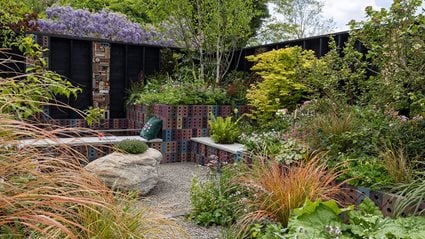
The Green Man is represented by one side and has a more woodland feel, whilst the May Queen is represented by the other which has a more open and overtly floral nature. The two parts are joined by a low angular stone wall from which a charred timber seat is cantilevered and plants are colonising. The dark angular stone and charred timber both from fire, highlight the softness of the planting.
A mossy route runs through the centre of the border, connecting the two parts. The proposed planting scheme is to include a combination of native plants associated with Beltane, combined with non-native perennials in warm colours to create drama but also softness. The Green Man area is represented by birch, rowan and woodland underplanting, with the May Queen represented by hawthorn, complemented by a palette of native perennials, combined with warm colour ornamental perennials.
Unifying this, is a palette of green foliage that serves as the base for the whole border and creates a coherent look. Use of yellow in general at Beltane was seen as bringing good luck.
The inspiration for this border comes directly from the time of year, with RHS Malvern taking place in early May, coinciding with Beltane celebrations. This is a moment when spring is in full swing- days are longer, growth is abundant and there is a renewed desire to spend time outdoors. The border is conceived as a celebratory garden, encouraging connection with nature at this transitional point in the year.
At its heart, the border is intended to be a place to pause. A small seating area with a firepit is enclosed within the planting, offering a quiet space to sit and celebrate the season, surrounded by the fundamental elements of the natural world – trees, stone, moss, foliage and flowers. Visitors are invited to step into the border rather than simply view it from the outside, leaving with a sense of grounding, calm and heightened seasonal awareness.
A moss and stone slab path leads into the seating area, reinforcing a feeling of discovery and transition. The intention is to create a space that feels almost hidden, a garden within a border, encouraging visitors to engage more deeply and experience the planting, materials and atmosphere at close quarters, rather than from the perimeter alone.
The planting
The Green Man area is represented through silver birch, rowan and woodland underplanting, evoking regeneration, growth and connection to the natural world. The May Queen is symbolised by hawthorn, traditionally associated with fertility and protection and central to Beltane folklore.
These symbolic trees are complemented by a mixed palette of native and ornamental perennials, layered over a base planting of ferns and grasses that runs throughout the border. This consistent underlayer creates a cohesive visual language while allowing the more expressive planting above to change with season and light.
A palette of yellow and warm‑toned flowers is woven throughout the border. At Beltane, these colours were traditionally seen as symbols of warmth, abundance and good fortune, reinforcing the cultural narrative of the planting scheme.
The trees within the border play a key role in shaping the microclimate. Silver birch and rowan are grouped together within the Green Man zone, while hawthorn defines the May Queen section. Together, they create areas of partial shade, establishing the environmental conditions required for the layered woodland inspired planting beneath.
The border features approximately 270 plants supplied by R&B Nursery, a local, family run Scottish nursery. They have been chosen for their high quality stock, reliability and shared values around sustainable growing. The nursery has been used on a number of previous projects, ensuring continuity, provenance and planting well suited to local conditions.
Sustainability
The border has been designed with reuse and longevity in mind. Following the event, it is intended that the border will be deconstructed and relocated, either in full or in part, to the sponsor’s site. Should any elements not be relocated, all stone will be reused across future projects by Faodail Landscapes Ltd, ensuring minimal waste and a circular approach to materials.
Sustainable building methods and materials are central to the design. The border incorporates traditional dry‑stone walling, constructed using locally sourced Scottish stone and time‑honoured techniques, avoiding the use of concrete or cementitious materials. Accented with copper detailing, the wall demonstrates how traditional craft can be reinterpreted in a contemporary way, its strong, angular forms intentionally contrasting with the softness and movement of the surrounding planting.
A floating seat formed from naturally charred timber is integrated into the stonework, increasing durability and resistance to weathering while minimising the need for chemical treatments. The dark, fire like surface reinforces the Beltane narrative, while its cantilevered form provides a tactile, human scale focal point within the border. Together, these elements celebrate low impact construction, craftsmanship and storytelling, creating a structure that feels both grounded and expressive within the planting.
The planting design has been developed with climate resilience at its core. It responds to the challenges of a wetter Scottish climate while also incorporating drought resilient species, creating a robust and adaptable planting scheme. A carefully balanced mix of native and non native plants has been selected to increase resilience to weather extremes, pests and disease.
Trees are integrated as key structural elements within the planting design, creating beneficial microclimates that offer shelter, dappled shade and moisture regulation. In warmer summers, this light shade helps cool the space, while protection from wind extends the garden’s usability throughout the year.
Trees also contribute to carbon sequestration by absorbing CO₂, reinforcing the garden’s long term environmental value. Together with the planting and built elements, this approach demonstrates a thoughtful response to changing climatic conditions. A carefully balanced mix of plants suited to cooler, wetter Scottish conditions alongside drought tolerant species, combining both native and ornamental planting, enhances resilience, seasonal interest and biodiversity, while supporting long term ecological health.
The designers – Hinterland Studio (Dominika Henzel and Lauren Taylor) and Faodail Landscapes (Chris Wright and Euan Douglas)
Hinterland Studio was established in 2022 by chartered landscape architects Dominika Henzel and Lauren Taylor. Together, they bring extensive experience gained from working within landscape and architectural design studios across the UK, Europe and the Middle East. Their combined expertise spans a broad range of project scales, from large‑scale masterplanning to local public realms and private gardens.
Creativity sits at the heart of Hinterland Studio’s design approach. Dominika and Lauren enjoy working with form, colour, texture, scale and planting to create rich, evocative spaces that feel engaging and meaningful. They strive to bring heart, soul and a sense of fun to every project, grounding their designs in careful research and analysis of place. Each scheme responds thoughtfully to the history, context and stories of its setting. The pair have designed and planted five RHS‑judged trade stands for their client ArtFe, showcasing sculptural work with consistent success.
Faodail Landscapes takes its name from the Gaelic term meaning “lucky find.” Established in 2022, the company was founded by friends Chris Wright and Euan Douglas, united by a shared passion for the environment and outdoor spaces. The practice was formed following valuable experience working alongside award winning designers and landscapers, which shaped their understanding of the physical and mental wellbeing benefits that thoughtfully designed outdoor spaces can provide.
At the core of Faodail Landscapes is a commitment to quality, attention to detail and respect. For materials, for craft and for the landscape itself. Every build is approached with care and integrity, ensuring spaces are not only well made but enduring and meaningful.
RHS People’s Choice Award
All Show Gardens
Feature Garden
Bloom Together Community Garden with Heart of England Britain in Bloom Group
Bloom Together Community Garden with Heart of England Britain in Bloom Group
Feature Garden
Bloom Together Community Garden with Heart of England Britain in Bloom Group
Bloom Together Community Garden with Heart of England Britain in Bloom Group
Get involved
The RHS is the UK’s gardening charity, helping people and plants to grow - nurturing a healthier, happier world, one person and one plant at a time.