RHS Chelsea
Flower Show
All About Plants garden designs for RHS Chelsea 2026
Focusing on unusual and specialist plants, this category explores innovative planting schemes and palettes. Working with expert nurseries, these gardens provide fresh inspiration for plant lovers everywhere
At RHS Chelsea, the All About Plants category celebrates the beauty and diversity that plants bring to garden design. Rather than relying on hard landscaping, these gardens focus on unusual and specialist varieties, creating immersive spaces that highlight the artistry of planting. By collaborating with expert nurseries and experimenting with distinctive schemes and palettes, this category offers fresh inspiration for plant lovers.
Plant Heritage: The Missing Collector Garden, designed by Kate Campbell, Sally-Anne Rees and William Murray

Plant Heritage: The Missing Collector Garden, designed by Kate Campbell, Sally-Anne Rees and William Murray
Plant Heritage’s Missing Collections campaign inspired the concept of ‘The Missing Collector’: a mysterious plant enthusiast who has left behind an extraordinary collection. In the Plant Heritage: The Missing Collector Garden, vignettes of jewel-toned plants nestled within lush green foliage offer visitors a rare glimpse of this treasured botanical archive. Inspired by museum display cases, stone drawers within a raised platform create unusual planting opportunities, while stone pillars frame the space, resembling stacked reference books.
Cleary Gottlieb: Time for Creativity, designed by Christina Cobb

Cleary Gottlieb: Time for Creativity garden, designed by Christina Cobb
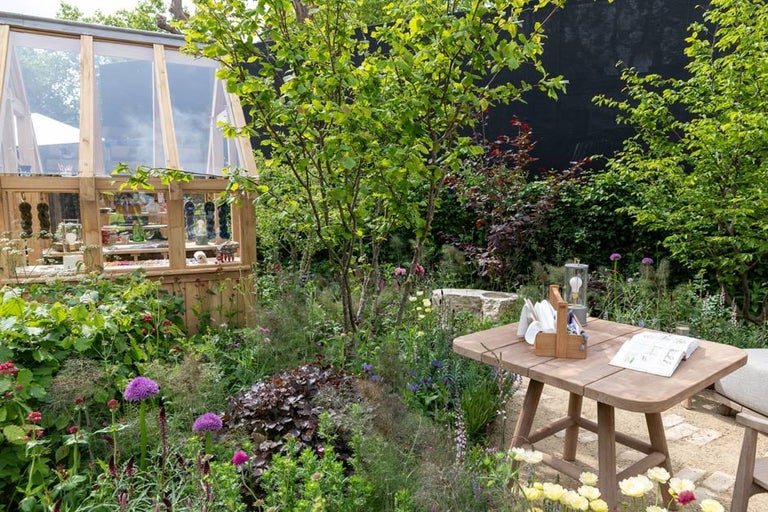
The Cleary Gottlieb: Time for Creativity garden aims to encourage people to reduce their screen time and make time for hobbies that have been neglected or explore new creative interests. A walk-through glasshouse filled with books, paints, papers, fabrics and threads welcomes visitors, inviting them to choose something creative and journey through the space. At the end of a winding path, a peaceful seating area surrounded by vibrant planting awaits, where creativity, focus and time can be reclaimed.
The Bat Conservation Trust’s Nocturnal Garden, designed by Melanie Hick

The Bat Conservation Trust’s Nocturnal Garden, designed by Melanie Hick
The Bat Conservation Trust’s Nocturnal Garden demonstrates how easy it is to grow plants that support bats by feeding their prey. These plants attract the small insects that bats feast on and are simple to grow in the UK. The garden reminds us that after we enjoy our gardens during the day, bats and their prey can benefit from our plant choices long after we’ve retired for the evening.
Woodland Trust: Forgotten Forests Garden, designed by Ashleigh Aylett

Woodland Trust: Forgotten Forests Garden, designed by Ashleigh Aylett
The garden celebrates the vital work of the Woodland Trust in restoring the UK’s rare and vulnerable ancient woods, once overshadowed by dense plantations of non- conifers. In the Woodland Trust: Forgotten Forests Garden, visitors will journey through the transformation of a damaged ancient woodland, from a dark, uniform conifer forest into a vibrant, thriving habitat bursting with life, colour and beauty. Along the way, they’ll discover how the Trust carefully opens up these landscapes, letting in the light that awakens the dormant seed bank beneath the soil, allowing ancient species to flourish once more.
YoungMinds Garden, designed by Charlie Chase

YoungMinds Garden, designed by Charlie Chase
The YoungMinds Garden is a vibrant celebration of global botany, designed to inspire young people and offer a restorative, purposeful community space at a time of rising demand on young people’s mental health services. Plant diversity throughout the garden mirrors the range of experiences young people bring to the space. Characterful weeping conifers create a dappled canopy, beneath which a rich planting palette thrives. Stepping pads, crafted from waste stone, form a pathway leading young gardeners to the heart of the garden. Yellow-flowered plants, symbols of light and hope, have in the cracks of weathered boulders. A habitat wall, built from stone offcuts, frames the garden, offering a sense of enclosure while championing an ecological approach to design.