RHS Chelsea
Flower Show
Balcony and Containers designs revealed
Smart solutions for small spaces: explore the Balcony and Container Gardens at RHS Chelsea 2026 and discover practical ideas for balconies, patios and containers
The Balcony and Container Gardens are designed to inspire gardeners with limited outdoor space. These innovative displays showcase how creativity and sustainability can flourish in even the smallest settings. From vibrant plant combinations to clever design solutions, they demonstrate that you don’t need acres of land to create a green oasis. Whether you have a balcony, terrace or compact courtyard, discover ideas that transform everyday spaces into stunning sanctuaries.
Balcony Gardens
A Little Garden of Shared Knowledge sponsored by Viking, designed by Katerina Kantalis

A Little Garden of Shared Knowledge sponsored by Viking, designed by Katerina Kantalis
A compact, creative retreat for a retired couple, A Little Garden of Shared Knowledge balcony garden blends personal sanctuary with shared stories, celebrating a lifelong love of gardening, travel and the arts. The space encourages nurturing, with a curated selection of flowers, herbs, vegetables and fruit arranged within a compact layout. Drawing on insights from previous gardens and travels near and far, the balcony represents a culmination of learning, exploration and a desire to pass on knowledge, particularly to younger family members.
Fettercairn: The Angels’ Share, designed by May Starey

Fettercairn: The Angels’ Share, designed by May Starey
The Fettercairn: The Angels’ Share garden captures the spirit of whisky’s ageing journey, from copper stills to oak casks, and is inspired by Fettercairn’s Highland landscape. As whisky ages, some liquid is lost to evaporation and this is known as the Angels’ Share. Combining Scottish vernacular references and planting that’s attractive to endangered, pollinators, the garden embraces a balance between people, craft and nature.
Hedgerow in the Sky – Tech Mahindra, designed by Sarah Mayfield and Monika Greenhough

Hedgerow in the Sky – Tech Mahindra, designed by Sarah Mayfield and Monika Greenhough
A sanctuary inspired by British hedgerows, blending layered planting, natural textures and wildlife-friendly design to show how even the smallest spaces can nurture and beauty. The Hedgerow in the Sky garden reimagines the character and biodiversity of British hedgerows within a contemporary urban balcony garden. Layered planting echoes the natural structure of hedgerows, offering year-round interest and creating moments of discovery for both pollinators and people.
The Transient Garden, designed by Rebecca Lloyd Jones

The Transient Garden, designed by Rebecca Lloyd Jones
The Transient Garden transforms a compact balcony into a flexible, green retreat with modular design, container planting and vertical accents for modern, mobile living. Visitors can expect to see container planting, folding furniture and vertical structures that add height and interest without overwhelming the space. Inspiration is drawn from the ephemeral qualities of nature’s shifting light, changing seasons and the way nature continually evolves and renews itself.
Tales from the Riverbank Garden sponsored by Kennedys’ Independent Property Agents, designed by Susie Kennedy and Kate Henning

Tales from the Riverbank Garden sponsored by Kennedys’ Independent Property Agents, designed by Susie Kennedy and Kate Henning
Tales from the Riverbank offers a river-dwelling bird’s-eye view of a young couple’s dream – a small but perfectly formed floating home with a fully functioning garden. Away from the hustle and bustle of working life, it blends seamlessly with the natural riverbank environment. This garden celebrates the arts and crafts of a bygone era of riverside living, an approach enjoying a revival as more people seek a simpler, more connected way of life.
Container Gardens
Alzheimer’s Society: Microbes and Minds Garden, designed by Tina Worboys

Alzheimer’s Society: Microbes and Minds Garden, designed by Tina Worboys
The Alzheimer’s Society: Microbes and Minds Garden raises awareness of the growing evidence linking gut microbiome health with brain function – an exciting and timely area of research. Inspired by the rural orchards of Worcestershire and Herefordshire, this garden tells the story of apple cider vinegar and its gut health benefits. At its heart stands a beautiful apple tree symbolising ‘The Mother’, the naturally occurring culture of beneficial bacteria formed during fermentation. Surrounding it are high-gloss, curved sculptures inspired by amber glass bottles, designed to protect ‘The Mother’ and, metaphorically, the sitter within the intimate seating area, reflecting apple cider vinegar’s wellness benefits.
The Seasalt Painted Garden, designed by Lynn James

The Seasalt Painted Garden, designed by Lynn James
The Seasalt Painted Garden is inspired by the mid-century St Ives School artists and blends bold colour with recycled materials. Filing cabinets repurposed as plant containers, reflect the artists’ ingenuity and resourcefulness during wartime shortages. While celebrating the legacy of mid-century creativity, the garden also looks forward, featuring a newly commissioned sculpture that offers a fresh expression of contemporary art – bridging past inspiration with present-day innovation.
The Sightsavers Garden: We Start With Sight But We Don’t Stop There, designed by Peter Karn, Sarah Fisher and Janice Molyneux

The Sightsavers Garden: We Start With Sight But We Don’t Stop There, designed by Peter Karn, Sarah Fisher and Janice Molyneux
A sensory sanctuary where thoughtful, innovative design invites us to experience how inclusion, accessibility and belonging benefit everyone. Inspired by Sightsavers’ mission to protect sight, eliminate disease, and champion disability rights, The Sightsavers Garden reimagines an intimate urban space as a richly layered haven alive with sound, scent and texture. Simple materials, multi-sensory planting and a central turning circle designed for wheelchair users welcome all visitors, inviting them to slow down, pause, connect and to imagine a more inclusive and sustainable world.
The Whittard of Chelsea Garden, designed by Ollie Pike

The Whittard of Chelsea Garden, designed by Ollie Pike
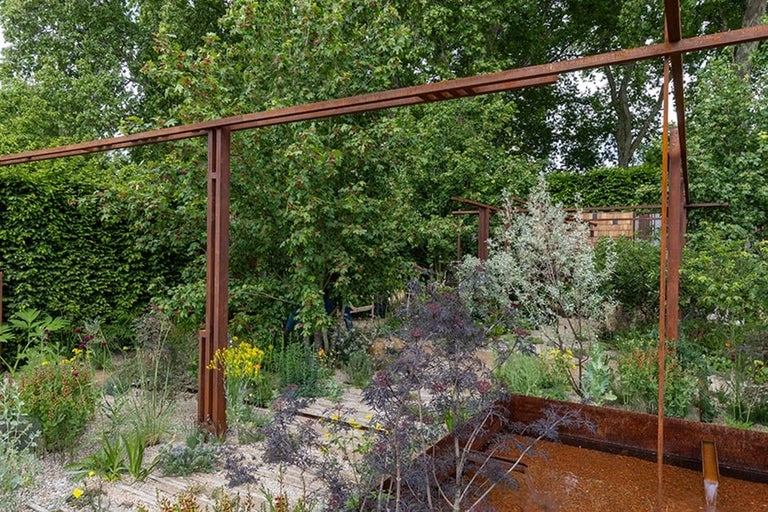
Celebrating 140 years of the simple, peaceful pleasure of enjoying a Whittard of Chelsea unique tea blend, this garden transforms a small Chelsea courtyard into a tranquil retreat. In The Whittard of Chelsea Garden, nature, tea and wonder come together to create the perfect sanctuary – a place to pause, reflect and savour the moment. The act of pouring tea holds deep cultural significance and is often considered an art form. The beauty and sound of the pour inspire the garden’s design, where a network of copper pipes winds through the space, mimicking this ritual with graceful streams of water that enhance the serene atmosphere.
Flood Re: Contain the Rain Garden, designed by John Howlett

Flood Re: Contain the Rain Garden, designed by John Howlett
The Flood Re: Contain the Rain Garden draws inspiration from traditional Persian design, creating a tranquil sanctuary within a compact urban space. Designed for a single person or couple with an environmental conscience, it offers an immersive retreat from the bustle of city life. The garden is intended to be enjoyed both from indoors, with views of lush greenery, and from a small seating area nestled among vibrant planting, providing a sense of peace and escape.