RHS Flower Show
Wentworth Woodhouse
Feature Gardens at RHS Wentworth Woodhouse
Four Feature Gardens bring Yorkshire culture and history to life. Find out more about the designs featuring at this exciting new show
RHS Wentworth Woodhouse in South Yorkshire is the perfect setting for showcasing gardens that reflect its rich horticultural history. They include gardens which focus on the mining community in and around Wentworth, the famous Rhubarb Triangle, community gardening and how to work with what you have in your garden.
RHS Miners Garden designed by Chris Myers

The RHS Miner’s Garden asks you to imagine going back in time to when coal mining was a thriving industry in the north of England. After a long hard day down the pit in pitch darkness, the first thing almost every miner wanted to do was get out in the daylight and breathe in the fresh air, and what better way to do this than by getting stuck into some serious gardening.
Through the necessity of feeding their families and sheer survival, miners found huge enjoyment in gardening, it was one of the biggest things in almost every miner’s life. This garden aims to take you back to a time and place where miners cohabited in tiny adjoining cottages and worked alongside each other both down the pit and above ground, tending to the land around their home.
An allotment style scenario demonstrates the methodical and productive way in which miners gardened with lots of produce, growing crops to feed their family alongside different types of flowers for cutting to brighten the family home. This eye-catching combination of everyday life fused with gardening provides the focal point of this feature garden, with the facacde of two cottages providing the backdrop.
The cottages and the productive garden environment will be nestled within a more natural fringe of wild trees, habitat and a few rusty remains of the mining industry that has in more recent times ceased to exist. This garden reflects on how pits that have closed in South Yorkshire have been transformed into nature reserves, which are incredibly beneficial to wildlife.
RHS Teenage Dirt Park designed by Rachel Platt

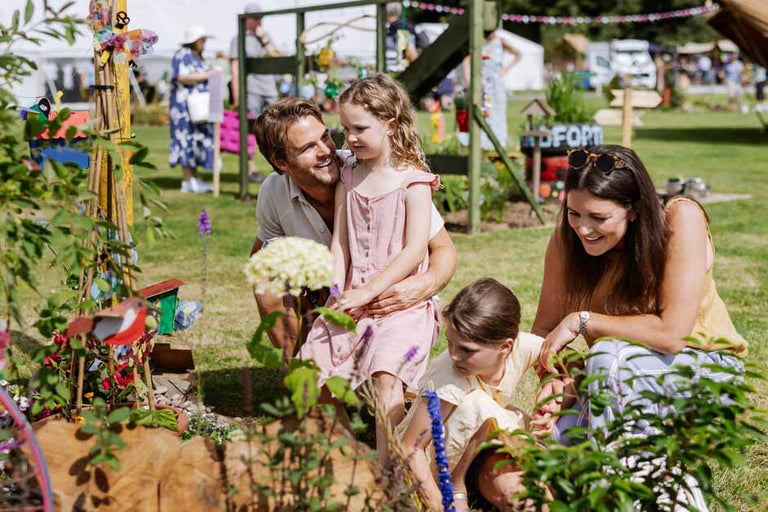
RHS Teenage Dirt Park is a bold community garden, a space to connect, create, and let loose, designed with Rotherham’s young people and created for the Children’s Capital of Culture. At its heart, a striking central structure invites young people to hang out, vibe to music, and capture their next viral TikTok. Thrill-seekers can hit the adrenaline-pumping dirt track featuring rollers, jumps and berm turns, while vibrant graffiti seating brings a splash of urban creativity. Wrapped in resilient meadow planting, this dynamic space blends culture, nature, and self-expression – an open invitation to play, chill, and make it their own.
RHS Work With Your Garden designed by Matt Biggins and Richard Hill

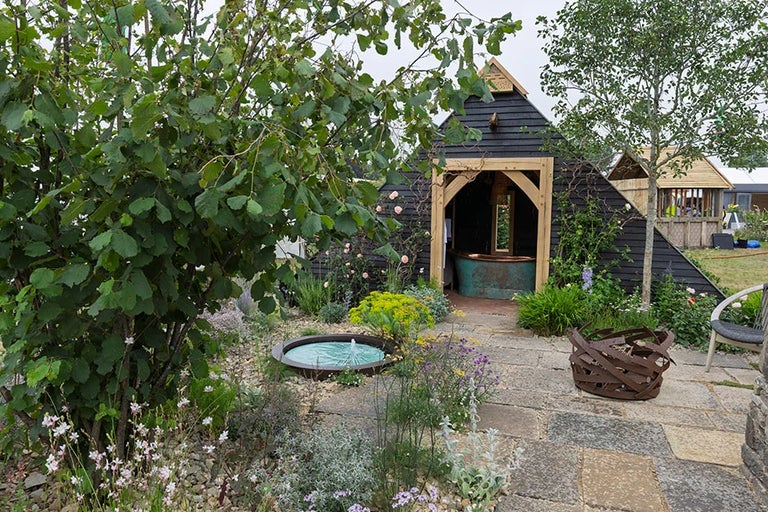
The theme of RHS Work With Your Garden is that we shouldn’t fight against our garden, we should work with it and this RHS feature garden showcases how you can work with your space to create a happy and healthy garden. The layout of the garden is inspired by the rays of the sun, flooding out into the open from a central shaded circle. Subtle links to our industrial past link the garden firmly to Yorkshire. Visitors can walk freely through the garden, moving through planting archetypes, from full sun to shade. Explore how elements such as , soil, changes in topography or moisture can be worked with to create a beautiful garden at home.
RHS Rhubarb By Candlelight created by Olivia Copley

RHS Rhubarb By Candlelight created by Olivia Copley is an artistic exploration of the otherworldly glow and atmosphere found in The Rhubarb Triangles sheds, where rhubarb creaks and sparkles like jewels under candlelight. The installation aims to visually transport visitors inside the interior of dark rhubarb forcing sheds, using plants to interpret the sensory experience found within.
The Installation explores the rich and mysterious history of Yorkshire’s Rhubarb Triangle, using colour, texture, light and shadow to recreate the otherworldly experience of rhubarb growing by candlelight, transforming the Chapel into an immersive experience that emulates the dark interiors of Rhubarb Forcing Sheds.
The method of forcing rhubarb is said to originate from the early 1800s when gardeners at Chelsea Physic Garden discovered sweet pink stems growing underneath some discarded upturned buckets. Before long, the ingenious Victorians had developed terracotta rhubarb forcing jars to replace the humble bucket so that gardeners could enjoy an early crop, while maintaining the aesthetic values of their plot.
Yorkshire forced rhubarb (Rheum rhaponticum) is grown outside for two years before being lifted and placed into vast pitch-black huts where heat and the lack of light forces them to surge upwards at such a rate you can hear the cracking sounds as they grow. In February they are handpicked by candlelight and packed in boxes to be dispatched to markets, shops and restaurants around the world.
The Rhubarb Triangle
Joeseph Whitwell of Leeds is credited with pioneering the production of forced rhubarb in Yorkshire. With the ideal soil, winter frost and access to cheap coal to warm the sheds, production quickly expanded and by the late 1870s the area between Leeds, Wakefield and Bradford became known as the ‘Rhubarb Triangle’ exporting stems around the world. With its health properties and availability at a time of the year when other fruit is scarce, rhubarb soared in popularity hitting a peak in the post-war period.
However, as imported food became more readily available, added to high land and labour costs, the industry saw a rapid decline. At its peak there were over 200 forced rhubarb growers in the area, now there are barely a dozen. Forced Yorkshire rhubarb is still farmed in much the same way it was 100 years ago, and now it is seen as a regional delicacy with Protected Designation of Origin status, much like Champagne, Prosciutto di Parma and Roquefort cheese.
Urban Pollinators designed by Richard Browning

The Urban Pollinators garden highlights how urban gardens are invaluable to pollinators and other wildlife who rely on well-connected habitats for survival. Providing inspiration to the more than four fifths of the UK population who live in urban areas, this garden highlights how creating a paradise is achievable in any space, regardless of size.
Off centre, a circle of lavender provides a buffet for some of the 260-plus species of bees found in the UK. From here, a path weaves through the space, which is punctuated by a natural bamboo fence, its hollow stems providing vital habitat for invertebrates. At ground level, several holes have been carved into the fence to create a ‘hedgehog highway’ through to adjacent gardens, while water features have been mounded up with stones to allow winged pollinators a safe, thirst-quenching perch.