 RHS 1999
Shrubs
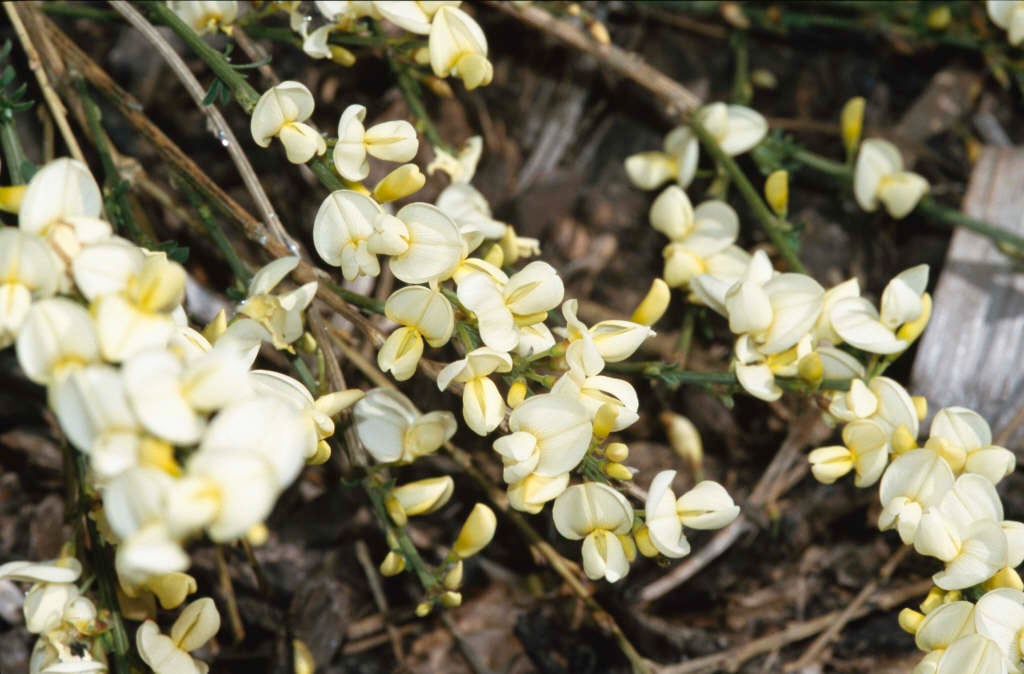
A small, prostrate deciduous shrub with arching branches. Leaves small, trifoliate; flowers cream in late spring
Position
Full sun
Soil Types
Loam, Sand
Max Height
0.1-0.5 metres
Max Spread
1-1.5 metres
RHS 1999 A small, prostrate deciduous shrub with arching branches. Leaves small, trifoliate; flowers cream in late spring
0.1-0.5 metres
1-1.5 metres
| Season | Stem | Flower | Foliage | Fruit |
|---|---|---|---|---|
| Spring | ||||
| Summer | ||||
| Autumn | ||||
| Winter |
Grow in moderately fertile well-drained soil in full sun. Will thrive in poor acid soil, and although lime-tolerant may become chlorotic on shallow chalk soils. Plant when small, they resent transplanting
Propagate by semi-ripe cuttings in late summer or early autumn and hardwood cuttings in midwinter
Minimal pruning required but pruning group 1 or pruning group 3 if necessary. Do not cut into old wood
May be susceptible to broom gall mites
May be susceptible to honey fungus