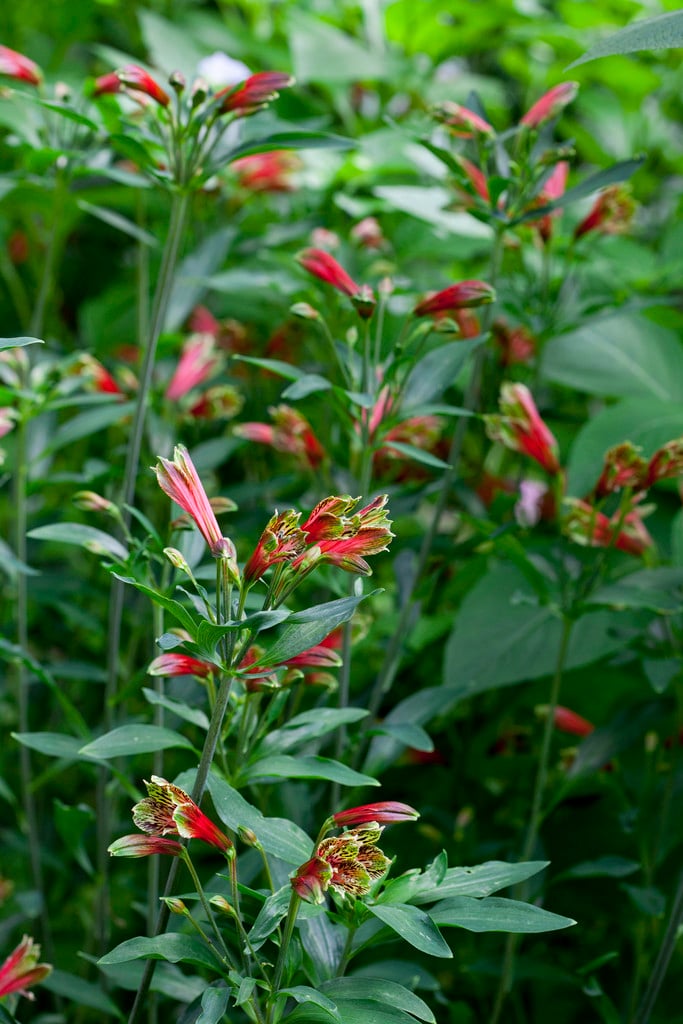
Alstroemeria psittacina

RHS Plant Profile
parrot lily
parrot lily RHS

Synonyms

Alstroemeria pulchella Sims

Plants for pollinators
Herbaceous Perennial

A clump-forming tuberous perennial to 90cm tall, with leafy mauve-spotted stems, and in summer bearing terminal clusters of narrowly funnel-shaped green flowers, heavily overlaid with crimson-red

Position

Full sun, Partial shade

Soil Types

Chalk, Clay, Loam, Sand

Max Height

0.5-1 metres

Max Spread

0.1-0.5 metres

Size

Time to Maturity
2–5 years
Max Spread
0.1-0.5 metres
Max Height
0.5-1 metres

Growing Conditions

Chalk Clay Loam Sand
Moisture
Moist but well–drained
pH
Acid or Alkaline or Neutral

Position

Full sun Partial shade
Aspect
South–facing or West–facing or East–facing
Exposure
Sheltered
Hardiness
H4

Colour & Scent

Season Stem Flower Foliage Fruit
Spring
Summer
Autumn
Winter

Botanical Details

Family
Alstroemeriaceae
Native to GB/Ireland
No
Foliage
Deciduous
Habit
Clump forming
Potentially harmful
Skin allergen. Wear gloves and other protective equipment when handling
Genus
Alstroemeria are fleshy rooted herbaceous perennials forming spreading clumps of erect stems bearing narrowly lance-shaped leaves, with umbels of showy funnel-shaped flowers in summer
Name Status
Correct
Plant Range
Brazil N Argentina

How to Grow

Cultivation

Grow in fertile, moist but well-drained soils in full sun or partial shade. Young plants are best left undisturbed to form clumps; use a dry mulch for the first two winters. See Alstroemeria cultivation

Propagation

Propagate by division in autumn or very early spring

Suggested planting locations and garden types

  • Cottage and informal garden
  • City and courtyard gardens
  • Gravel garden
  • Prairie planting
  • Wildlife gardens
  • Cut flowers
  • Flower borders and beds
  • Underplanting of roses and shrubs

Pruning

Pull up spent flowered stems, leaving tubers in ground

Pests

May be susceptible to slugs

Diseases

Generally disease-free but may be susceptible to a virus