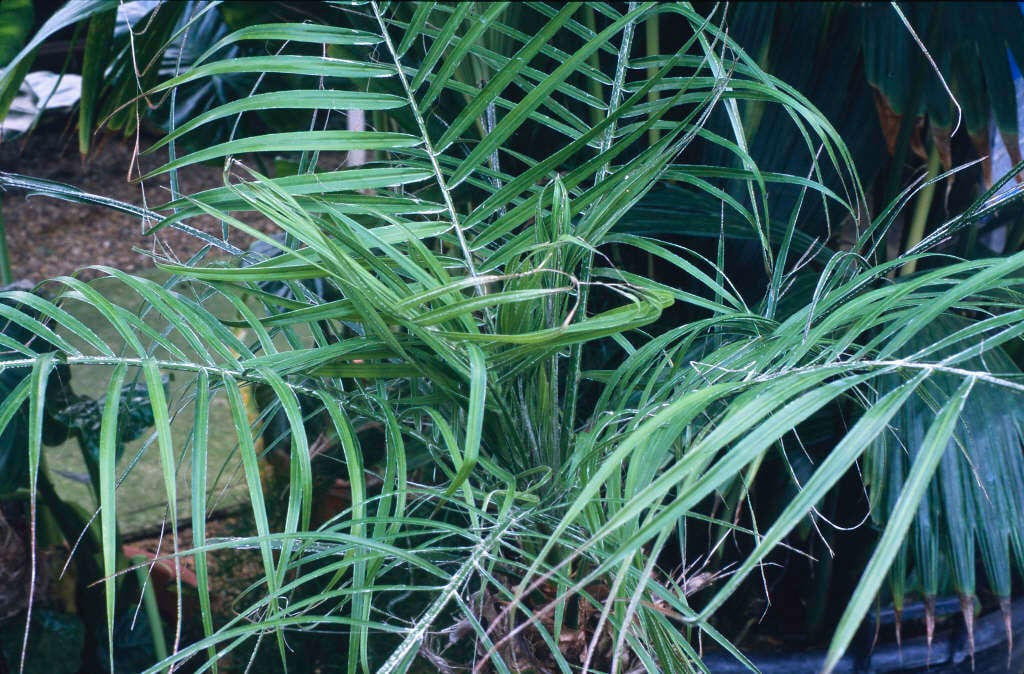
Phoenix roebelenii

RHS Plant Profile
miniature date palm
miniature date palm RHS 2002

Other common names

pygmy date palm, Roebelin palm

Award of Garden Merit
Conservatory Greenhouse Palms

A dwarf palm with a slender trunk, occasionally clustered, bearing pinnately-divided leaves to 1m in length; panicles of small yellow flowers may be followed by small edible black fruit

Position

Full sun, Partial shade

Soil Types

Chalk, Clay, Loam, Sand

Max Height

1.5-2.5 metres

Max Spread

1.5-2.5 metres

Size

Time to Maturity
20–50 years
Max Spread
1.5-2.5 metres
Max Height
1.5-2.5 metres

Growing Conditions

Chalk Clay Loam Sand
Moisture
Moist but well–drained
pH
Acid or Alkaline or Neutral

Position

Full sun Partial shade
Aspect
East–facing
Exposure
Sheltered
Hardiness
H1B

Colour & Scent

Season Stem Flower Foliage Fruit
Spring
Summer
Autumn
Winter

Botanical Details

Family
Arecaceae
Native to GB/Ireland
No
Foliage
Evergreen
Habit
Bushy
Genus
Phoenix are evergreen palms with solitary or clustered stems and narrowly oblong, pinnate leaves with linear segments, and drooping panicles of yellow flowers followed by fleshy ellipsoid fruits
Name Status
Correct
Plant Range
China to Indo-China

How to Grow

Cultivation

Grow under glass or as a houseplant in a peat-free, loam-based compost in bright indirect light with shade from hot sun. When in growth water moderately and feed with a balanced fertiliser once a month. Water sparingly in winter

Propagation

Propagate by seed sown at 19 to 24°C in spring

Suggested planting locations and garden types

  • Patio and container plants

Pruning

No pruning required

Pests

scale insect and glasshouse red spider mite may be a problem under glass

Diseases

Generally disease-free