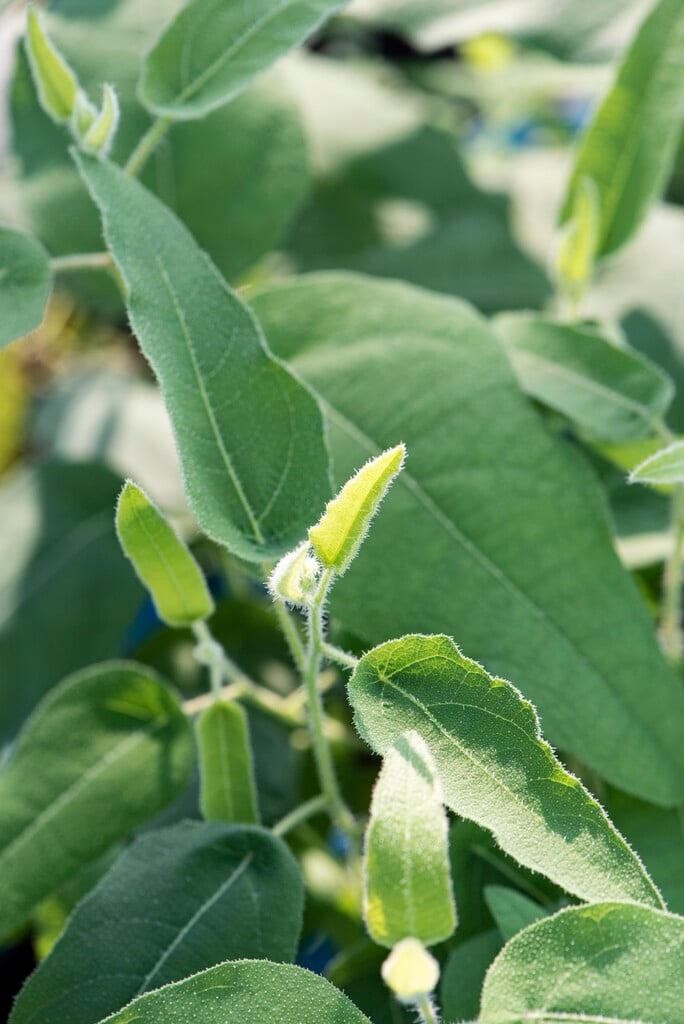
Corymbia citriodora

RHS Plant Profile
lemon-scented gum

Other common names

citron-scented gum, lemon-scented eucalyptus

Synonyms

Eucalyptus citriodora

Trees

Fast-growing, large tree reaching about 30-40m tall in the wild, with smooth, creamy-white, sometimes pinkish bark and strongly lemon-scented, very slender yellowish-green adult leaves to 16cm long. Clusters of 3 white flowers are produced throughout the year but mainly in winter

Position

Full sun

Soil Types

Clay, Loam, Sand

Max Height

Higher than 12 metres

Max Spread

wider than 8 metres

Size

Time to Maturity
20–50 years
Max Spread
wider than 8 metres
Max Height
Higher than 12 metres

Growing Conditions

Clay Loam Sand
Moisture
Moist but well–drained
pH
Acid or Neutral

Position

Full sun
Aspect
South–facing or West–facing
Exposure
Sheltered
Hardiness
H3

Colour & Scent

Fragrance Foliage
Season Stem Flower Foliage Fruit
Spring
Summer
Autumn
Winter

Botanical Details

Family
Myrtaceae
Native to GB/Ireland
No
Foliage
Evergreen
Habit
Spreading branched
Genus
A genus of around 100 species of evergreen trees, native to Australia, with green foliage, peeling bark and masses of bright red, pink or orange flowers
Name Status
Correct
Plant Range
Australia

How to Grow

Cultivation

In mild counties and frost-free areas, grow in neutral to acid soil that doesn't dry out, in full sun with shelter from winds; in frost-prone areas, grow in a cool or temperate greenhouse, in a mix of lime-free potting compost and grit, in full light with good ventilation. Water freely in spring and summer and apply a general fertiliser monthly, water sparingly in winter. See eucalyptus cultivation

Propagation

Propagate by seed at 13-18°C in spring and summer

Suggested planting locations and garden types

  • Cottage and informal garden
  • Mediterranean climate plants
  • Conservatory and greenhouse
  • Cut flowers

Pruning

Pruning group 1, or for the best display of juvenile foliage use Pruning group 7. May need restrictive pruning under glass. See Eucalyptus: pruning

Pests

May be susceptible to eucalyptus gall wasp and eucalyptus sucker

Diseases

May be susceptible to silver leaf and oedema