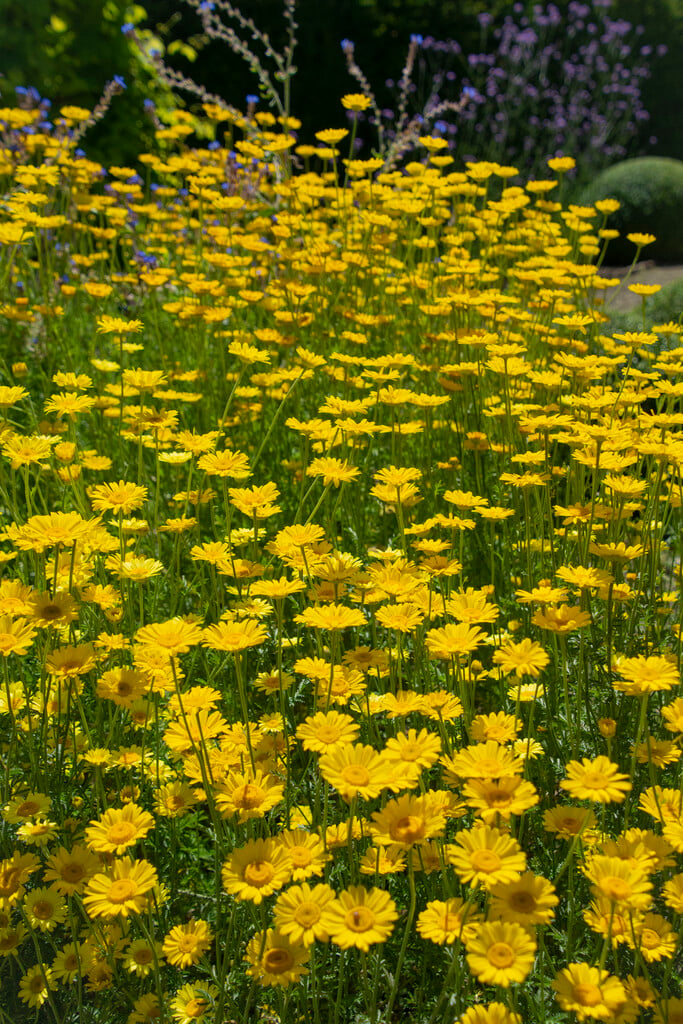
Cota tinctoria

RHS Plant Profile
dyer's chamomile

Other common names

golden marguerite, ox-eye chamomile, yellow chamomile

Synonyms

Anthemis tinctoria

Plants for pollinators
Herbaceous Perennial

A clump-forming perennial with finely divided leaves, mid-green above and downy-grey beneath. Plentiful golden yellow flowers are held on uprights stems in summer.

Position

Full sun

Soil Types

Chalk, Loam, Sand

Max Height

0.5-1 metres

Max Spread

0.5-1 metres

Size

Time to Maturity
2–5 years
Max Spread
0.5-1 metres
Max Height
0.5-1 metres

Growing Conditions

Chalk Loam Sand
Moisture
Well–drained
pH
Acid or Alkaline or Neutral

Position

Full sun
Aspect
South–facing or West–facing or East–facing
Exposure
Exposed or Sheltered
Hardiness
H6

Colour & Scent

Fragrance Foliage
Season Stem Flower Foliage Fruit
Spring
Summer
Autumn
Winter

Botanical Details

Family
Asteraceae
Native to GB/Ireland
No
Foliage
Deciduous
Habit
Clump forming
Genus
A genus of herbaceous chamomile, native to Europe, North Africa and South Western Asia. Plants have sunflower-like heads with white or yellow petals and yellow centres
Name Status
Correct
Plant Range
Europe, Caucasus, Iran

How to Grow

Cultivation

Grow in full sun in well-drained soil; it is drought-resistant and tolerant of poor soils

Propagation

Propagate by seed in pots in a cold frame in spring, by division in spring or root basal cuttings in late spring to early summer

Suggested planting locations and garden types

  • Cottage and informal garden
  • Mediterranean climate plants
  • Banks and slopes
  • Cut flowers
  • Flower borders and beds

Pruning

Cut back hard after flowering to encourage basal growth that will overwinter

Pests

May be susceptible to aphids, slugs and snails.

Diseases

May be susceptible to Powdery mildews