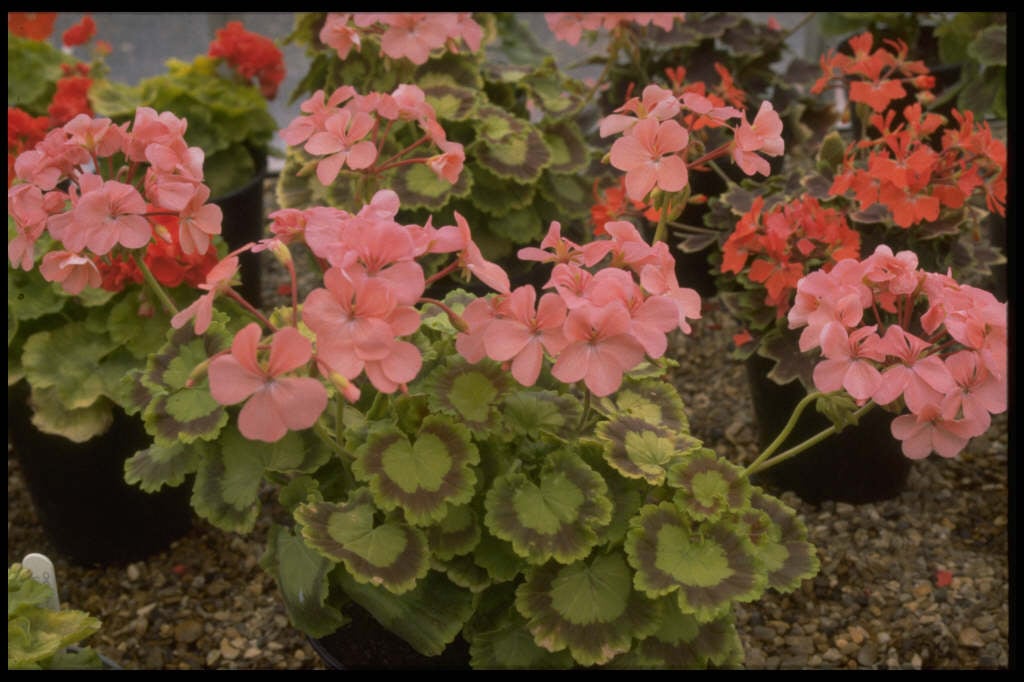
Pelargonium 'Mrs Quilter' (Z/C)

RHS Plant Profile
geranium 'Mrs Quilter'
geranium 'Mrs Quilter' www.gardenworldimages.com
Award of Garden Merit
Houseplants Bedding Conservatory Greenhouse

'Mrs Quilter' is a compact Zonal pelargonium with rounded, golden-yellow leaves, strongly zoned with bronze, and clusters of single, pale pink flowers

Position

Full sun, Partial shade

Soil Types

Loam, Sand

Max Height

0.1-0.5 metres

Max Spread

0.1-0.5 metres

Size

Time to Maturity
1–2 years
Max Spread
0.1-0.5 metres
Max Height
0.1-0.5 metres

Growing Conditions

Loam Sand
Moisture
Well–drained
pH
Acid or Alkaline or Neutral

Position

Full sun Partial shade
Aspect
West–facing or East–facing
Exposure
Exposed or Sheltered
Hardiness
H1C

Colour & Scent

Season Stem Flower Foliage Fruit
Spring
Summer
Autumn
Winter

Botanical Details

Family
Geraniaceae
Native to GB/Ireland
No
Foliage
Evergreen
Habit
Bushy
Genus
Pelargonium can be perennials, sub-shrubs or shrubs, sometimes succulent and mostly evergreen, with palmately lobed or pinnately divided leaves and clusters of slightly irregular, 5-petalled flowers
Name Status
Accepted
Horticultural Group
Zonal pelargoniums are bushy evergreen perennials with fleshy stems, rounded, palmately lobed leaves often zoned with maroon, and single or double flowers in shades of purple, red, pink, orange and white, from early to late summer

How to Grow

Cultivation

Grow in fertile well-drained soil in full sun or partial shade. Remove spent flowers. To overwinter, grow small plants in late summer from cuttings or cut back old plants by one third and lift for storage in frost-free place to repot in spring when growth resumes. See Pelargonium cultivation for further advice.

Propagation

Take softwood cuttings in summer and overwinter plants in frost free conditions or take softwood cuttings in spring

Suggested planting locations and garden types

  • City and courtyard gardens
  • Coastal
  • Cottage and informal garden
  • Patio and container plants
  • Flower borders and beds

Pruning

Deadhead regularly

Pests

May be susceptible to vine weevil, leafhoppers, caterpillars, thrips, fungus gnats and aphids

Diseases

May be susceptible to foot and root rots in wet soils, grey moulds, pelargonium rust and and a virus