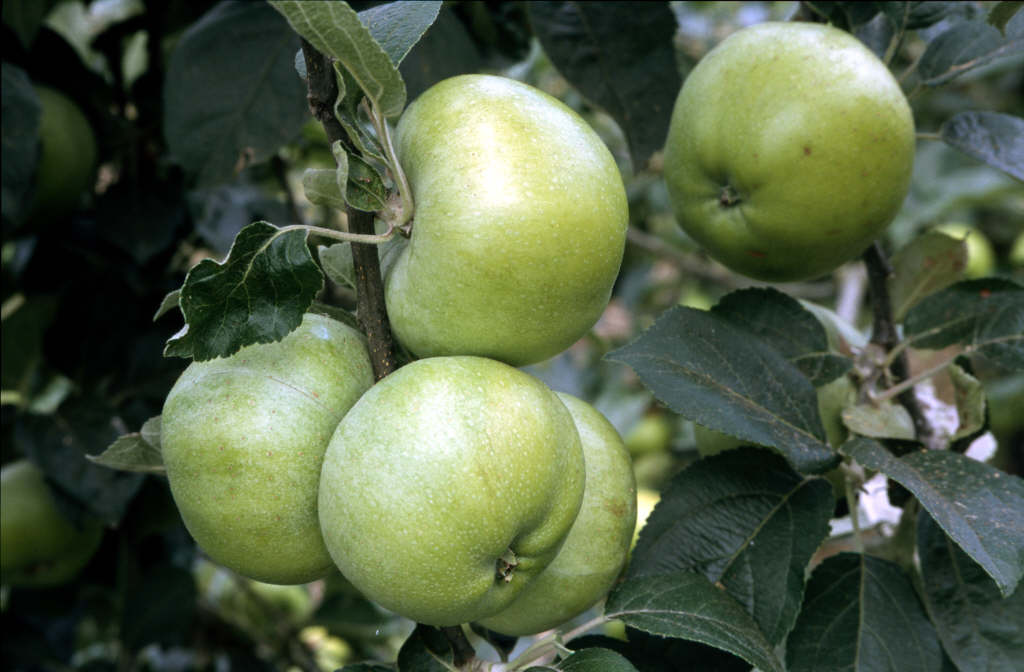
Malus domestica 'Grenadier' (C)

RHS Plant Profile
apple 'Grenadier'
apple 'Grenadier' RHS
Award of Garden MeritPlants for pollinators
Fruit Edible

A culinary cultivar in pollination group 3. Suitable for northerly, colder, higher rainfall areas. Fruits are medium to large and distinctly ribbed with a pale green skin, becoming pale yellowish-green. Cooks to sharp purée. Heavy, regular crops can be used from August to September

Position

Full sun

Soil Types

Clay, Loam, Sand

Max Height

4-8 metres

Max Spread

4-8 metres

Size

Time to Maturity
5–10 years
Max Spread
4-8 metres
Max Height
4-8 metres

Growing Conditions

Clay Loam Sand
Moisture
Moist but well–drained or Well–drained
pH
Neutral

Position

Full sun
Aspect
South–facing or West–facing
Exposure
Sheltered
Hardiness
H6

Colour & Scent

Season Stem Flower Foliage Fruit
Spring
Summer
Autumn
Winter

Botanical Details

Family
Rosaceae
Native to GB/Ireland
No
Foliage
Deciduous
Habit
Bushy
Genus
Malus are small to medium-sized deciduous trees with showy flowers in spring and ornamental or edible fruit in autumn; some have good autumn foliage colour
Name Status
Accepted
Horticultural Group
Apples suitable for culinary use have a tart flavour and are best cooked or made into a puree

How to Grow

Cultivation

It will crop best in a sunny situation. The height will depend on the rootstock and training method. Suitable for all training forms. Keep a clear area around the trunk of at least 60cm radius. Fruit thinning may be required. For more details see apple cultivation

Propagation

Propagate by chip budding or grafting onto a clonal rootstock for fruit. The rootstock used will largely determine the vigour of the tree

Suggested planting locations and garden types

  • Cottage and informal garden
  • Wildlife gardens
  • Edible fruit

Pruning

Regular pruning required - see apple pruning; spur bearing

Pests

May be susceptible to aphids, including woolly aphid and rosy apple aphid, fruit tree red spider mite, codling moth and other caterpillars