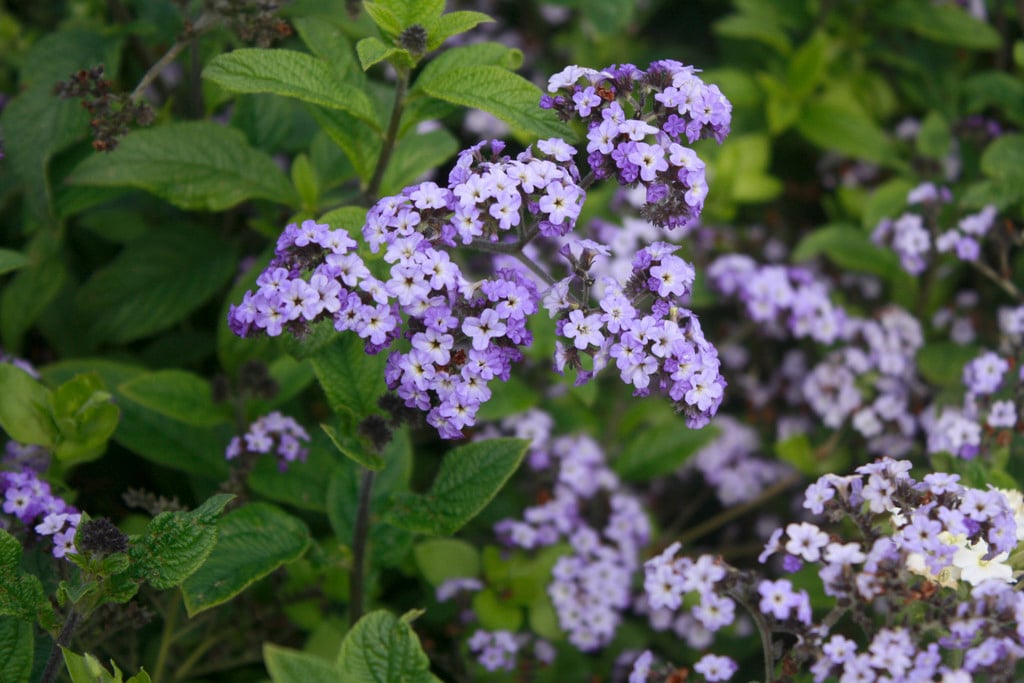
Heliotropium arborescens 'Chatsworth'

RHS Plant Profile
heliotrope 'Chatsworth'
heliotrope 'Chatsworth' RHS

Synonyms

Heliotropium arborescens 'Chatsworth Park'

Award of Garden MeritPlants for pollinators
Bedding Shrubs

A tender bushy upright evergreen shrub to 1.2m tall, with wrinkled, dark green ovate leaves and clusters of small, very fragrant purple flowers in summer

Position

Full sun, Partial shade

Soil Types

Loam, Sand

Max Height

1-1.5 metres

Max Spread

0.1-0.5 metres

Size

Time to Maturity
2–5 years
Max Spread
0.1-0.5 metres
Max Height
1-1.5 metres

Growing Conditions

Loam Sand
Moisture
Moist but well–drained
pH
Acid or Alkaline or Neutral

Position

Full sun Partial shade
Aspect
South–facing or West–facing or East–facing
Exposure
Sheltered
Hardiness
H1C

Colour & Scent

Fragrance Flower
Season Stem Flower Foliage Fruit
Spring
Summer
Autumn
Winter

Botanical Details

Family
Boraginaceae
Native to GB/Ireland
No
Foliage
Evergreen
Habit
Bushy
Potentially harmful
Pets: Harmful if eaten repeatedly. For further information and contact numbers regarding pets, see the HTA guide to potentially harmful plants
Genus
Heliotropium can be annuals, perennials, sub-shrubs or shrubs, with simple leaves and large clusters of small, scented flowers in summer
Name Status
Accepted

How to Grow

Cultivation

Under glass, grow in peat-free compost in full light but with some protection from hot sun. Outdoors grow in any moist but well-drained soil in full sun. Water moderately in the growing season and apply a balanced fertiliser once a month. In the winter keep the rootball just moist

Propagation

Propagate by seed sown in containers in spring at 16-18C (61-64F). Take softwood cuttings or semi-ripe cuttings in summer

Suggested planting locations and garden types

  • City and courtyard gardens
  • Coastal
  • Cottage and informal garden
  • Patio and container plants
  • Wildlife gardens
  • Sub-tropical
  • Flower borders and beds
  • Conservatory and greenhouse

Pruning

Tip-prune shoots on young plants in early spring to promote bushy growth. Older leggy plants can gave their stems shortened by half in spring

Pests

Glasshouse whitefly may be a problem if grown under glass

Diseases

Generally problem free