Why gardening is great exercise for both body and mind
Keeping active and engaged in the garden boosts your fitness and improves overall physical wellbeing. It is a natural – and cheaper – alternative to the gym

As 69% of women report burnout, one Swedish garden offers a place to rest, reflect and grow strong again
"Gardening involves working with living material, which doesn’t demand anything from you beyond what you want to give."
Burnout has become a global health crisis, affecting people across ages and professions. Recent research found that women (69%) are more likely than men (56%) to feel burned out. This is often driven by long work hours, caregiving responsibilities and the pressure to excel both professionally and personally.
“We hear the same story again and again,” says Anna María, who conducts scientific evaluations of nature-based rehabilitation programmes in several locations across Sweden. “People – especially women in education, healthcare and social work – are being asked to do more with fewer resources. Eventually, they crash.”
"People – especially women in education, healthcare and social work – are being asked to do more with fewer resources. Eventually, they crash."
But burnout isn’t exclusive to women. Men are also increasingly affected, though often less likely to seek help.
“It used to be mostly mid-career women,” Anna María explains, “but now we’re seeing much younger people , and more men, too. Some are students in their 20s. Others are professionals who don’t realise how depleted they are until they physically can’t go on.”
In the past year, 22% of men said that they needed time off work due to poor mental health caused by pressure or stress. However, cultural norms around masculinity may discourage them from acknowledging stress or pursuing support – especially emotional or psychological help. This is where nature-based therapy can offer a unique bridge.
“Gardening doesn’t require you to talk,” Anna María says. “You can just show up and start working with your hands. For some men, that non-verbal space is essential.”

At the Alnarp Rehabilitation Garden , the landscape is more than beautiful – it’s therapeutic by design. Every path, planting bed and seating area has been carefully planned using research from environmental psychology and occupational therapy.
“The garden is divided into different rooms,” says Anna María, the researcher behind the programme. “Some are open, others secluded. It gives people the choice of social connection or solitude, depending on how they feel that day.”
Paths are soft underfoot to naturally slow the pace. Colour schemes are calm and natural. There are areas to gather and areas to disappear – both physically and emotionally.

The programme, which runs in 12-week cycles, uses gardening as a foundation for healing. Activities follow the rhythm of the seasons and the life cycle of a plant:
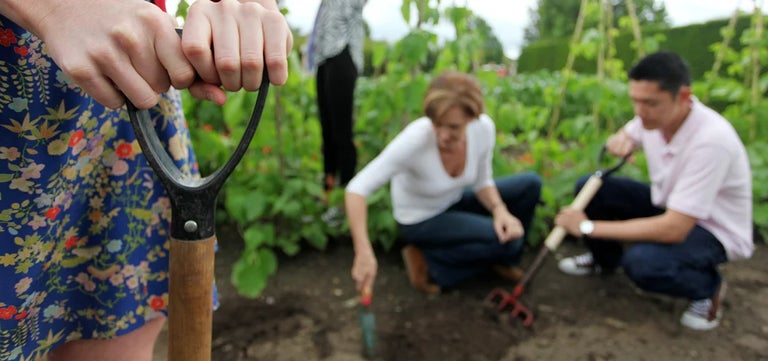
Participants begin by preparing the soil – breaking up clumps and smoothing it for planting.
“Sometimes, that’s the whole task for the day,” Anna María says. “It’s very sensory. And while their hands are busy, their thoughts can settle.”
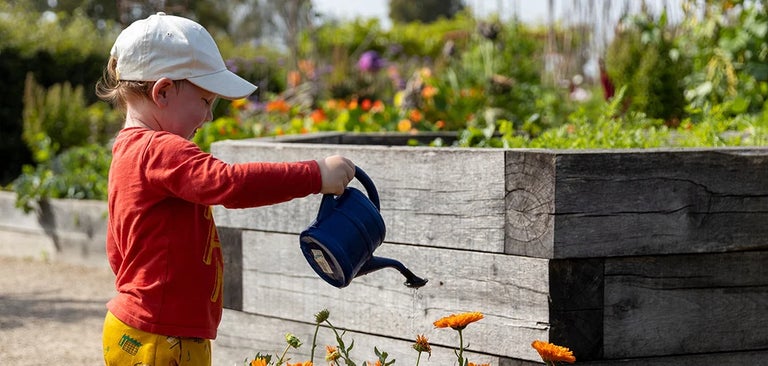
Simple routines like watering, weeding and harvesting help participants reconnect with their senses – and with themselves. The tasks are small, but their effect is often big.

“By week eight, we often see a shift,” Anna María says. “That’s when participants start moving from pure recovery into deeper reflection. They’re not just resting anymore – they’re rebuilding.”
For those recovering from burnout, the garden offers more than activity – it provides structure, routine and a sense of safety. Each day begins with tea, check-ins, and an outline of gentle tasks, from watering to harvesting to preparing simple meals using garden-grown herbs and vegetables.
Notably, the programme includes time to not finish tasks – a subtle but powerful challenge to perfectionism, especially among women conditioned to overachieve.
Anna María and her colleagues have noticed a shift in who seeks help – and how.
“We’ve had psychiatrists come through the programme who know every stress-reduction technique, but still can’t unwind,” she says. “The garden works in a different way. It allows people to slow down and reconnect without pressure.”
This applies equally to men and women, young and old, professionals and students. The burnout may look different, but the recovery often shares a common thread: time, nature and the chance to just be.
Anna María recommends starting with plants that are sensory-rich and forgiving.
“Pelargoniums are fantastic,” she says. “They root easily, smell interesting and everyone can find one they like. That sense of discovery and success matters.”
Other recommended plants include:
Anna María is clear that horticultural therapy doesn’t replace clinical care. But as an integrated part of recovery, it offers something medicine often can’t: slowness, simplicity and non-verbal healing.
“I’d love to see it used more often,” she says. “We’ve never seen a negative effect from time spent in the garden.”
With more programmes launching across Sweden and Denmark – and increased recognition in the UK and beyond – this approach to burnout recovery is finally beginning to bloom. Across Sweden, other municipalities, farms, and even forests are offering similar programmes.
“We’re learning how to manage forests and green spaces not just for conservation, but for human health,” says Anna María. “It’s part of a field called evidence-based health design.”
You don’t need a big garden to start.
“Even one pot on your windowsill is enough,” Anna María says. “Touch the soil, care for something living, watch it grow. That’s where healing can begin.”
If you’re struggling with stress or burnout, speak to a healthcare provider. In the south of Sweden, general practitioners can refer patients to nature-based rehabilitation programmes.
And for anyone feeling overwhelmed: there’s power in slowing down. In digging your hands into the earth. In letting nature set the pace.
About the author - Charlotte Olver
Charlotte Olver is a garden writer who explores how gardening supports wellbeing. Blending science with storytelling, her work highlights nature’s role in healing and celebrates the garden as a place of restoration, resilience and belonging.