Growing Geranium Rozanne at school to support wildlife
Give pupils first-hand experience of providing food for pollinators and creating a habitat for invertebrates.
.png?width=640&height=640&ext=.png?width=700)
Quick facts
Learning objectives:
- Geranium Rozanne provides food for pollinating insects
- Geranium Rozanne provides a micro-habitat for invertebrates
- Science: how animals obtain food from plants, micro-habitats
- PSHE: how pupils can help look after their environment, how everyday choices can affect the environment
Jump to
Providing food for pollinating insects
Pollinating insects, including bees, hoverflies and butterflies, feed on the nectar in the Geranium Rozanne flowers. The nectar gives them the energy they need to fly, mate and lay eggs. Some insects will also feed on the pollen.
Geranium Rozanne has lots of flowers on each plant, providing plenty of nectar for insects. It also has flowers from early summer through to autumn, so they can feed for a long time.
Why are some insects attracted to the flowers?
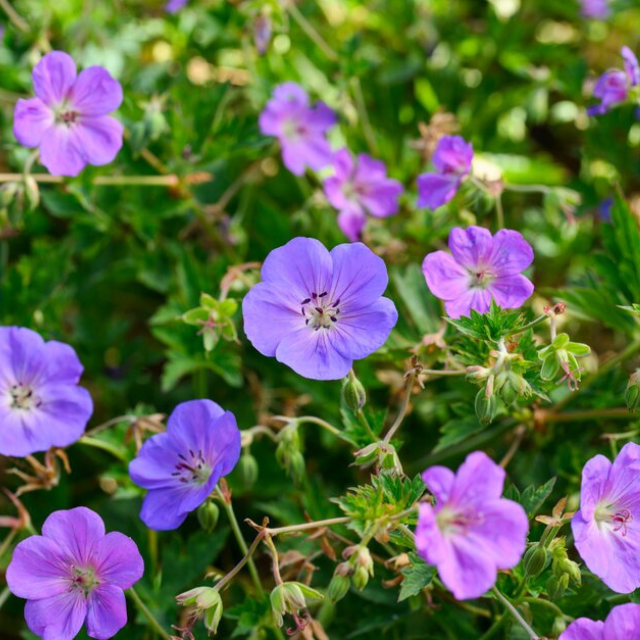
Bees can see shades of blue very well, so the flowers’ blue-violet colour is very attractive to them.Geranium Rozanne flower showing saucer-like shape
The flowers are an open saucer shape. This makes it easy for pollinating insects to land on them and feed. The flowers are also shallow, making them ideal for short-tongued bees like the early bumblebee, honeybees and solitary bees, as they are able to reach the nectar.
Creating micro-habitats for invertebrates
Geranium Rozanne leaves growing close to the ground
How to grow Geranium Rozanne at school
In winter, the leaves die down to the ground, then in spring they reappear, ready for the plant to grow again, so there’s no need to buy more plants each year.
Reflection questions
- Have you noticed any micro-habitats at your school?
- Have you spotted any insects visiting flowers at school? If so, did you notice what colours the flowers were?
Key words
| Invertebrate | An animal that doesn’t have a backbone (spine) e.g. insects, spiders or worms. |
| Mate | When a female has partnered with a male to produce young. |
| Nectar | Sweet liquid mainly produced by flowers to attract pollinators. |
| Pollen | Dust-like grains produced by the male part of the flower. |
Get involved
The RHS is the UK’s gardening charity, helping people and plants to grow - nurturing a healthier, happier world, one person and one plant at a time.