Growing nasturtiums in a school garden to support large white butterflies
Teach butterfly life cycles and food chains by supporting butterflies with food for their caterpillars.
Quick facts
Learning objectives:
- Understand the life cycle of a butterfly
- Describe a simple food chain
- Explain how growing nasturtiums in school grounds can help large white butterflies
Curriculum links:
- Science: how animals obtain food from plants and other animals, food chains (identifying producers, predators and prey), insect life cycles
- PSHE: how pupils can help look after their environment, how everyday choices can affect the environment
Jump to
Why grow plants for butterflies?
Different types of caterpillars feed on different types of plants. Some types of caterpillars have a very narrow diet and will only eat one or two types of plant. For example, small tortoiseshell butterfly caterpillars mainly eat nettles.
Why are caterpillars important?
- Caterpillars are an important part of food chains (see food chain diagram below). This is especially the case for birds, such as bluetits and robins, which feed them to their chicks
- The butterflies and moths they become are pollinators, helping plants produce seeds that grow into new plants
Large white butterfly catterpillar as part of a food chain
Large white butterfly life cycle
As the days and weeks pass, the caterpillars eat more and more leaves, growing larger. As a caterpillar grows, its skin does not grow with it. To become larger, it must shed its skin. Large white butterflies shed their skin five times; after the fifth, they are fully grown.
Female large white butterfly laying eggs on a leaf
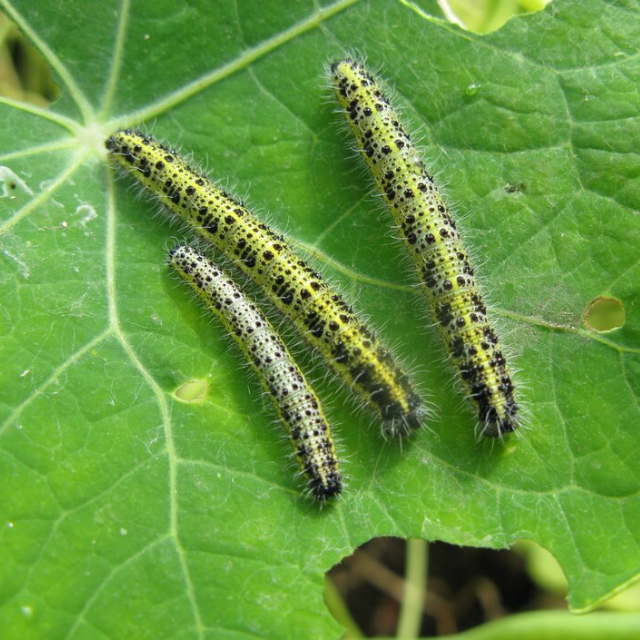
Large white butterfly caterpillars eating nasturtium leaves
Large white butterfly pupa
Large white butterfly life cycle
How can you help large white butterfly caterpillars?
Nasturtium plant, showing flowers and leaves
Large white butterfly adult
Reflection questions
- Have you seen any butterflies or caterpillars in your school grounds recently?
- Can you think of a place at school where you could grow nasturtiums for caterpillars?
Key words
| Mate | When a female has partnered with a male to produce young. |
| Nectar | Sweet liquid mainly produced by flowers to attract pollinators. |
| Pollen | Dust-like grains produced by the male part of the flower. |
| Predator | An animal that hunts, kills and eats other animals. |
| Primary consumer | A living thing that can’t make its own food, so must eat plants to get the energy it needs. |
| Producer | A living thing that makes its own food instead of eating other living things, for example green plants. |
| Secondary consumer | An animal that eats a primary consumer. |
Get involved
The RHS is the UK’s gardening charity, helping people and plants to grow - nurturing a healthier, happier world, one person and one plant at a time.