Plant a pear tree to give birds at your school food and shelter
Support pupils’ understanding of the role of trees as bird habitats
Quick facts
Learning objective:
- Understand how planting a pear tree can provide habitat for a variety of birds
- Science: habitats and how animals obtain food from plants
- PSHE: how pupils can help look after their environment and how everyday choices can affect the environment
Jump to
Creating a habitat for birds
How does a pear tree provide food?
Pear trees support birds with food in two ways. The first is by providing flower Flower buds
Bullfinches eat flower buds in the spring before the flowers open.
Flower buds
© iStock.com/MikeLane45
Bullfinch
Ripe or fallen pears
Pears and their seeds are eaten by many different birds including wood pigeons, starlings, thrushes, redwings, magpies and lesser spotted woodpeckers.
Pears
Wood pigeon
Part of the tree which provides food for invertebrates which birds then eat
FlowersPear tree flowers provide nectar for moths and butterflies. This gives them energy to fly, mate and lay eggs. The caterpillars that hatch from the eggs provide food for birds.
Pear tree blossom
© IStock.com/BriBar
Blackbird
Leaves
Pear tree leaves provide food for the caterpillars of moths such as the Leopard, Brindled Beauty and Eyed Hawk moths. Birds such as blue tits, blackbirds, woodpeckers and robins then eat the caterpillars.
Pear tree leaves
© IStock.com/Tom Meaker
Blue tit
Fallen leaves
In autumn, the leaves fall off the tree, creating a layer of leaf litter on the ground. Leaf litter is a habitat for invertebrates including earthworms, woodlice, spiders and beetles. These invertebrates may then be eaten by birds, including blackbirds, robins, song thrushes and wrens.
Fallen leaves under a pear tree
© IStock.com/Dave Dunn
Song thrush
Tree bark on older trees
Insects can hide in cracks and crevices in the
Pear trees
© IStock.com/Peter Clayton Photography
Nuthatch
How does a pear tree provide shelter?
Pear trees give birds a place to rest, sleep and nest, away from harsh weather and predators. Different sized pear trees provide shelter in different ways.Leaves and branches
Leaves and branches can provide protection from wind and rain and help small birds stay hidden from predators.
Leaves and branches on larger trees
Leaves and branches on larger trees provide places for birds to build their nests and raise their young. Some birds will roost (rest and sleep) in their branches.
Pear tree leaves and branches
Pear tree
Singing perches
Robin perching on a branch to sing
Choosing which pear tree to plant
Pear tree trained against a fence
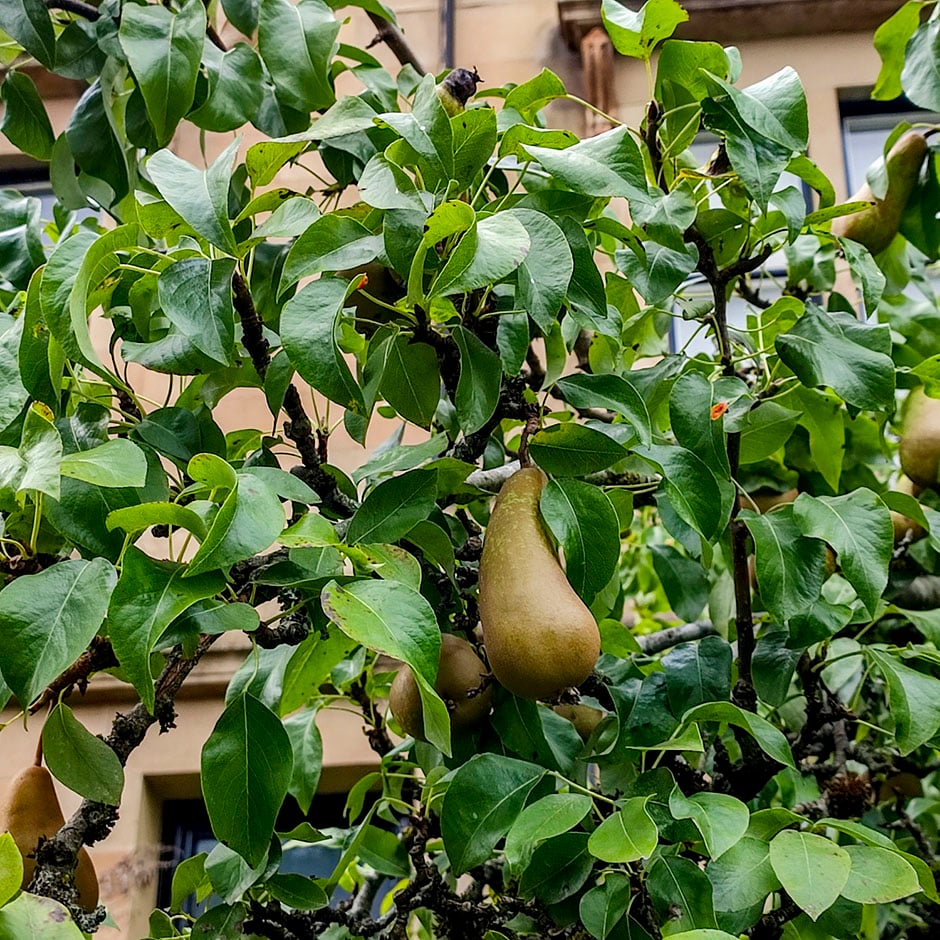
Pyrus communis ‘Concorde’ on a dwarfing rootstock is recommended for school growing. This tree is on the RHS Plants for Pollinators list and is known to benefit pollinating insects such as bees, butterflies and moths. Due to its compact size, it can be grown in pots or trained as a step-over tree.
- Choose the best location for your pear tree to ensure healthy growth and a good harvest
- Learn how to grow pear trees in containers when space is limited
- Follow guidance on planting pear trees into the ground in school gardens
Reflection questions
- Where can birds can shelter and find food in your school grounds?
- Is there anywhere a pear tree could be planted to provide a habitat for birds?
Additional information
Key words
| Invertebrate | An animal that doesn’t have a backbone (spine), e.g., insects, spiders, worms, slugs |
| Mate | When a female partners with a male to produce young |
| Nectar | Sweet liquid mainly produced by flowers to attract pollinators |
Get involved
The RHS is the UK’s gardening charity, helping people and plants to grow - nurturing a healthier, happier world, one person and one plant at a time.