How to master Ikebana‚ the Japanese art of flower arranging
Learn the basics of ikebana, the Japanese art of flower arranging, with this simple step-by-step guide using seasonal stems, graceful shapes and mindful composition
Melissa Mabbitt
Executive Editor, The Garden
5-minute read
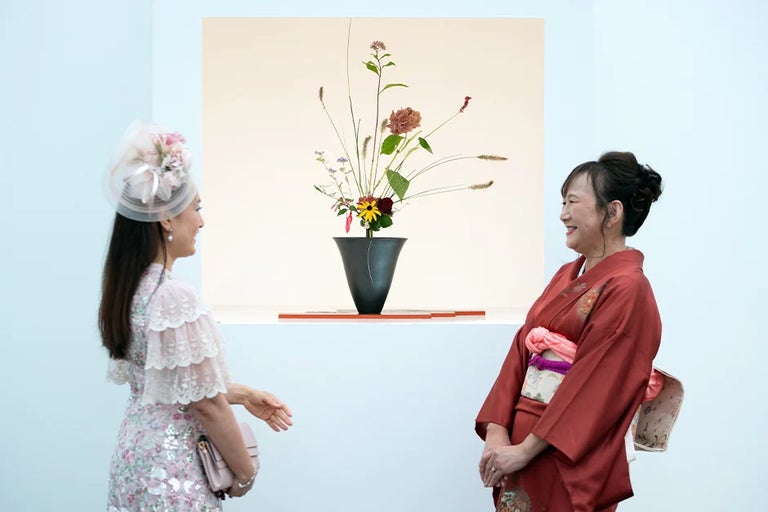
Ikebana is the Japanese art of flower arranging, focusing on shape, balance, seasonality and simplicity. Unlike traditional bouquets, ikebana highlights the individual beauty of each stem and leaf, encouraging you to slow down and appreciate the character of every plant material you use.
The aim is to create harmony – using carefully chosen stems, negative space and asymmetrical balance to create a natural, sculptural arrangement.
What you’ll need
A tall vase or container
A kenzan (pin holder) or floral support
Gravel or Blu-Tack
Water
Secateurs
Seasonal stems and foliage
How arrange ikebana
Step 1.
A tall container is best for a slim arrangement. Fill it three quarters with gravel to raise the internal level if needed. Nestle a kenzan (a metal base with wire pins) in the gravel or Blu-Tack it to the base of the pot. Top up with water.
Step 2.
Select the stems that form the basis of your design. Here it’s the pussy willow. Focus on placing the long stems first – just two or three are needed. Push them straight into the kenzan then tilt them to one side to create an elegant angle.
Step 3.
The stems should be asymmetrically arranged, but also balanced. Consider the negative space around them. To make the stems arch more gracefully into the space you desire, gently grasp them, bending them gradually, all the way along.
Step 4.
Introduce the secondary material. Like these faded iris leaves, this should complement the first main material, not distract from it. Make sure you can see space around each leaf, so as to appreciate their innate character.
Step 5.
In traditional ikebana, Narcissus should have one flower stem and four leaves – you can combine these in a piece of the lower stem – known as the sheath – to make the right amount. Try to preserve the leaves’ powdery coating as you work.
Step 6.
Remove individual florets from each cluster of flowers to leave just two or three – you should be able to appreciate the delicate shape of each bloom. Add two or three flowers at the centre of your design to bring in the focus.
Step 7.
The final arrangement is graceful and natural-looking. The shape of the willow stems and iris leaves echo each other as if they have been caught by the same breeze. Display ikebana with plenty of space around it to allow you to imagine the plants reaching for the sky.
Ikebana doesn’t require expensive flowers or specialist training. A single branch, a few garden stems and a thoughtful approach can be enough to create an arrangement that reflects the season and encourages a moment of calm.