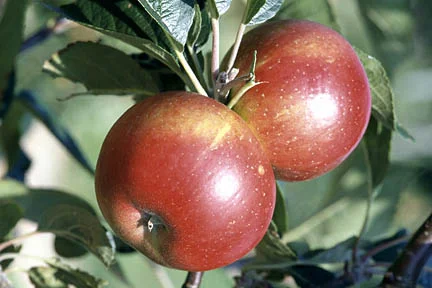
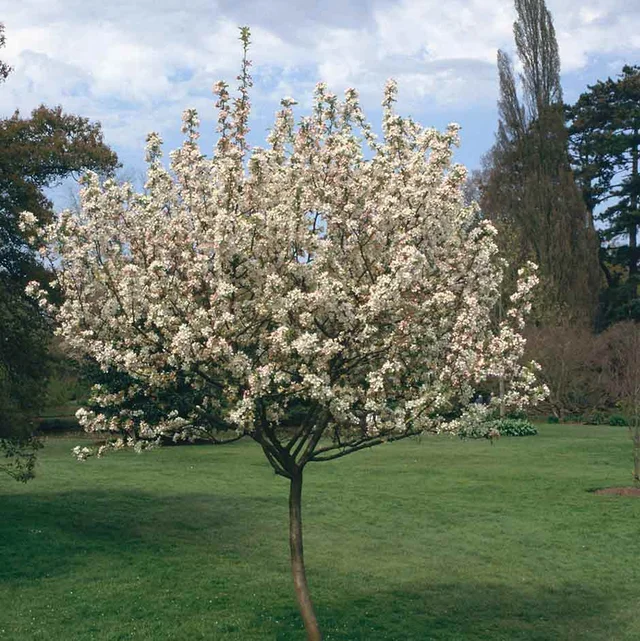
How to choose and plant an apple tree
There's an apple tree for every garden, no matter how large or small. Read our RHS help and advice on how to select and plant the perfect variety for your needs

With flavours that simply can’t be matched, homegrown apples are better for you and the planet. By choosing the right varieties, you could be enjoying them almost all year round
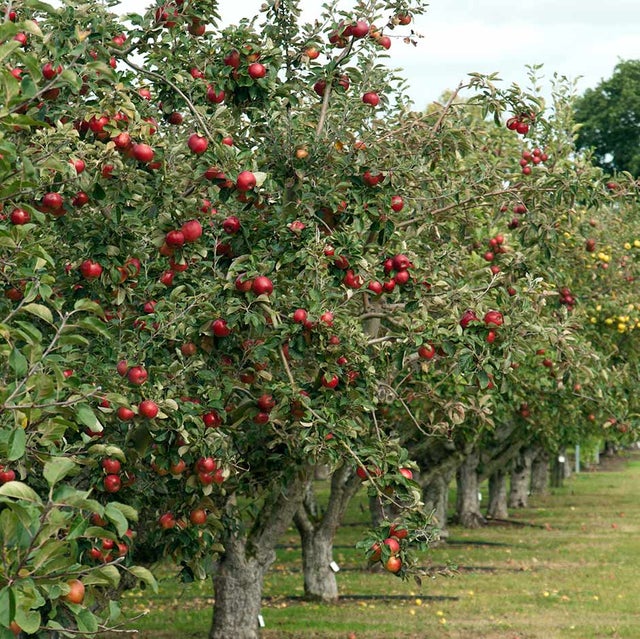
Grow a handful of carefully chosen apple trees and you might never have to buy apples again. RHS apple expert Jim Arbury explains how, through selecting varieties that crop early as well as those that store well, you can extend your homegrown apple season to cover most of the year.
"Seven to eight months of apples – August to March – is very realistic for most people"
“You can get some apples in July, particularly in the South of England, and some that will keep through until April, May or even June,” says Jim. “So you can potentially reach up to 11 months by beginning harvesting in July and and finishing up the last of your stored apples in June.”
“To get the longest season out of your apples you need to choose some that start cropping in July and August,” says Jim. “Many of these very early ones are old varieties, because there hasn’t been much modern breeding for early apples – they’re either long–stored or imported from the southern hemisphere for that time.
“One of the old varieties that ripens early is ‘Beauty of Bath’, around late July, along with an American variety called ‘Stark’s Earliest’. At the other end, one of the longest-storing apples is ‘French Crab’, which ripens late and can store until June. Then you ideally need a sequence of a few other varieties to cover the timeframe in between.
“With warmer weather, apples are ripening earlier, but it’s unpredictable,” says Jim. “2024 was wetter and not so hot, so they weren’t so early. In 2025, everything started ripening early.”
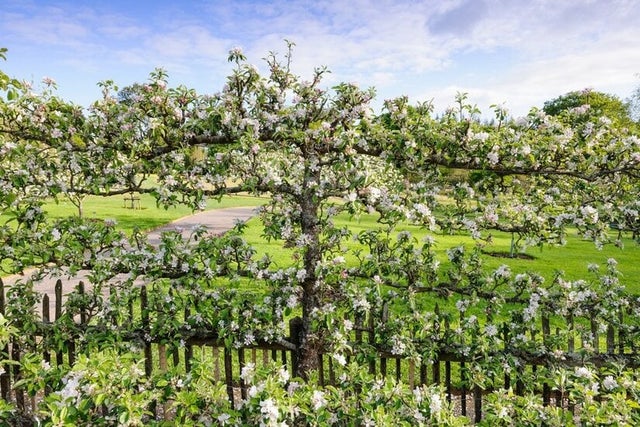
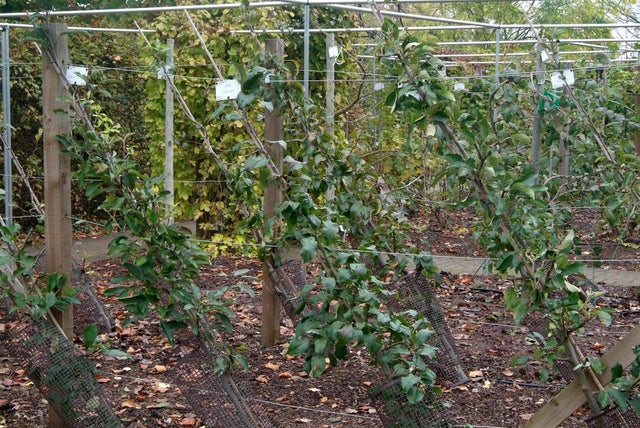
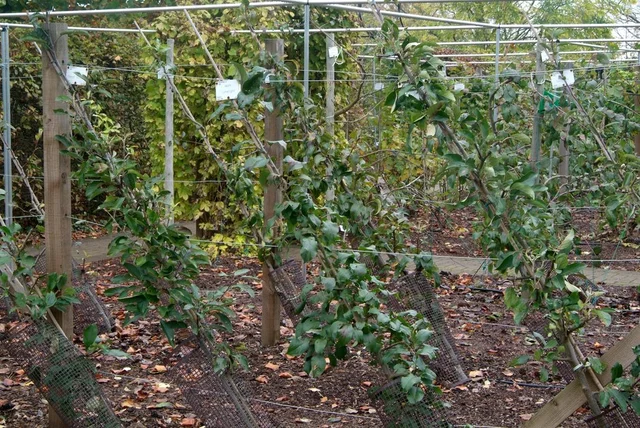
“You can fit five apple trees into the length of two fence panels if you grow them as cordons, each 75cm apart,” he says.
How to get 11 months of apples from five trees
If you only have space to plant five apple trees, planting the following varieties could give you up to 11 months of apples with the right storage:
“If you have space for more than five apple trees, choose more of the late-storing ones,” says Jim. “You have a longer window to eat these – and warmer autumns are hindering storage of early apples.”
As well as ‘French Crab’ and ‘Sturmer Pippin’, ‘D’Arcy Spice’, ‘Pixie’, the cooking apples ‘Bramley’s Seedling’, ‘Edward VII’, ‘Woolbrook Russet’ and ‘Howgate Wonder’ (a dual-purpose cooker and eater) can all keep until March or April, so any of these are good extras to add if you have space for more than five trees.
“Getting storage conditions right is important for achieving long storage,” says Jim. “It needs to be cool but frost-free, dark and mouse-free. A shed or garage often works well, ideally a north-facing one to keep cool – it wants to be as cool as possible without dropping below 4°C.
“If you’re building a shed specially, build it somewhere shady, under trees or behind the house. Insulate to keep it cool in summer and above 4°C in winter. For , put a small opening covered with very fine mesh high up in the wall.

“Store the apples in stacking trays – you can buy wooden trays or use mushroom trays or similar that are often thrown away by market stalls, restaurants and other shops that get deliveries of produce. Removable, stackable trays work best as they are easier to clean than fixed storage.
“Apples will keep for even longer in the fridge, so try keeping a few there for super-long storage. Just make sure the temperature isn’t below 4°C, as apples will sustain cold damage – though pears will be fine down to 0°C. If it’s a fridge you don’t use much for other things, open it from time to time to exchange air and prevent carbon dioxide levels getting too high in the fridge, which can also cause damage.
“Don’t forget you can also store apples in the form of juice, cider, dried apple slices and more.”
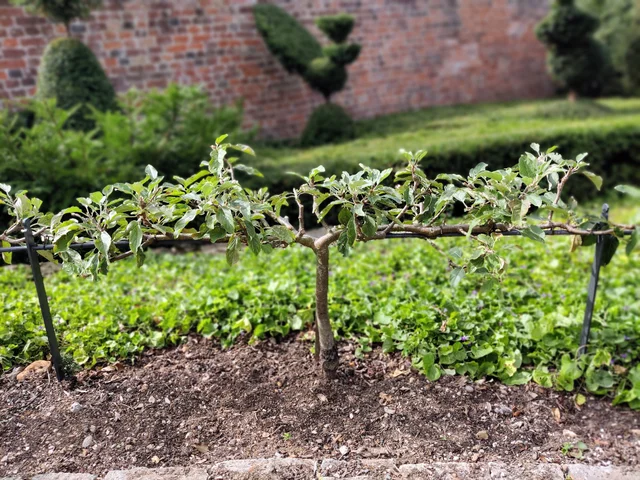
“You don’t need lots of space to grow apples,” says Jim. “You can grow them on allotments, patios, courtyards, in pots and in community orchards, which are really valuable in cities. Not all allotments allow large trees, so check the regulations for yours and grow apples as stepovers and cordons if necessary.
“You can make good use of walls, fences, archways and stepovers, which are particularly good for early apples.
“You can also grow an apple tree successfully in a pot. Choose a tree grafted onto a dwarfing or semi-dwarfing rootstock – M26 or M9. A pot naturally restricts growth, so a very dwarfing rootstock like M27 can actually be too much on top of that, leading to weaker growth.
“Feed it regularly with liquid seaweed from spring to early autumn. Repot it every few years when dormant in late winter – even if it’s back into the same pot. Just refresh them by trimming some of the roots and putting in some fresh peat-free .
“If you only have room for one tree, ‘Red Falstaff’ is a great choice. It’s more or less self-fertile, and will give you crisp, crunchy, juicy and fairly sweet apples from October to January.”

“You may already have some apples in your garden that you could store for longer. ‘Granny Smith’, for example, will keep a long time and though it’s not one I would necessarily choose to plant, you do find it in gardens already and it actually gets better the longer you store it.
‘Braeburn’, which is also quite commonly found in gardens, will also keep for a long time with the right storage,” says Jim.
Apples may be readily available year-round in the supermarket, but there are numerous benefits to growing your own.
1. New flavours
“One of the best things about growing your own apples is that you get to experience different flavours,” says Jim. “There is a huge range available to you compared to what’s sold in the supermarket, and you can choose the ones you most like to eat.”
To find your favourites, try going to an organised autumn ‘apple tasting’ event, or head to a local farm shop and buy one of each apple that’s grown in the UK to do your own tasting at home.
2. Better for the environment
“Growing your own apples is also better environmentally,” says Jim. “For example, in a supermarket you might buy a ‘Braeburn’ that has been grown in the southern hemisphere, refridgerated for storage and then transported halfway around the world.
“At the same time, you could be eating a recently picked ripe ‘Discovery’ apple from your own garden, with no food miles.”
3. Grown without
A 2015 study by Greenpeace found that 83% of non-organic apples in European supermarkets contained one or more pesticide. A total of 42 chemicals were identified in the 109 apples tested. The most common pesticide was chlorpyrifos – a nerve agent – which was found in 14% of them.
“When you grow your own apples you know exactly how they’ve been treated, and that they won’t have been sprayed with anything whatsoever,” says Jim.
4. Cheaper in the long run
“By planting a few apple trees, you save money in the long term,” says Jim. Buy the trees bare root between November and March for the cheapest prices and best establishment, and well-cared-for trees will supply you with apples for a lifetime.
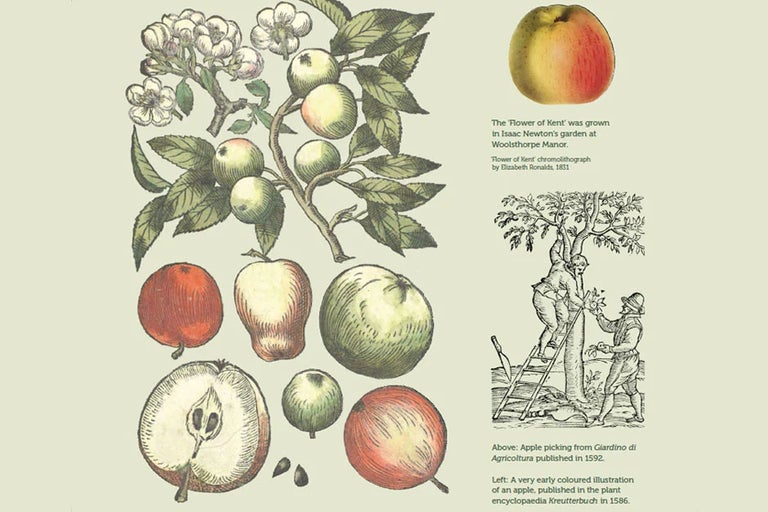
5. Helping to conserve heritage varieties and social history
It’s not just wild plants that can be endangered – cultivated plants can be, too, with cultivars risking being lost forever if gardeners no longer choose to grow them.
“Growing apple trees gives you the opportunity to help to conserve social history by choosing local varieties,” says Jim. “You could grow varieties from your region, or those with a family connection, to help keep flavours alive for future generations.”

About the author – Olivia Drake
With a background in biology, Olivia is passionate about sustainable horticulture, biodiversity and the role gardening can play in conservation. She is trained as a botanical horticulturist and previously worked in public gardens around the UK and abroad.