Nature’s role in the recovery process
Carol Klein on breast cancer, the climbing rose that got her through recovery, her new memoir – and bath time with John Lennon

Anna Allerton, TV producer turned executive coach, discusses workplace stigma, the second spring and the supporting role gardening and nature plays for menopausal women
Anna Allerton started to experience severe symptoms of perimenopause in her late 30s while on maternity leave with her second daughter. These symptoms worsened on her return to work and led her to leave her job.
“I was a sports journalist and TV producer for 20 years,” says Anna. “I had to quit my job in live TV due to the symptoms I experienced. I struggled with anxiety, insomnia, night sweats, heart palpitations, a loss of confidence and dips in levels of joy. I experienced brain fog, and peaks and troughs in anger. I didn’t recognize myself.
“At its worst, I thought I was going mad. The stress of a newborn, a toddler and a senior high-pressure job meant that the symptoms were ramped up and it became difficult to manage. I thought this was my new normal and I would have to learn to live like this.”

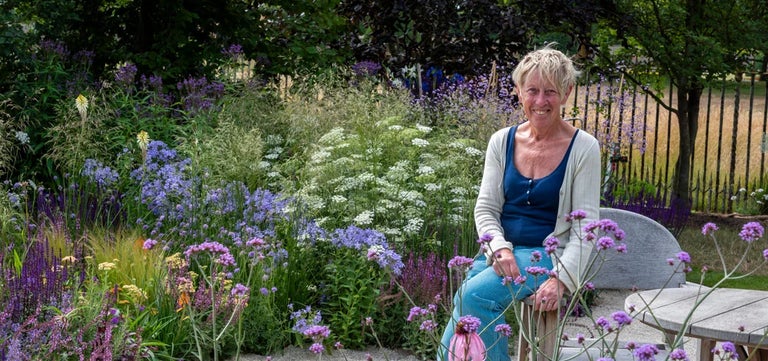
During this time gardening and nature became a sanctuary for Anna, and it remains an essential part of her toolkit for coping with her symptoms.
“I’ve always been a keen gardener, but I think I’ve become more attuned to how gardening calms my mind,” says Anna. “Gardening afforded me peace and calmness, but it also gave me something I could control.
“There is something powerful about the effect of nature on wellbeing. There’s nothing better than fresh air, walking barefoot on the grass and breathing and feeling present. I don’t think it matters whether you are in an inner city or in the middle of the countryside. We don’t have a massive garden here.”
A New Zealand study published in the Journal of Therapeutic Horticulture in 2000, surveyed 145 middle aged women gardeners who reported many psychological and emotional benefits. 42 per cent of these women were perimenopausal, of whom many had hysterectomies, and 43 per cent were post-menopausal.
Participants felt that gardening enhanced their wellbeing and offered them a source of physical exercise. They also saw gardening as a therapeutic tool for stress release, a source of spiritual connection and an activity which provides them time for reflecting, problem solving and allowing expressions of creativity, freedom and control.
After a year of tests and doctors telling her she was too young to be experiencing perimenopausal symptoms, Anna was referred by her GP and started treatment with a menopause expert. The NHS estimates that the average age of women going through the menopause is 51, but around one in 100 people experience the menopause before the age of 40.
"Young mums with symptoms of perimenopause often feel locked out of the conversation, aged out almost."
“Young mums with symptoms of perimenopause often feel locked out of the conversation, aged out almost,” says Anna. “If you have young kids and are dealing with toddler tantrums, potty training and weaning, alongside insomnia, anxiety, rage and loss of confidence you can begin to feel like you are a rubbish parent, and then the mum guilt really starts to set in.”

When Anna was on maternity leave, the allotment became somewhere she could walk to with her then-two-year-old and baby in the buggy, for a bit of peace.
“It gave me a space to nurture my eldest child by getting muddy, planting things and getting involved with watering,” says Anna. “My husband built a small pond, and we did lots of activities with the kids to try and encourage wildlife.”
“My now six-year-old daughter still asks on the school run if we can go and check on the tadpoles. It’s created a nice legacy.”

One of Anna’s biggest challenges has been around adjusting her diet, particularly her relationships with alcohol and caffeine.
“Making these small changes has made me feel empowered and that I’m doing something for my health,” says Anna. “It has encouraged me to try new things.
"As an amateur allotmenteer, it’s satisfying to grow and eat food that’s good for me."
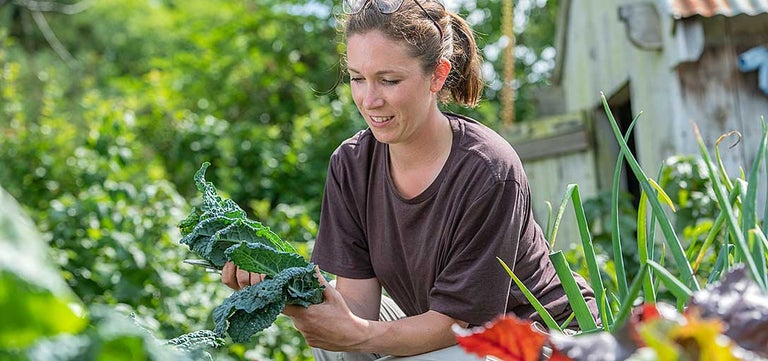
“We started to grow more vegetables including carrots, cucumbers and tomatoes. I wanted to grow produce that wasn’t going to be covered in pesticides and learn more about processed foods and its potential effect on our bodies. As an amateur allotmenteer, it’s satisfying to grow and eat food that’s good for me.
“The kids regularly go down to the allotment and pick and eat all the strawberries, so there’s never usually any left to bring home, but that’s fine because they are good for them and it’s teaching them about where food comes from.”

For Anna, gardening has given her a sense of purpose and a distraction, and it’s also been good for her body. “Looking after your muscles and your body in general in perimenopause and menopause is important,” says Anna. “I don’t have to pick up the weights in the gym to be able to do that. There are different elements of gardening that can help me with that too.”
Gardening involves physical tasks such as digging, planting and weeding which can be as effective as low to moderate intensity exercise and certainly can be more fun. It can improve muscle strength, balance and cardiovascular health. Gardening is ideal for improving joint flexibility, reducing stiffness in the joints and maintaining the health of the cartilages that acts a shock absorber for the bones. Don’t forget navigating uneven terrain in the garden can improve our balance and co-ordination and help reduce risk of falls and related injuries.
Dr Nadira Awal, Founder of Pause and Co Healthcare

“At one point I was struggling with insomnia and, as a result, began focusing on my nighttime routine,” says Anna. “I started to look at growing herbs to make tea. I didn’t put too much pressure on myself, but it encouraged me to grab some books and look at how some of these herbs could benefit my health and wellbeing.
"We can take some of the lessons that nature gives us and use them in our professional lives."
“Gardening has taught me the power of patience. I’m quite an impatient person, but gardening doesn’t offer instant gratification. We can take some of the lessons that nature gives us and use them in our professional lives.”

Anna has set up a business as an executive coach and specialises in supporting women who are navigating perimenopause and menopause alongside their careers. In 2022 a report by The Fawcett Society found that one in 10 women have left work during the menopause, with 14 per cent reducing their hours.
"Women have a vast locker of superpowers."
“The reality is that women are leaving the workplace, but they are leaving the workplace with a number of transferable skills, combined with other responsibilities such as motherhood or caring responsibilities,” says Anna. “Women have a vast locker of superpowers.
“Perimenopause and menopause can be a second spring for women. It is a chance for us to look at what we are doing and ask ourselves if we are truly satisfied. However, some symptoms of perimenopause and menopause can be disruptive to our careers.”
Anna believes there is still a stigma associated with the menopause and its symptoms, but it is changing.
“There is still stigma and stereotype attached to it, particularly in the workplace, but the more people talk about it, the more we start to normalise it,” says Anna. “Much of it is around fear and being defined by age. Many professional women feel that if they declare this in the workplace, they may be considered too old.
"We have to keep the momentum and the storytelling going."
“There’s been some amazing work done by high-profile women which has brought the topic into the public consciousness. They have used their voice, their platform and their experience to start to normalise this conversation. Now women are talking to each other about menopause, and how it’s effecting them.
“Those brave trailblazers have encouraged people like me to share my experience. I think we are making progress. We have to keep the momentum and the storytelling going.”
Expert’s opinion
“One reason many women experience mental health challenges during menopause is the drop in oestrogen and progesterone, which affects serotonin – the hormone that regulates mood. This hormonal shift can lead to anxiety, mood swings, low motivation, brain fog and a dip in confidence, all of which can impact performance at work and at home.
Spending time in nature helps. Being outdoors encourages mindfulness, reduces stress, and improves mental clarity. Sunlight boosts endorphins and serotonin, enhancing mood, focus and sleep by supporting melatonin production. It also triggers vitamin D synthesis, vital for bone health, immunity and muscle function.
I’m not a natural gardener, but I’ve come to love it. Over the past 18 months, I’ve brought our garden back to life after years of neglect. Seeing bulbs bloom and wildlife return has been a joy. I’m already excited for next spring – as long as I remember to plant those bulbs!”
Dr Nadira Awal, Founder of Pause and Co HealthcareFor support visit the NHS website, Balance, Menopause Matters, empower4life, The Menopause Charity and British Menopause Society. For more on Anna’s executive coaching business, contact Allerton Consulting.
About the author - Charlotte Olver
Charlotte Olver is a garden writer who explores how gardening supports wellbeing. Blending science with storytelling, her work highlights nature’s role in healing and celebrates the garden as a place of restoration, resilience and belonging.