Creating a garden for someone living with a terminal illness
How to adapt a garden for people living with a terminal illness, from Thames Hospice Volunteer and Horticultural Ambassador Graham Stone

When Victoria Bennett suffered a heartbreaking number of bereavements over eight years, she made the garden her safe space and began to create something living out of loss
"Grief and hopethe skipping rope’s two ends,twin daughters of impatience."
Victoria Bennett was seven months pregnant when her eldest sister died from drowning. Her death, in October 2007, was followed by more bereavements in Victoria’s family, and her son’s diagnosis with type one diabetes.
“I kept things together to look after my son, but I was broken inside. I felt I had no hope. I wanted to reconnect with myself and allow myself to grieve where I hadn’t been able to do so, because I was adjusting to life as a new mother.”
It was around this time that Victoria and her family moved to a housing estate, built on an industrial site, where the ground was very poor.

"In the face of so much loss, I felt the need to put down some roots to see what would grow."
Her garden grew over a 10-year period, with Victoria documenting her progress in her book, All My Wild Mothers. “I started off just wanting to capture moments of my son’s life. Time was quickly passing me by, and I didn’t feel fully engaged.”
“I would try to get as close to the moment as possible and capture it, a bit like pressing a flower. During this process, other memories started to come to the surface. I found myself writing about my sister’s death and other losses I had experienced in the past.”
"By focusing on writing about one moment or planting one plant, over time the garden grew into something special and started giving back to me."
Victoria is not alone. In fact, new research conducted by Sue Ryder revealed that 40% of people who have been bereaved credit gardening with ‘saving them from their grief’, with 51% finding that gardening helps keep their loved one’s memory alive.

Victoria’s mother loved her garden. “She had six children so looking back it was probably her safe space, and somewhere she went for a bit of peace and quiet. She was a wild gardener before the term existed, and my sister was also a keen gardener.
“When my sister was alive, she gave a Forsythia cutting to my parents. My mother planted it in her garden and, when my sister died a few years later, she took a cutting from that Forsythia, and we planted it in my garden. Shortly after I found out that my mother was dying of cancer as well. We’ve since moved from where I grew that plant, but I took a cutting from the tree and now it’s growing in our new garden.”
Before Victoria fell pregnant with her son, she and her husband experienced a pregnancy loss. “I was scared that it was going to happen again. My friends gave me a conker and told me to plant it, and it would grow strong like my son. I planted it and it grew into a horse chestnut tree. From a young age my son knew that it was his tree, and we used to measure him against it.”
"We can use the garden to tell our story, and to bring in aspects of the person that we’ve lost as well."
There’s a belief that we grieve and then we move on, but it’s a process. Everything changes, from the future that you thought you might have with that person to the shape of your family.
For Victoria, creating and tending to the garden gave her a space to talk with her son, who was four when they first started to plant the garden. “For the first eight years of his life, there was a serious illness or a bereavement in our family. And that trauma impacted the family he was born into.”
"From time spent with me in the garden, he developed an understanding of the circle of life, of how plants must die to grow back again."
“My son is home educated so the garden became his learning space. As we were planting, we were learning about each plant be that its medicinal properties, whether it was edible or how it would contribute to . We learnt as much as we could around those plants and, in the process, he learnt science, storytelling and the history of plants. At one point he grew a Roman herb garden and, through this, learnt about Roman cookery and history.”
“I was able to show my son how we can have an impact just by planting a seed or by the little weeds we’d grown. It’s important to be able to feel like you can do something and be a part of something hopeful and something that changes our world and makes it heals a little bit.”

The garden Victoria created wasn’t perfect, but to her it was beautiful. “It provided wildlife with a habitat, but it also gave me and my family food, medicine and beauty. There’s a sense of give and take.”
"If we contribute to the earth, it will give back to us and heal us."
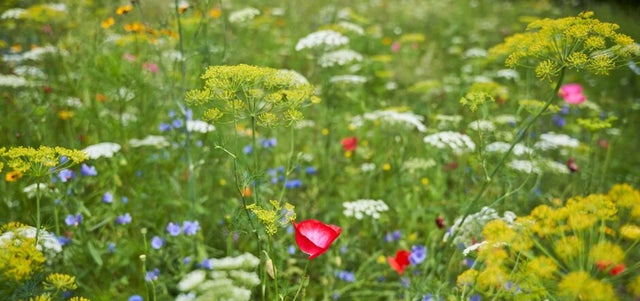
“If you’ve experienced a bereavement, I recommend wild gardening. You don’t have to turn your whole garden over to it, just one area would be enough. Wild gardening teaches us that we can’t always control things.
“The garden taught me to cherish the things that we might think we have to dig out and get rid of because it doesn’t fit the idealised notion of what a garden should be.”

There are a lot of plants in folklore that are able to support us as we learn to live alongside grief. Human beings have always tried to find ways to live with our mortality and to continue to live when we lose the people we love, and plants have been part of that journey.
“Lots of plants that grew in the garden were chosen for their uses in helping to support at difficult times or their connection to grief and the passing over of people in folklore, such as pineapple weed. Pineapple weed has the same properties as chamomile and it’s a lot easier to grow, but you can still use it in the same way. In folklore it helps people to live alongside the people who have passed over.
“When we’re grieving, we have depleted immunity so plants with medicinal uses such as a sedative or those with immune boosting properties can be useful. For example, I grow borage in the garden, which is used to help bring a sense of courage and hope when all seems lost.”
Plants from Victoria’s grief garden and what they are said to bring:
There’s no set way to grieve and there’s no destination that you’ve got to try and reach. Grief is messy so be gentle with yourself while you find your way through it.
“Grief disconnects us from ourselves and from the world around us in many ways. The world moves at a very different pace to the person who’s grieving. But nature just keeps moving, keeps going through the same cycle. Watch as plants grow and then die off and lie dormant during the winter, but they will come back again and that’s what will happen for you.”
"We, as humans, are constantly in a state of renewal and release and this is reflected in nature too."

Gardening has taught Victoria to not feel guilty about moving on and to allow life back in. “In times of grief, gardening, particularly wild gardening, teaches us resilience and gives us a sense of hope.
“I think that’s important, not just for those experiencing grief, but for us all. We’re all living through a difficult and uncertain period where people are feeling overwhelmed by the climate crisis and concerned by what type of world we are passing onto the next generation. And this can lead to similar feelings of overwhelm.”
"The garden has taught me that when things feel uncertain, doing something small such as planting a seed and watching it grow can give you hope."
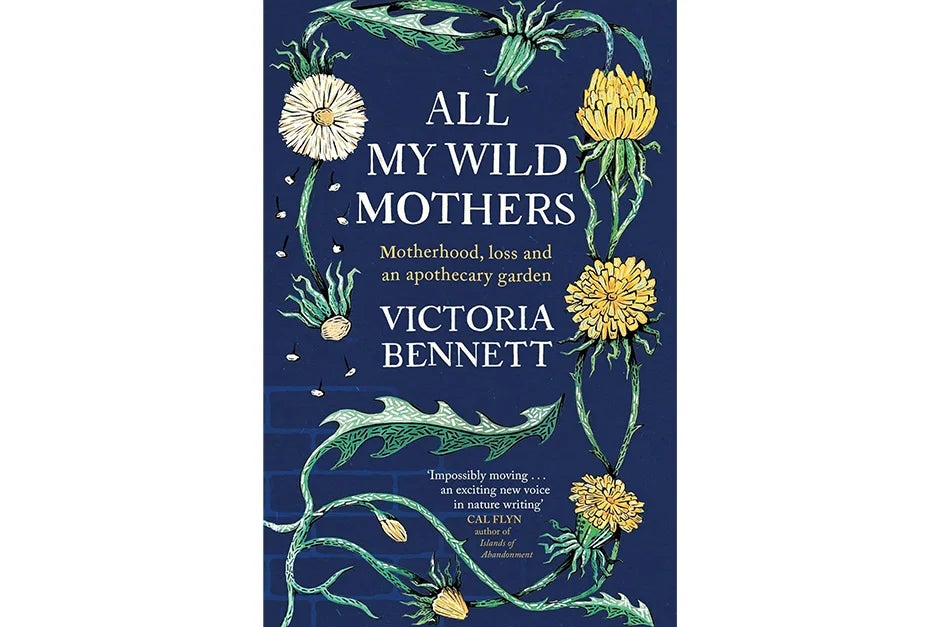
Victoria Bennett is the author of All My Wild Mothers, published February 2023 by Hachette. Available now in paperback £12.99
There are more resources on coping with grief available from Sue Ryder, Mind,Age UKand Marie Curie.
About the author - Charlotte Olver
Charlotte Olver is a garden writer who explores how gardening supports wellbeing. Blending science with storytelling, her work highlights nature’s role in healing and celebrates the garden as a place of restoration, resilience and belonging.