Winter-flowering honeysuckles (Lonicera) are our Wildlife Wonder Plant of the Month for January, which means our wildlife experts have highlighted it as a top plant we can all grow to provide value to wildlife this month.
If you’re looking for a plant that works hard, looks good, and asks for very little in return, shrubby honeysuckles are unsung heroes of the winter garden. Here’s why they deserve a spot in yours.
1. They light up one of the coldest, darkest times of year
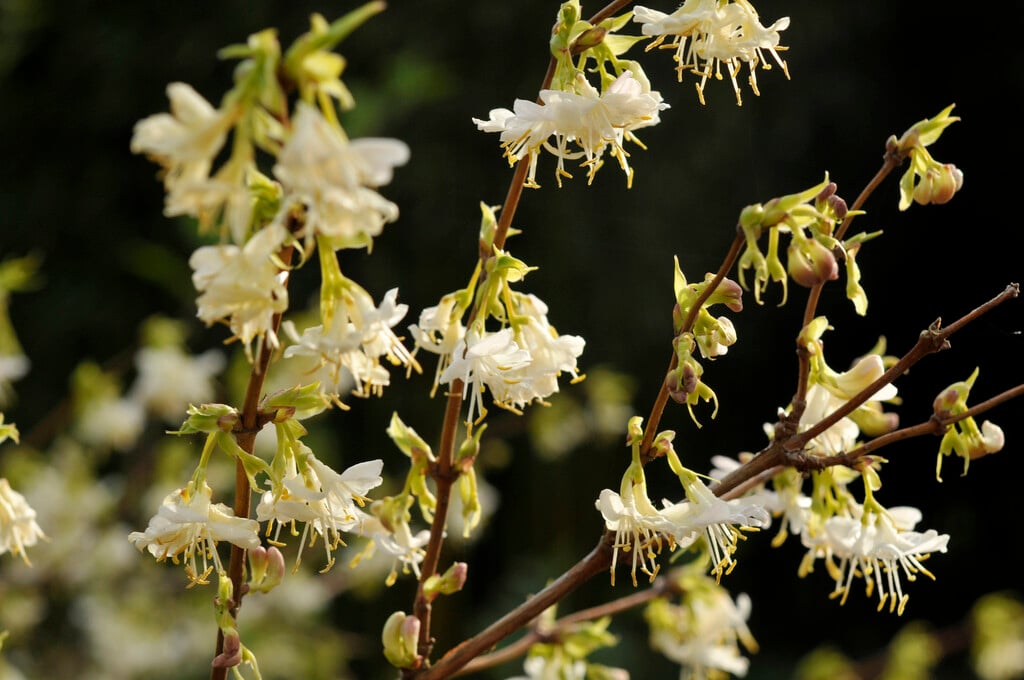
Many shrubby honeysuckles flower in winter when almost nothing else is blooming – imagine stepping outside on a frosty morning and catching a whiff of sweet fragrance from creamy white blossoms. This also means they are the perfect one-stop-shop for any early pollinators that emerge, hungry, on a particularly mild winter’s day.
2. They smell wonderful
That classic honeysuckle scent isn’t just for climbers. Shrubby types bring fragrance to your garden when you need it most – in the middle of winter, when everything else feels a bit bleak.
"Few things lift spirits so immediately as to walk past a winter-flowering honeysuckle in full bloom and inhale the promise of spring"
- James Armitage, botanist and RHS Specialist Publications Editor
3. Wildlife loves them
For each month of 2026, as part of our Bringing Nature Home theme, we’ve selected a star plant and a handful of supporting plants that are fabulous for wildlife in that month. Shrubby honeysuckles are our Wildlife Wonders Plant of the Month for January. Pollinators flock to their flowers, and many types produce berries that birds adore. So, by planting one, you’re creating a mini wildlife haven.
1
of
2
of
4. They’re tough, adaptable and low maintenance
Full sun? Partial shade? Most soils? Shrubby Lonicera are not fussy. Just avoid spots and you’re good to go. A light prune once a year after flowering keeps them looking their best, while they’re easy to propagate by or layering if you fancy making more for free.
Which winter-flowering honeysuckles to grow
Botanist James Armitage, RHS Specialist Publications Editor, says: “Winter-flowering honeysuckles are subtle, unobtrusive and exceptionally valuable garden shrubs. They are medium or large shrubs to around 2.5m tall, usually keeping some of their leaves through the year. As with many other winter bloomers, the flowers are pale and of modest size, but make their presence felt by the strength of their fragrance.”
From the more compact Lonicera fragrantissima to the pink-tinged Lonicera standishii ‘Budapest’, there’s a shrubby honeysuckle for everyone. These are some of the winter-flowering honeysuckles we recommend.
Lonicera fragrantissima
Lonicera × purpusii ‘Winter Beauty’
Lonicera fragrantissima
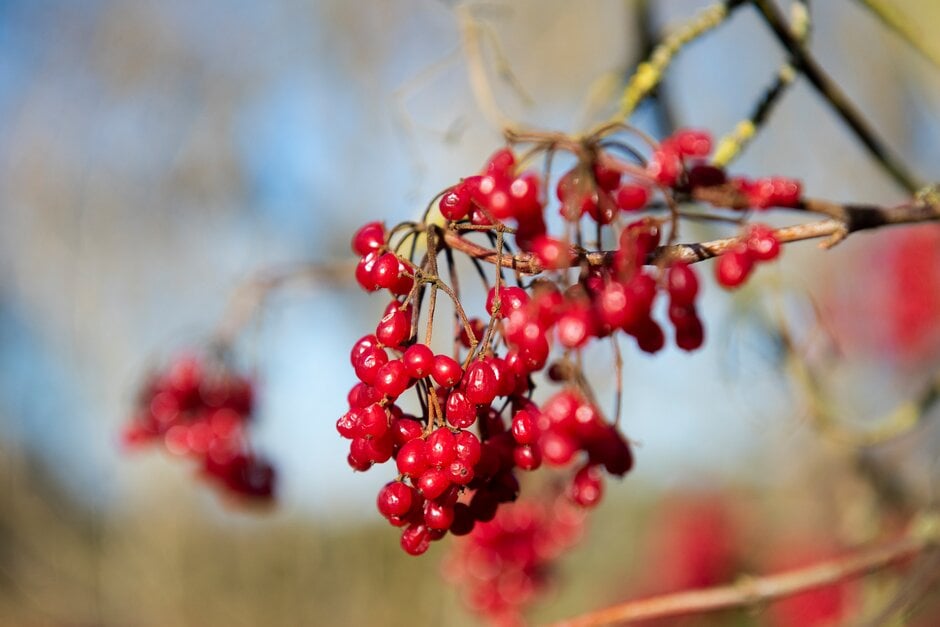
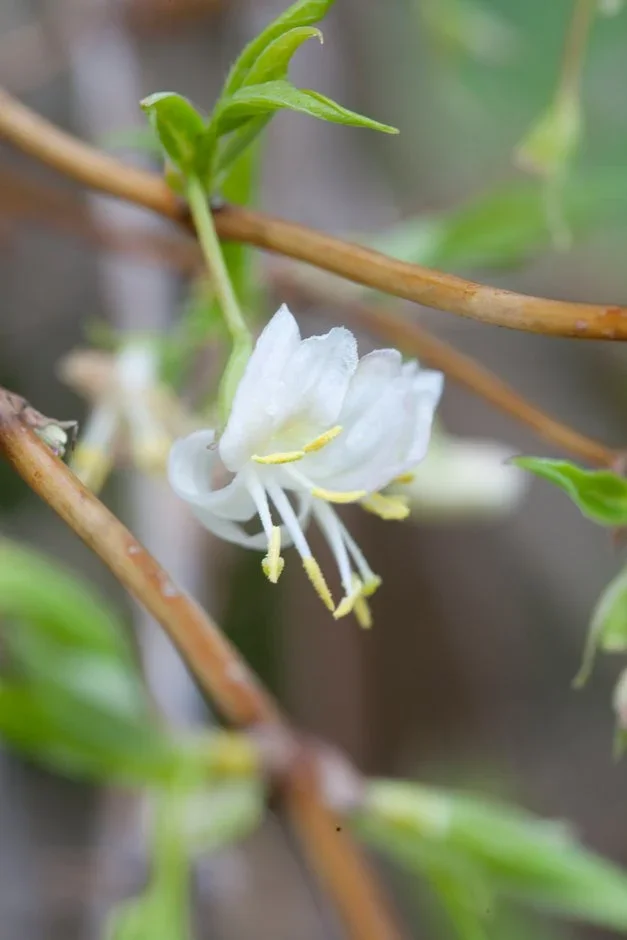
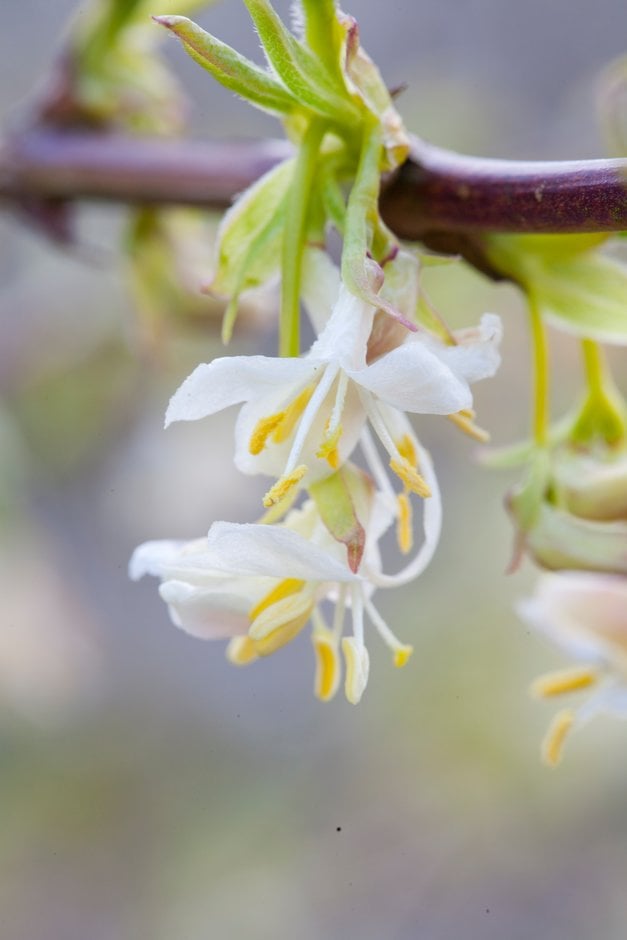
“Lonicera fragrantissima has small flowers (about 1cm long), which are tubular, creamy white and though often sparsely spaced along the stem, are deliciously fragrant,” says James. “Growing the plant close to a wall can encourage flowering and later the production of red fruit.”
Leigh Hunt, RHS Principal Horticultural Advisor, adds: “At 1.5-2m tall and wide, Lonicera fragrantissma is a little smaller than the other winter-flowering honeysuckles, making it an appealing choice for smaller gardens.” Buy it here >
Lonicera standishii f. lancifolia ‘Budapest’
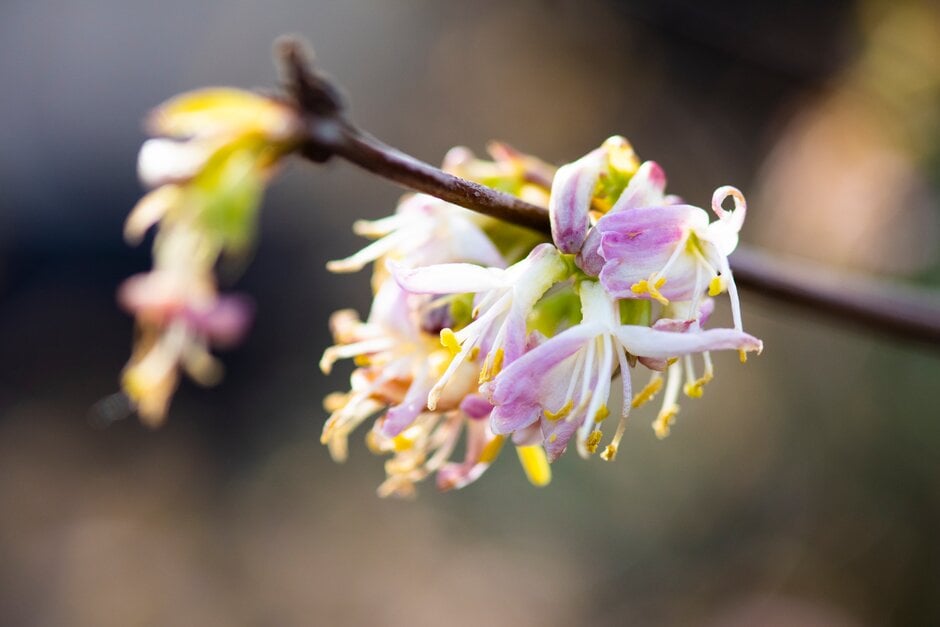
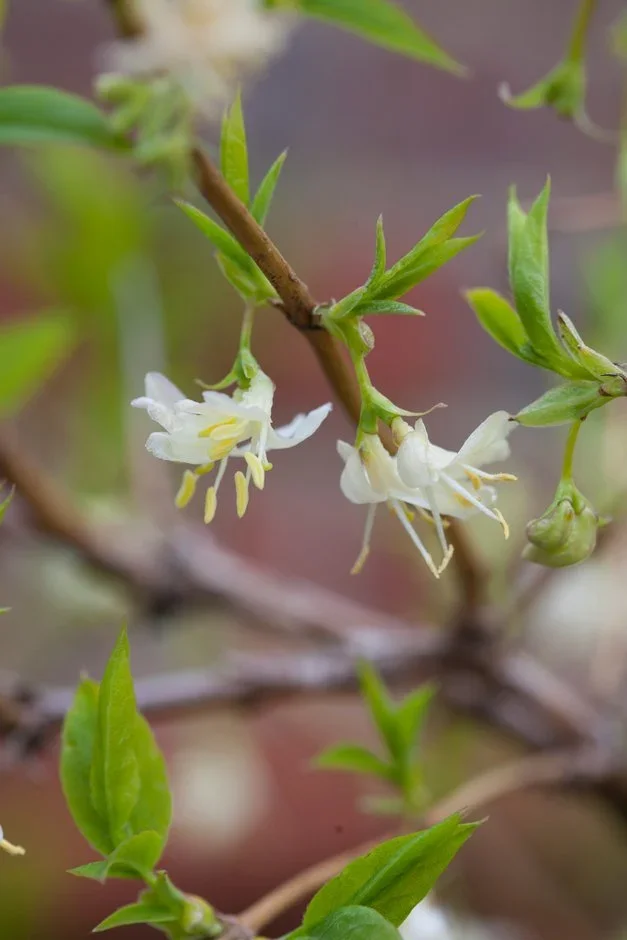
“Closely related L. standishii differs in its bristly stems and leaves and its slightly larger flowers, which are often tinged pale pink,” says James. “It flowers throughout winter and is similarly fragrant. There is a variant with long, narrow leaves named L. standishii var. lancifolia. A fine selection of this plant is ‘Budapest’, which has reddish new growth and most attractive pink-flushed flowers.”
Lonicera standishi
Lonicera standishii f. lancifolia ‘Budapest’
Lonicera × purpusii ‘Winter Beauty’
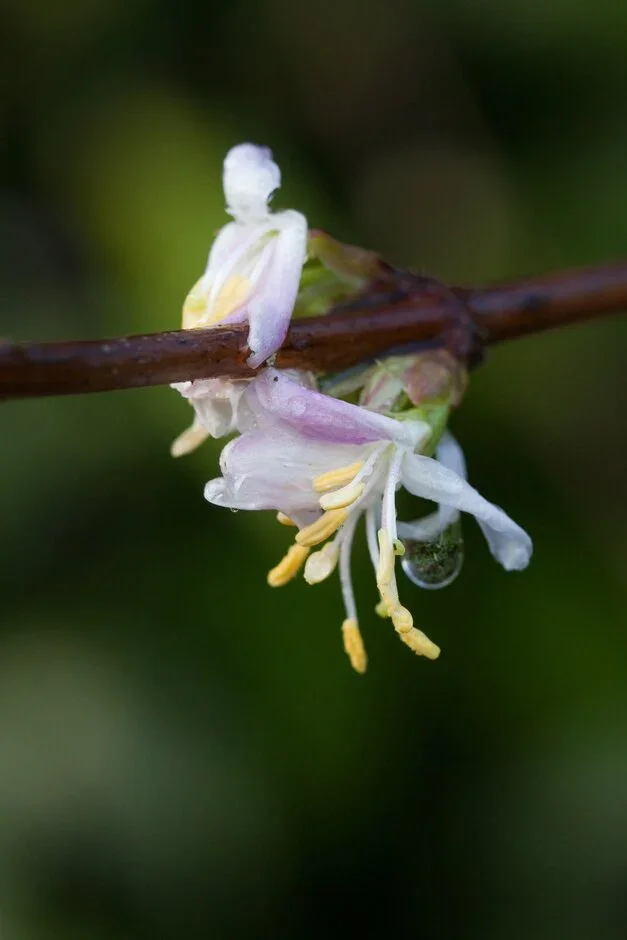
“The most common winter-flowering honeysuckle, Lonicera × purpusii, can be relied on to perform well in a range of sites and soils,” says James. “‘Winter Beauty’ is broader than it is tall, eventually spreading to 2.5m. It has reddish shoots and is highly floriferous from an early age, often continuing to bloom into spring. The fragrance is sweet with a refreshing citrus tone that prevents it becoming sickly. Cut stems brought inside will make the air rich with their perfume.” Buy it here >
Lonicera setifera
“There are a couple of other species worth seeking out if you are a devotee of the rare and choice,” he says.
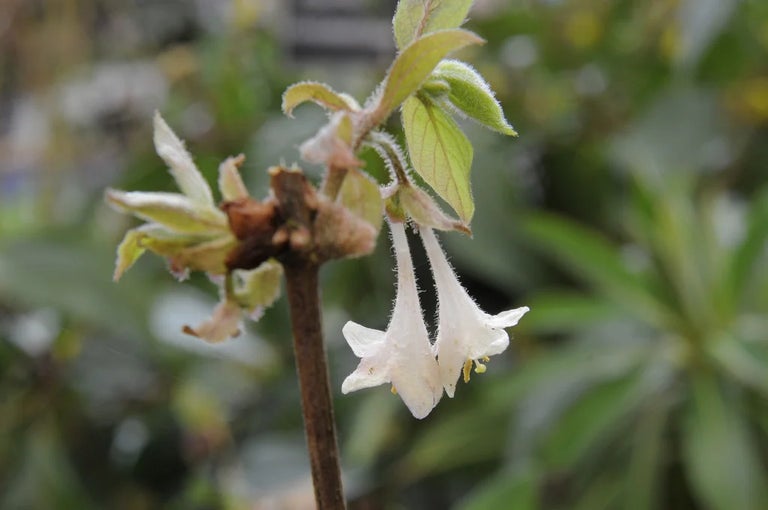
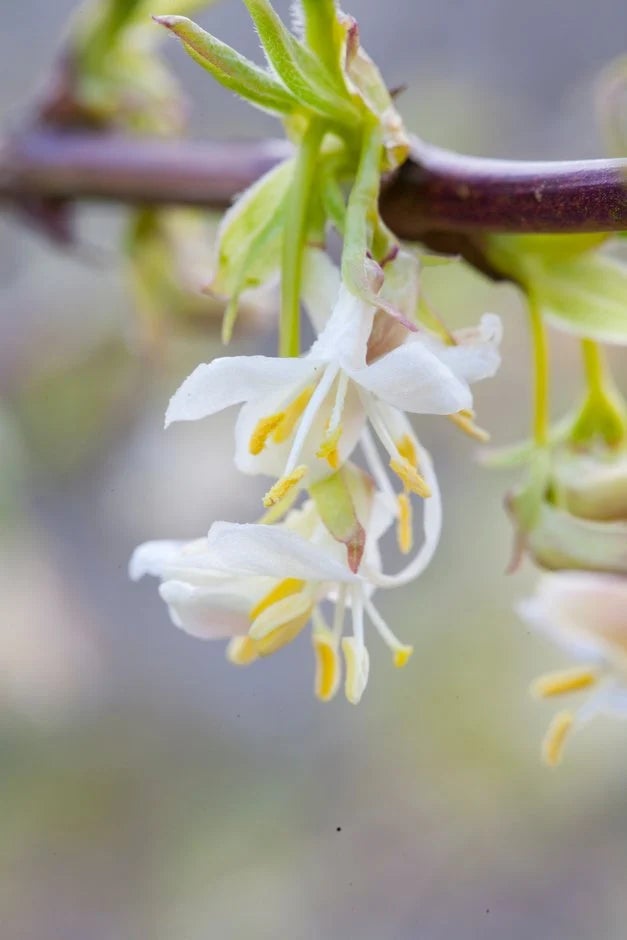
“Lonicera setifera is a lovely, upright shrub with rather thick, narrow leaves and is bristly all over, even on the flowers. These are held in pairs and, though only a little over 1cm long, have great charm. The white petals flare out like Christmas bells from a short pink tube, each cuddled close to its neighbour by reddish, cup-shaped calyces. Its fragrance is light but pleasing, and red fruit may follow. This species tends to be fully and branches are still bare when flowers open in late winter.”
Lonicera setifera is distinctively bristly, with pink-tinged blooms
Lonicera elisae
“Also worth seeking out, Lonicera elisae was introduced in the 1980s by Roy Lancaster and bears purple-flushed shoots and pale yellow flowers tinged pink on the outside,” says James.
Roy himself says: “In February–March, or earlier in mild winters, leafless branches sprout short, hairy shoots carrying pairs of slender, nodding, funnel-shaped flowers 2cm long. These vary from pale primrose-yellow to cream, sometimes with a hint of pink or peach on the five spreading lobes. The stamens and style peep from the open mouth and, for those with a sharp sense of smell, there can be a delicate scent. The flowers have a singular, rather elegant charm, especially when seen at close quarters.”
Lonicera elisae has purple-flushed shoots and pale yellow flowers tinged pink on the outside
What to plant with winter-flowering honeysuckle
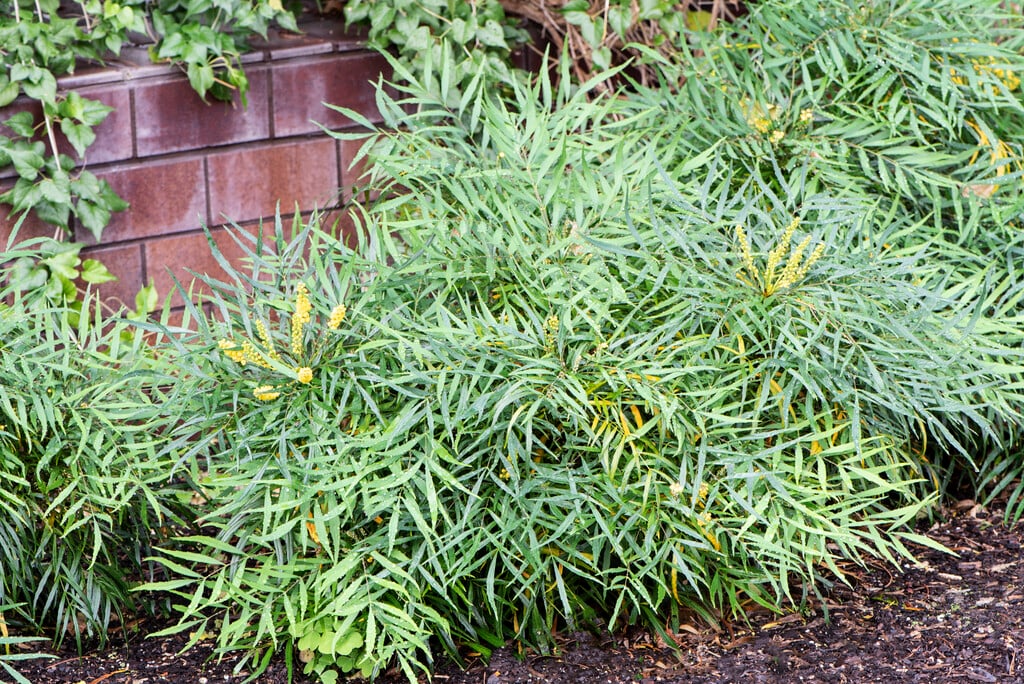
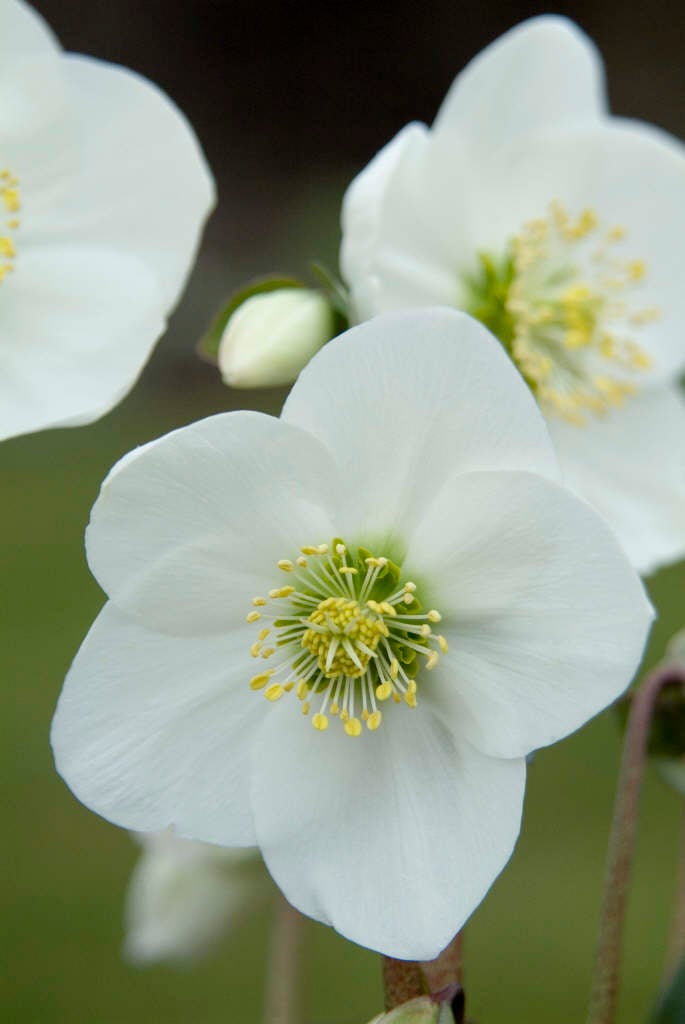
Our Wildlife Wonders supporting plants for January are mahonia, Helleborus nigerand crocus, so don’t forget to sneak some of those into the garden too. Try Mahonia eurybracteata – a relatively compact species with elegant slender leaves – for a shady spot, and Crocus tommasinianusfor early flowers in a lawn, border or pots. You can bring some on in pots in a greenhouse or in the house to flower earlier still; then when moved outside they will provide forage for any hungry bumblebees that may emerge on a mild winter’s day.
“Winter-flowering honeysuckles give greatest benefit planted by doors or gates where their fragrance can be freely enjoyed,” says James. “Although fully hardy, they often flower better given shelter from a nearby wall, and this will also concentrate their perfume.
Left to right: Lonicera standishii var. lancifolia ‘Budapest’, L. standishii, L. fragrantissima, L. setifera ‘Daphnis’, L. × purpusii and L. × purpusii ‘Winter Beauty’
“They can be grown with other shrubs to extend the flowering period, but are most valuable in combination with other winter interest plants,” he says. “Grown with simple but elegant snowdrops such as Galanthus plicatus ‘Three Ships’ or G. ‘Nothing Special’, gothic Helleborus niger and evergreen ferns, winter honeysuckles create a truly evocative scene. Woody winter companions might include deciduous hollies such as Ilex verticillata ‘Christmas Cheer’ or Viburnum betulifolium with its cascades of blood-red fruit. Avoid planting close to other fragrant plants such as daphne, as this can lead to an unpleasant mingling of scents.
“After the flowers fall, you can ensure your winter-flowering honeysuckles continue to provide interest through the by allowing them, once mature, to play host to a reasonably tame clematis that can climb through the branches,” he says. “For late spring flowers, choose a Clematis macropetala such as ‘Markham’s Pink’, or for summer try yellow-flowered Clematis Golden Tiara.”
How to grow shrubby honeysuckle
Where and when to plant: Outdoors in a sunny spot or dappled shade, sheltered from extreme weather. Though shrubby honeysuckle can be planted at any time of year except in hot, dry weather, they will establish best if planted in autumn or early spring.
Soil: Lonicera prefer moist but well-drained soil, but tolerate a wide range range of soil types.
Maintenance: Both the deciduous and evergreen shrubby honeysuckles are low maintenance and easy to grow. Prune deciduous forms in spring after flowering, cutting out a third of the oldest stems. A harder prune can be done every few years to regenerate overgrown plants. Give evergreen forms such as Lonicera nitida a light trim once a year to maintain shape. Mulch with homemade compost or leafmould to retain moisture around the roots.
Propagation: Depending on type, shrubby honeysuckles can be propagated via hardwood, softwood or semi-ripe cuttings, and sometimes by layering.
Why you should plant a shrubby honeysuckle
Imagine stepping into your garden on a cold January morning to find Lonicera fragrantissima or ‘Winter Beauty’ in full bloom – its creamy flowers irresistibly fragrant outside your door. Easy to grow, wildlife-friendly, and endlessly charming, shrubby honeysuckles tick all the boxes. Plant one (or three) this spring and thank yourself later.
Still not convinced? Watch the video below to discover the sensation of shrubby honeysuckle with RHS Senior Wildlife Specialist Helen Bostock, or our video on Instagram to hear why Mark Tuson, Garden Manager and specialist at RHS Wisley, also loves this plant.
Lonicera as alternatives to box
Looking for a neat hedge or a disease-free, low-maintenance structural evergreen? In contrast to the deciduous winter-flowering honeysuckles, which flower fragrantly on bare, arching winter stems, evergreen shrubby honeysuckles like varieties of Lonicera ligustrina hold their small green leaves all year round and are perfect for clipping into shape, offering many of the same structural uses as box while avoiding any worries over blight or box caterpillar.
Holding an RHS Recommended: Award of Garden Merit, Loniceraligustrina var. yunnanensis ‘Baggesen’s Gold’ is a colourful choice showcasing golden-yellow foliage and small cream flowers that may be followed by purple berries. Lonicera ligustrina var. pileata is a particularly compact variety ideal for low hedging or low-maintenance groundcover.
Find out more about choosing box alternatives here.





_13989.jpg?w=1280&fit=clip&fm=jpg&auto=format)