Quick Facts
Undemanding and well-behaved
1
They are mainly winter flowering, but there are a few unusual summer-flowering ones
2
They can be planted all year round, but establish better when planted in autumn or spring
3
Plant in a sunny spot or dappled shade, sheltered from the worst of the weather
4
A light, annual trim will keep shrubby honeysuckles in shape and flowering nicely
5
Mulch with leaf mould or garden compost to help improve the soil and retain moisture
6
Generate more plants by taking hardwood cuttings in autumn
7


Before you get started
Choosing shrubby honeysuckles
A shrubby honeysuckle is the perfect addition to a relaxed woodland-style garden. An evergreen shrubby honeysuckle can be used as a low-growing hedge or prunned to make a piece of topiary.
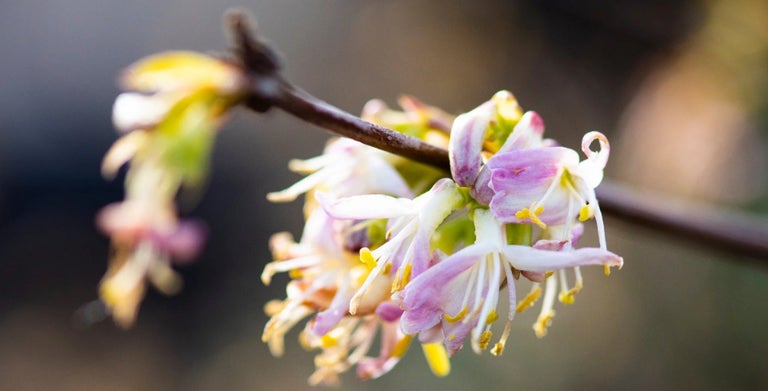
- Deciduous shrubby honeysuckles provide their main season of interest in winter, when their sweetly-scented blooms make an uplifting addition to the dark, dank days. Then, during summer, their mid-green leaves create a great backdrop for summer-flowering plants
- Evergreen shrubby honeysuckles are versatile; with their small leaves and colour variation they make a great alternative to box (Buxus). They can be clipped into shapes or left natural to add year-round interest to a border
- There are a couple of summer flowering types that are not so widely available but, if you are looking for something different with a delightful scent in early summer, these fit the bill
Buying shrubby honeysuckles
Shrubby honeysuckles are not always readily available in garden centres. You may have to research and find your desired plant through the RHS Find a Plant. However, you are more likely to find the winter-flowering shrubs during their peak flowering time. They are generally sold in 1-2 litre pots.
Evergreen hedging plants can be obtained in small 9cm (3½in) liner pots, but they are mostly available in 2 litre pots.
Planting
When to plant
- Plant at any time of year; just avoid planting during the hot dry summer months as new plants suffer from heat stress and struggle to put down new roots.
Where to plant
- As long as the site is sheltered from wind (such as along the coast), a shrubby honeysuckle will grow happily in sun or dappled shade
- Too much shade will result in an absence of flowers
- They will tolerate most soil types but will not fare well in the extreme wet or dry
Ongoing Care
Watering
- After planting, check and water regularly for the first spring and summer to aid rooting and establish so that the plant survives in your garden
- Generally they will only need an occasional soak during hot summers
Feeding
- Feed once a year in spring if the leaves are yellow and growth is poor
- Apply a general fertiliser, such as Growmore or Blood, Fish and Bone, according to the instructions on the packet
- They will also benefit from an annual of organic matter, such as garden or well-rotted manure, to help improve the soil and moisture retention
Overwintering
Shrubby honeysuckles are hardy and don’t require winter protection, but plant winter-flowering ones in a sheltered location out of the worst of the frost to help their flowers last.
Caring for older plants
- Keep on top of pruning to prevent older plants from becoming overgrown thickets. However, in a wildlife garden, you may wish to keep them bushy and dense to make great nesting places
- With the right location and care these shrubs live for many decades
Pruning and Training
Winter-flowering types
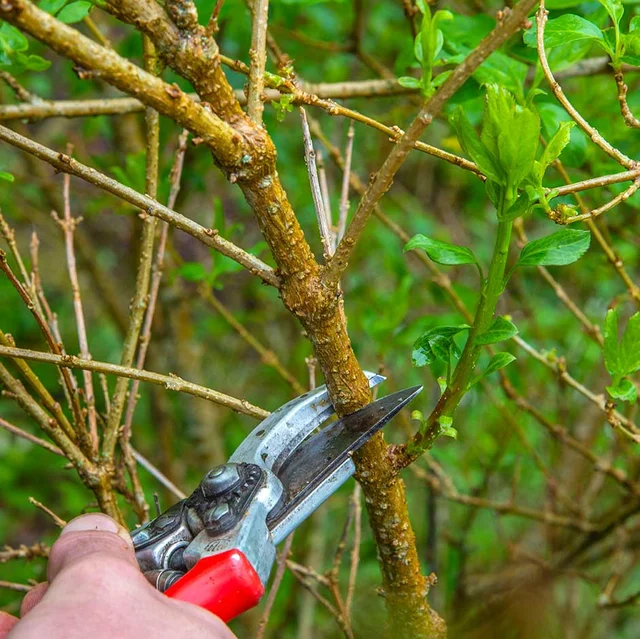
Prune in spring after flowering. Trim back wayward shoots and thin out congested areas in the centre of the shrub. Remove weak and damaged growth. Only a light prune is generally required.
Summer-flowering types
Prune lightly in late summer after flowering. Trim back wayward shoots and thin out congested areas in the centre of the shrub. Remove weak and damaged growth.
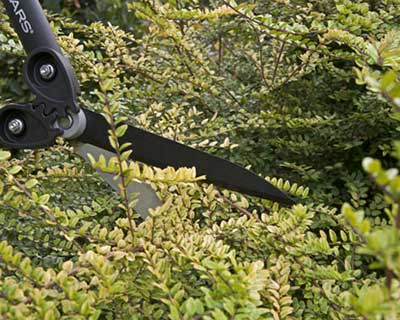
Evergreen shrubs and hedges: To keep clipped and shaped, hedges may require two or three clipping sessions between spring and autumn (don’t disturb nesting birds though). You can use a hedge cutter if you would like a more uniform shape or secateurs to create a natural, bushy appearance. Also see Renovate below.
Renovate
Prune in late winter/early spring. Cut back all of the stems to the height of 60cm (2ft) and it will respond with plenty of new shoots. Choose the strongest and best placed to stems to remain in order to create the shape of the shrub. This is a useful method for re-starting a honeysuckle hedge that has become bare at the bottom.
Propagating
Select healthy, disease free stems to propagate from to get your new plants off to a great start.
Hardwood cuttings: Ideal for shrubby honeysuckles. Select and cut woody stems from late-autumn to mid-winter. Choose straight, pencil thick stems of about 20-30cm (8-12in) long. Push into a pot of firm and keep in a or cool greenhouse over the winter. Check from time to time to make sure they haven’t dried out and are not sitting in soggy compost. New shoots will appear from the buds in spring.
Layering: Shorter stems on the outside of the shrub are ideal for layering in spring.
Softwood and semi-ripe cuttings: Best for evergreen shrubs. Take softwood and from spring to summer. For best chance of success, choose stems that have their leaf nodes close together and keep the stem between 10-15 cm (4-6in). Very long are more likely to dry out and fail.
Seeds: Collect fresh ripe berries in autumn, then clean and remove all of the berry flesh and allow the seeds to dry. The seeds require a cold spell of 4-12 weeks in order to germinate, so pot them up and store in a cold frame over winter or chill in a compost filled sandwich bag in the fridge. They will then germinate at 13°C-18°C (55°F-65°F).
Problems
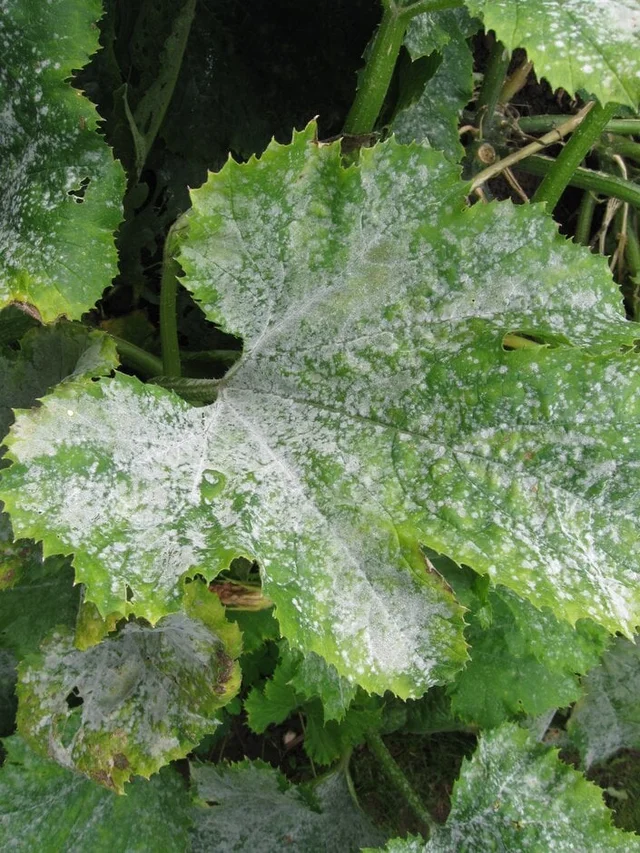
Honeysuckles are relatively dependable and trouble free, however they can be prone to if the weather is dry and hot. Help prevent an outbreak by mulching around the base with garden , which will improve the moisture retention of your soil.
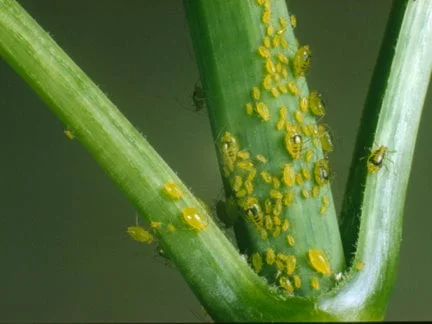
Check young shoots in spring as they can be prone to an aphid attack, small groups of aphids are easily rubbed off and squashed.