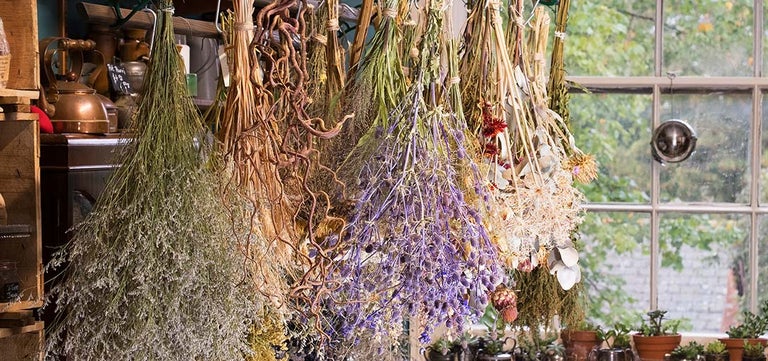
How to dry flowers and foliage
Gone are the days of the cobweb-festooned, dried floral arrangements that graced a dusty mantelpiece – dried flowers are back and they mean business

Discover how to create cyanotype prints using natural materials and objects from your garden
Cyanotype is a camera-less photography technique that involves laying objects on paper coated with a solution of iron salts and exposing it to UV light. After around 10-15 minutes in the light, the paper is rinsed with water, revealing an inverted print in vivid white and blue.
Simple and creative, cyanotype printing is a fun activity for for both children and adults. Here, the Socially Engaged Photography Network shares a step-by-step guide to creating your own cyanotype print using natural material and objects found in your garden.
What will I need?
If you are making your prints outdoors, you will need a clear or bright day. If not, you will need a UV lamp to expose your images.

Prepare your arrangement of objects on a normal piece of paper that is the same size as your cyanotype paper. This allows you to decide on a layout you’re happy with before starting.
Your cyanotype paper will be stored in a black bag to ensure it hasn’t been exposed to light before use. Once you’re ready, take one sheet out of your black bag and place it in direct sunlight or under a UV light. Arrange your objects on top of the paper in the design you’d like to print.
Try to keep your objects as flat as possible on the paper to ensure a sharp image. Photo frames are a great tool for this.

Once you’ve arranged your objects, leave the paper exposed to sunlight or under a UV lamp. The exposure time will depend on how bright the light is, so you may need to do some test runs. On a cloudy day, prints will take longer to develop and may not be as high contrast.

The paper will begin to change colour during exposure. The exposed part of the paper will turn a dark grey – this is when you know the print is ready to be rinsed.

Rinse the paper in water for two minutes and you will see the colours reverse. This process will also fix the exposed image, making it safe to view in daylight. Be careful when handling the paper, as it will be more fragile when wet. If you don’t have water to hand, place your exposed paper back in a box to wash later.

Leave your print to dry on a flat surface or hang it up on a line. You will notice the blue becomes even darker as it dries.
If your prints have curled when drying, they can be placed under a heavy object, such as a book, to flatten them.
Created with Open Eye Gallery and the Socially Engaged Photography Network .