Yangzhou Scholars’ Garden opens at RHS Bridgewater
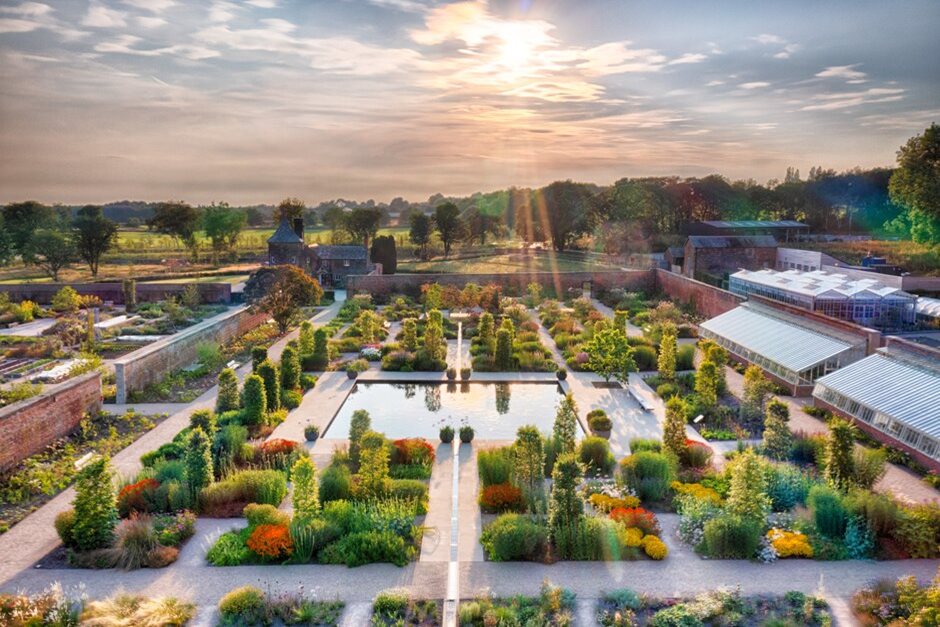
A major new landmark for Greater Manchester opens at RHS Garden Bridgewater in Salford
More than eight years in the making, the Yangzhou Scholars’ Garden opened on Saturday 26 September as the spectacular centrepiece of RHS Bridgewater’s Chinese Streamside Garden, the UK’s largest Chinese garden.
Inspired by the historic gardens of Yangzhou in eastern China’s Jiangsu province, it is the first authentic classical Chinese garden of its kind constructed in the UK. Combining authentic Chinese architecture with centuries-old craft techniques and cultural traditions, the garden has been meticulously constructed by a team of skilled artisans from China, alongside horticulturists from RHS Bridgewater.
Designed and built in partnership with Yangzhou City, the China Flower Association and Greater Manchester’s Chinese community, this ambitious project represents a unique international collaboration celebrating craftsmanship, horticulture and cultural exchange.
Mr Gerry Yeung of the Chinese Streamside Garden Founding Committee said: “We hope visitors will enjoy discovering this special place and, through it, gain a deeper appreciation of the rich traditions, artistry and values that have inspired Chinese gardens for centuries.”
Four authentically crafted pavilions celebrate the traditional scholarly arts
A garden inspired by centuries of learning
At the heart of the garden are four hand-crafted wooden pavilions, each one dedicated to a traditional Chinese art. The Qin Pavilion (Music Pavilion 琴), opened in 2023, celebrates harmony and the emotional power of music, the Qi Pavilion (Chess Pavilion 棋) represents strategy, balance and intellectual refinement, the Shu Pavilion (Calligraphy Pavilion 書) honours writing as an expression of character, and the Hua Pavilion (Painting Pavilion 畫) celebrates artistic expression and the relationship between people and the landscape.
Traditionally, Chinese scholar’s gardens were places of retreat, to escape the chaos of the world through contemplation, creativity and connecting with nature. Creating such a garden was a popular pursuit of the scholar class, particularly during the Qing dynasty (1644–1912), to showcase their knowledge of art, poetry and the natural world. They were used as gardens are today, as places to relax and entertain in. Friends might come together to play games, perform music, write poetry or paint together.
These gardens reflected their owner’s lives and the things they admired, be it a particular view or poem. A floor mosaic in the Yangzhou Scholars’ Garden depicts ‘The Three Friends of Winter’ – bamboo, pine and plum, a symbolic motif used in classical Chinese art. Remaining evergreen or blooming at the coldest time of year, together these plants represent perserverance and resilience, considered some of the ideal qualities of a scholar.
Artistic impression of the Yangzhou Scholars’ Garden at RHS Bridgewater
Symbolic planting and design
The surrounding garden features a large pond plus more than 200 trees and shrubs and nearly 4,000 perennials, all chosen for their seasonal beauty, cultural symbolism and connection to classical Chinese horticulture.
Dr Holly Peng, Deputy Secretary General of the China Flower Association, said: “Every classical Chinese garden has four essential elements – rocks, water, structures and plants. The rocks represent mountains, water represents lakes and rivers, and plants tell stories of the garden owner’s life and what kind of person they are.”
“For example, in the Scholars’ Garden at RHS Bridgewater there’s a dedicated section for peonies as they symbolise prosperity and royalty. Similarly, four Ginkgo trees symbolise longevity, and there’s lots of bamboo – a sign the owner is honourable and honest.”
Planting through the garden also celebrates the rhythm of the seasons, from spring-flowering magnolias and cherry blossom to restful summer greens creating a serene woodland atmosphere. Followed by the vibrant autumn foliage of acers and the winter silhouettes of cloud-pruned pines. As the seasons change, different views are revealed creating ever-shifting moments of beauty and surprise.
Autumn foliage marks the change of season in the Yangzhou Scholars’ Garden
A meeting of Chinese and British horticulture
While the garden focuses on plants that are either
Tracy Snell, Curator at RHS Bridgewater, said: “The Chinese and British love their gardens, so the Scholars’ Garden is a fusion of that love but also a celebration of the amount of flora we have in British gardens that’s native to China.”
Among the plants with shared origins are Butomus umbellatus (flowering rush) and Lythrum salicaria (purple loosestrife), which have mixed British and Chinese heritage. Another example is Salix × sepulcralis var. chrysocoma (golden weeping willow) with parentage that’s native to both Britain and China. Willows are also connected to the local area, with ‘Salford’ derived from Old English meaning a ford by the willow trees.
Moving mountains
Rocks are another essential element in classical Chinese garden design. In ancient times, the most skilled artisans who choose and positioned rocks in a garden were known as mountain masters. Today, the craft is still passed down from master to apprentice.
Dong Changling, a master stone technician constructing the Yangzhou Scholars’ Garden said: “Stones are one of the most important aspects of a classical Chinese garden, they represent mountains and reflect our deep appreciation of nature. They’re considered standalone pieces of art but can also symbolise the garden owner’s identity, culture and lineage.”
“My job is to choose, design and lay different kinds of stones. A very special Taihu stone from China has been placed so it can be seen from the window of the chess pavilion. We’re not trying to recreate the Dongting Mountain near Lake Taihu in Jiangsu province, where these holey stones originate, but the idea of the mountain. We say we’re borrowing the landscape to create a view.”
Finding the right design
Creating the Yangzhou Scholars’ Garden has been a journey of discovery as well as construction. Initially the garden was imagined as an Eastern-inspired botanical garden. It was the Chinese community in Greater Manchester that suggested a standalone Chinese garden. Visiting the historic gardens of China helped confirm to the RHS Bridgewater team which way the garden’s design should go.
Marcus said: “Looking across the great imperial gardens of Beijing, we could see unexpected parallels between classical Chinese garden design and the English landscapes of say Capability Brown. The vistas, proportions and positioning seemed quite similar, but these gardens were very grand and hard to imagine in the woodland setting of RHS Bridgewater.”
“We then visited the more intimate, historic gardens of eastern China. Their smaller scale and restrained palette of materials with natural timber and blue-grey bricks felt surprising familiar. We could begin to see how the two traditions might come together.”
The pavilions are constructed from Chinese fir timber and handmade tiles and bricks
A unique and lasting legacy
Eight years later, the resulting Yangzhou Scholars’ Garden offers a truly unique opportunity. A journey into another world, without leaving Greater Manchester. The chance to experience an authentic Chinese garden with striking architecture, intricate details and breathtaking planting around every corner. It’s a place like no other within the UK.
Gerry said: “This project really is of national significance. It’s the first time a genuine classical Chinese garden, rather than a Western interpretation, has been constructed in the UK. We can all be proud that it will be at RHS Bridgewater for generations to come.”
“The opening of the Yangzhou Scholars’ Garden is a proud and historic moment for everyone who has helped bring this vision to life and the result of many years of dedication, generosity and shared ambition from people in both China and Greater Manchester.”
Marcus said: “Creating an authentic garden of this scale, integrity and complexity has been an extraordinary horticultural and cultural journey. We’re realising a shared vision that has been more than eight years in the making, with international collaboration shaping the project from the earliest concepts through to its completion.”
“We’re immensely proud to unveil this remarkable new addition to RHS Garden Bridgewater and look forward to welcoming visitors to experience a unique corner of Chinese horticulture and culture right here in Salford.”