The Language of Flowers – a Lover’s Code
Most people today would understand the meaning of red roses presented to a lover, but did you know that the Victorians had a whole language for communicating through floral gifts?

Love can be tender, passionate, fickle or even tragic. There is one garden with a curated selection of plants and intricate designs which captures every facet of this enigmatic sentiment
Ah, France – the land of love. This gorgeous country is home to many enchanting places that celebrate this profound, enigmatic sentiment, but one in particular deserves to be visited at least once in a lifetime. It’s called Jardin d’Amour, the Garden of Love, and it’s located within the RHS Partner Garden Château et Jardins de Villandry.

The gardens we see today at Château et Jardins de Villandry were created in the early 20th century by Joachim Carvallo, a Spanish medical doctor and medical researcher, along with his American wife Anne Coleman. They acquired the estate in 1906 and, a year later, started extensive restoration work to bring the château back to its Renaissance appearance, which had been somewhat lost under the 18th-century additions to the building.
Once the château’s restoration was complete, the couple turned their attention to the gardens. Originally established in the Renaissance style between the 16th and the 18th century, the gardens had been replaced in the 1800s by a vast English-style park. The Carvallos decided to re-create the classical motifs of the Renaissance while also incorporating elements inspired by Joachim’s homeland.

“We don’t know why Joachim wanted his first garden to be dedicated to love,” said his great-grandson and current owner of Château et Jardins de Villandry, Henri Carvallo. The garden was built between 1908 and 1909 as part of the ornamental gardens, which also include a Garden of Crosses.
Located on the single terrace that leads directly to the ground floor of the château, the ornamental gardens are designed as an open-air salon and an extension of the residence’s reception rooms. Their motifs are a flamboyant fusion of 16th-century French parterres, Andalusian influences and Islamic garden designs. Designed by Joachim together with the Spanish painter and landscape architect Javier de Winthuysen, they evoke the spirit of a reinterpreted Renaissance, thus accentuating the Renaissance character of the château’s façade.
The ornamental gardens consist of two green salons on either side of the moat. Just below the viewing point is the first salon, which includes the Garden of Love and the Garden of Crosses. The former, located beneath the building’s windows, features four box beds symbolising the four states of love.
“Originally, the Garden of Love created by Joachim Carvallo consisted of six squares,” said Henri. “This was changed around 1925, when the two squares connecting to the Garden of Crosses were divided in half and turned into a more common pattern, in order to create an avenue leading to a monumental fountain.” They now connect the first and second ornamental salons.
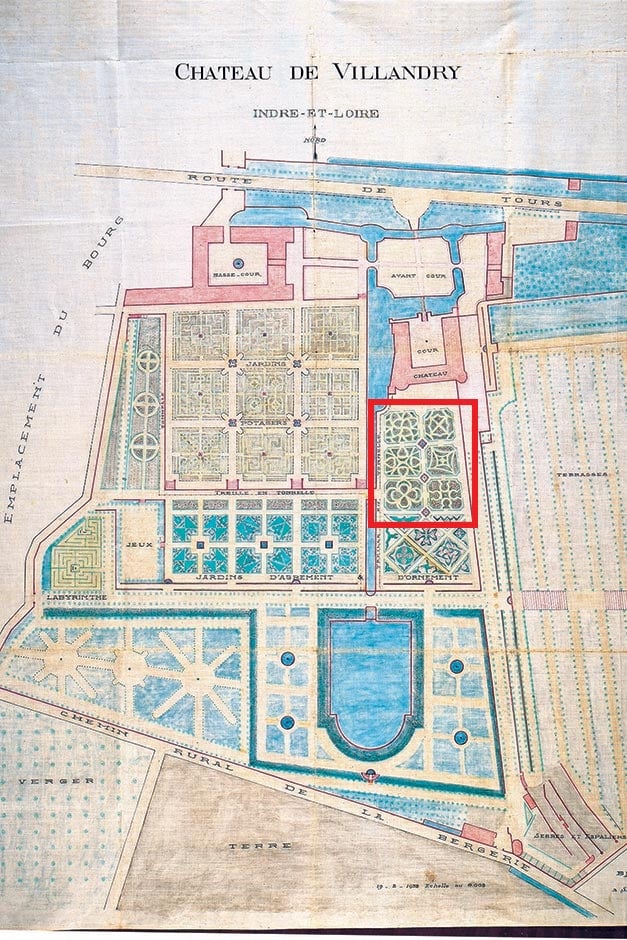
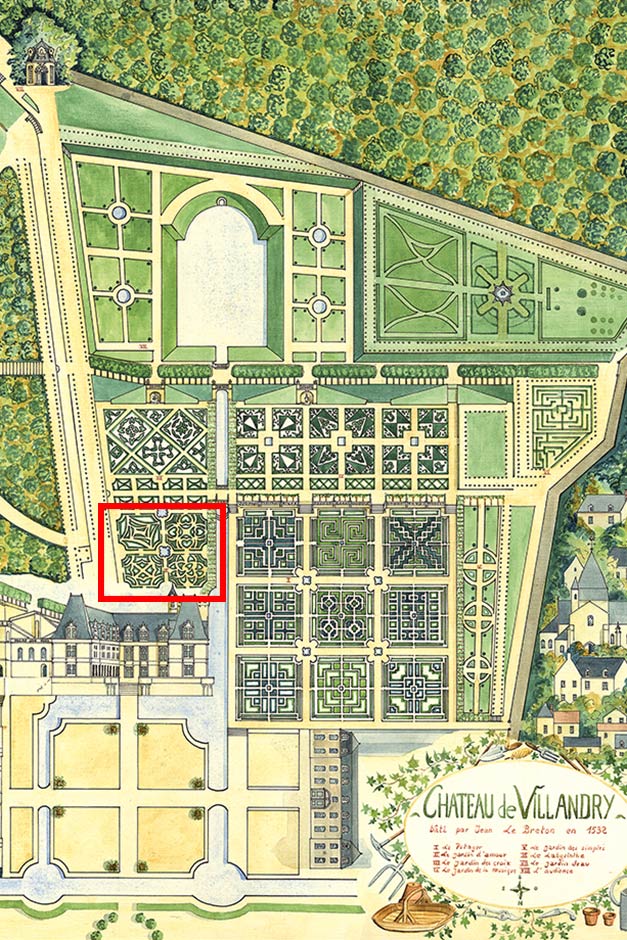
Each of the four squares is an interlacing pattern that represents a different state of love. Unlike the Kitchen Garden, the patterns are made up of broken curves rather than lines.
Tender Love is symbolised by four hearts separated by little flames of love in the corners of the square. At the centre are masks which were worn at balls to conceal the face, enabling their wearers to engage in all sorts of conversation, from the most serious to the most light-hearted.
Passionate Love also features hearts, but this time they are broken out of passion. The clumps of box are entangled to form a maze, further evoking the dance and whirlwind of passion.

Flighty Love has four fans in the corners, wings and butterflies that symbolise the fickleness of the sentiments. Between the fans are the horns representing betrayed love and, in the centre, the love letters and sweet notes exchanged by lovers symbolising the lighter side of sentiment. The predominant colour in this square is yellow, the symbol of betrayed love.
Tragic Love features box shaped into the dagger blades used in duels and red flowers to symbolise bloodshed. The designs represent the blades of daggers and swords used in duels caused by amorous rivalry. In summer, the flowers are red to symbolise the blood shed in these combats.
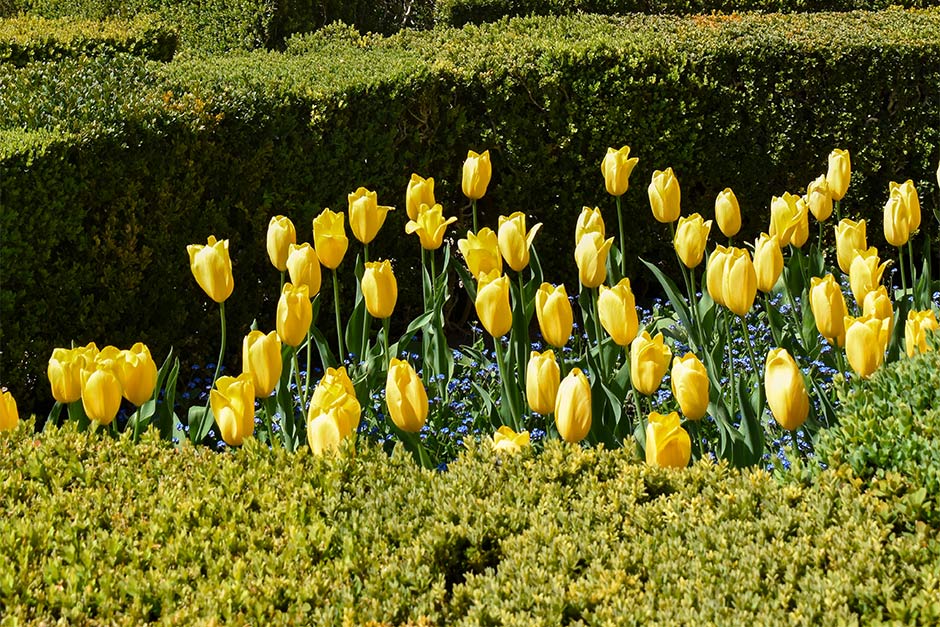
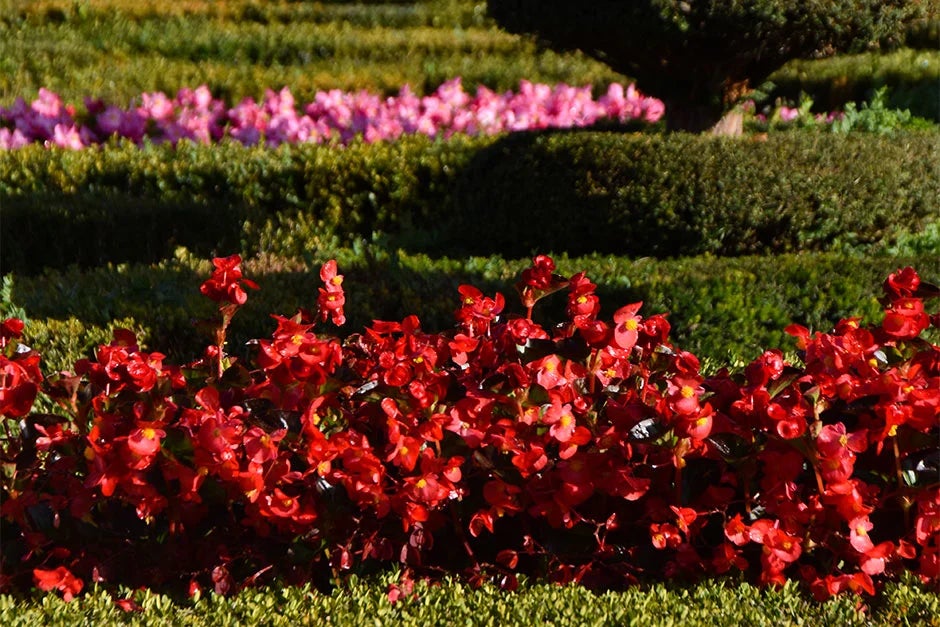
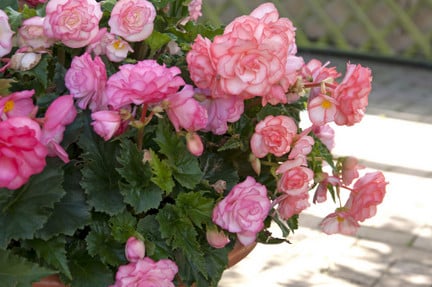
The garden is planted in bright colours, with tulips in spring and begonias in summer. “We have two plantations per year,” said Guillaumette Mourain, Events Manager at Château et Jardins de Villandry. “In spring, white, yellow, red and pink tulips bloom on a bed of forget-me-nots – blue or white depending on the pattern. At the time when nature is reborn, the result is both colourful and airy!”.
In summer, red, white and pink begonias wonderfully fill the boxwood patterns with their relatively dense structure. Planted in June, the begonias grow throughout summer and reach the height of the boxwood borders by the end of August. The yellow colour is also given by bidens.

Ornamental gardens at Château de Villandry, 19th century
"The Garden of Love is one of the gems of our RHS Partner Gardens scheme. It’s definitely worth a visit for romantic garden enthusiasts and their loved ones at any time of the year!"

Although the Château de Villandry is best known for its formal gardens, there are actually several areas that follow different styles. According to the classification established by Joachim himself, there are seven gardens at Villandry: the Ornamental Kitchen Garden, the Love Garden and the Garden of the Crosses, the Music Room, the Herb Garden, the Maze, the Sun Garden and the Water Garden. Exploring the gardens of Villandry is like exploring a stylistic library of French garden art, from the medieval garden to the Renaissance garden, through the garden ‘à la française’ to contemporary garden design. Each of them is an original creation, blending tradition and innovation.
Prunella Murray, RHS Partner Gardens Manager, said: “Château et Jardins de Villandry is one of our gems within our RHS Partner Gardens scheme and one of our most visited overseas gardens. Whilst the visiting window for RHS Members is from September–December, when open, it is definitely worth a visit for romantic garden enthusiasts and their loved ones at any time of the year if they are headed to the beautiful Loire Valley in France.”
The Garden of Love at Château et Jardins de Villandry is part of the RHS Partner Gardens scheme, which involves more than 240 gardens across the UK and overseas: