.JPG?w=1280&fit=clip&fm=jpg&auto=format)


Six small garden design ideas
Having a garden that’s tight on space doesn’t mean you have to limit your ideas, as these six tiny but terrific designs demonstrate

Trees give your garden structure, provide shade and make a wonderful resource for wildlife – every garden should have one
No garden is too small for a tree, and there’s a wide and varied range of flowering trees suitable for small spaces.
This choice of 10 are all winners of the RHS Recommended: Award of Garden Merit, which means that they have been tested by the RHS and found to be reliable, straightforward to grow, and widely available.

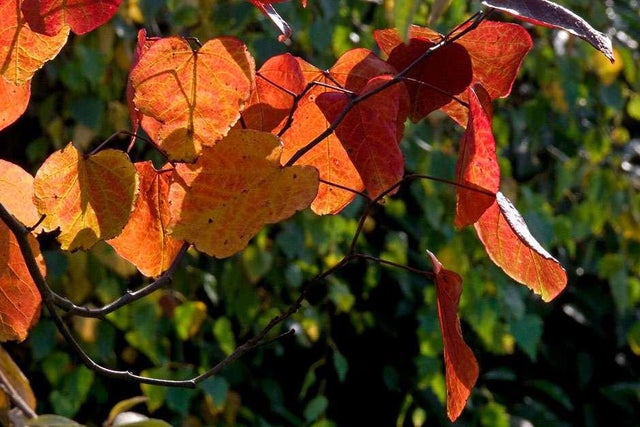
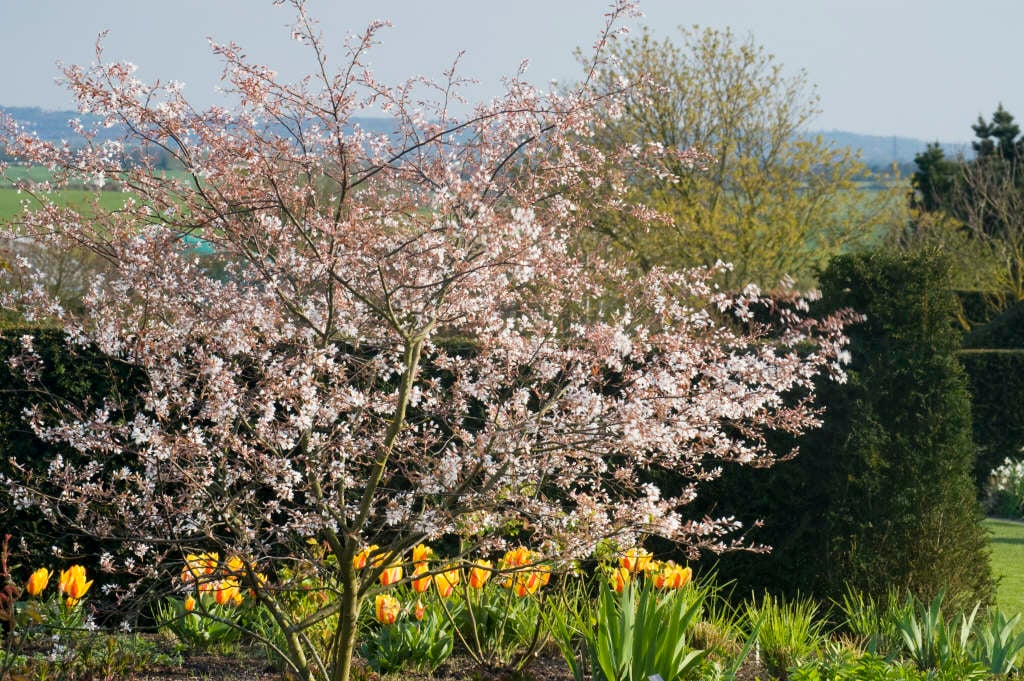
Amelanchier lamarckiior juneberry is a well-branched, bushy, small tree that’s a little reminiscent of a flowering cherry or crab apple. Pure white flowers open in spring among the coppery young foliage, creating a blizzard of early bloom. They are followed later by berries which are always appreciated by birds. And finally there’s fiery autumn leaf colour. Three different seasons of interest from one fine small garden tree. 5m (16½ft). Hardiness rating H7.

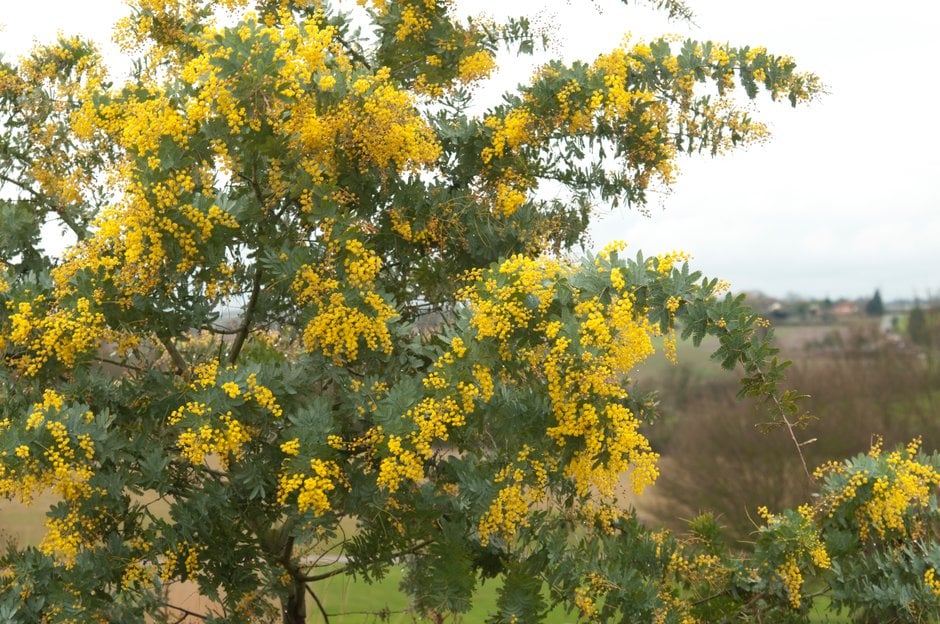
The golden wattle, Acacia baileyanalights up the garden in late winter and early spring. Its silvery grey, feathery evergreen leaves make a lovely background to the fluffy yellow flower clusters gathered in arching sprays. Trim off the lower branches to create a tree habit. 4m (13ft). Hardiness rating H3.

Arbutus or strawberry trees are a group of small, evergreen trees with flowers like lily-of-the-valley and unusual red and yellow fruits. What’s more their distinctive is an all-year-round feature and, unlike most members of the heather family, most are happy growing in limy soil. Arbutus unedo ‘Atlantic’ grows to 4m (13ft). Hardiness rating H4.
Allow your strawberry tree to develop its natural shape, then prune off the lower branches to reveal its beautiful bark.

Cornuskousa ‘John Slocock’is an unusually upright form of the Japanese dogwood, its vertical branches create a tree that fits nicely into a small space. The bold white bracts, opening in June, are veined in green and develop rosy tints as they mature, with bright red fruits like strawberries forming later. Autumn leaf tones in deep red and bronze are also a feature. It's happy in any soil except if it's shallow and chalky. 4m (13ft). Hardiness rating H5.

Crataegus persimilis ‘Prunifolia’ is a tree-forming selection and a definite step up in its ornamental qualities to regular hedgerow hawthorns. ‘Prunifolia’ has more compact growth, darker and glossier foliage, and bright white flowers sparked by pink anthers. The flowers are followed by exceptionally persistent crimson fruits and fine autumn leaf colour. 5m (16½ft). Hardiness rating H7.

An exceptional crab apple, Malus ‘Evereste’ is certainly one to choose if you have a balcony. It has snowy 5cm (2in) white, spring flowers opening from red buds to give an attractive contrast. Later, the 2.5cm (1in) red fruits develop, creating a whole new look. Look for trees grafted on M27 rootstocks and grow it on in a large container. Keep the soil moist and don’t allow it to dry out. 2m (6½ft). Hardiness rating H6.

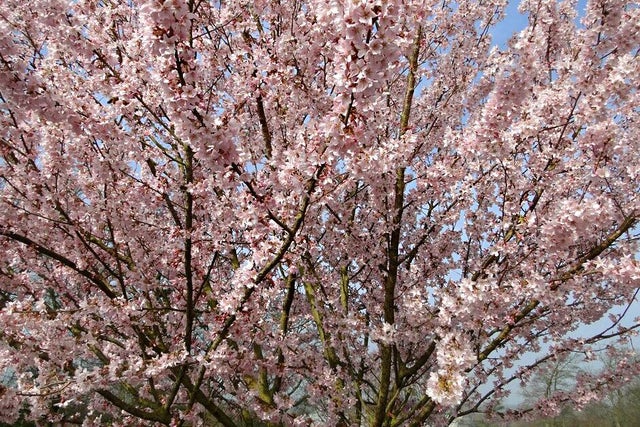
The Japanese apricot, Prunus mume ‘Beni-chidori’ is a great choice for a small tree in a number of ways. Firstly, its rich pink flowers are freshly scented and open in February and March, right along with all your spring shade lovers planted underneath. Secondly, it’s naturally small and casts only dappled shade. 3m (10ft). Hardiness rating H5.

Salix purpurea ‘Pendula’ is well worth planting in a small garden, as it’s much better-behaved than the giant weeping willows you see in parks and large gardens. It’s a lovely small weeping willow with purple stems that carry catkins before the leaves open. It makes a superb winter silhouette too followed by generous colour in spring. 4m (13ft). Hardiness rating H6.

Sorbus koehneana is a relatively uncommon relation of our mountain ash with some appealing differences. It remains smaller as a whole and its leaves are smaller too. With more leaflets than the native mountain ash it gives an altogether more feathery look. The flat white flower heads begin the display in April and are followed by small porcelain white berries on red stalks. 4m (13ft). Hardiness rating H6.
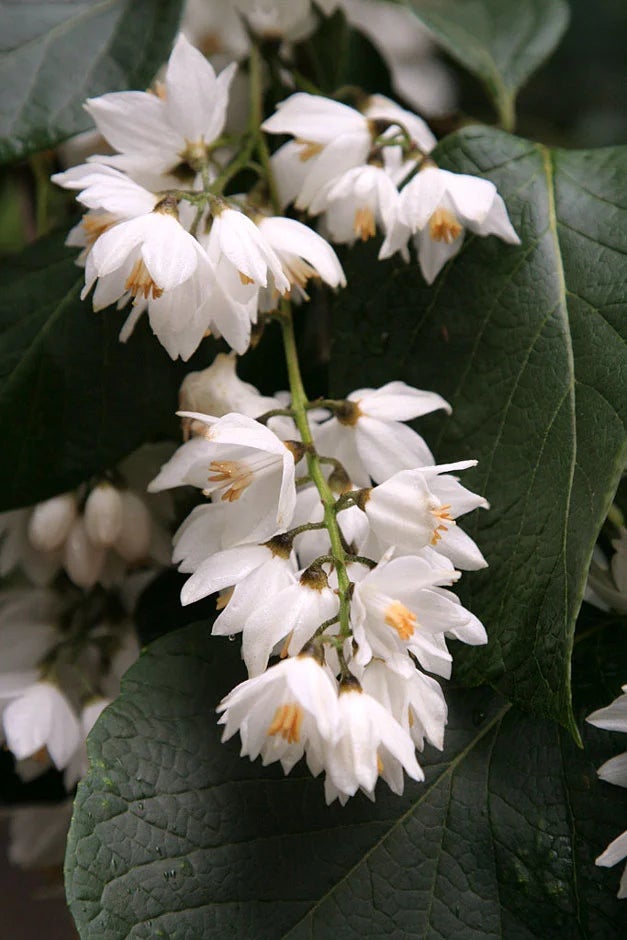
Styrax hemsleyanusis another that casts only light shade – ideal where you’d like to grow woodland perennials underneath. Its glory comes in June when the 15cm (6in) long strings of white flowers open, beautifully set off by bold leaves. It appreciates an open situation in good soil and preferably with shelter. 4m (13ft). Hardiness rating H5.
The system of hardiness ratings enables gardeners to understand the hardiness of plants and gives a guide to the best growing conditions.
Find out more >