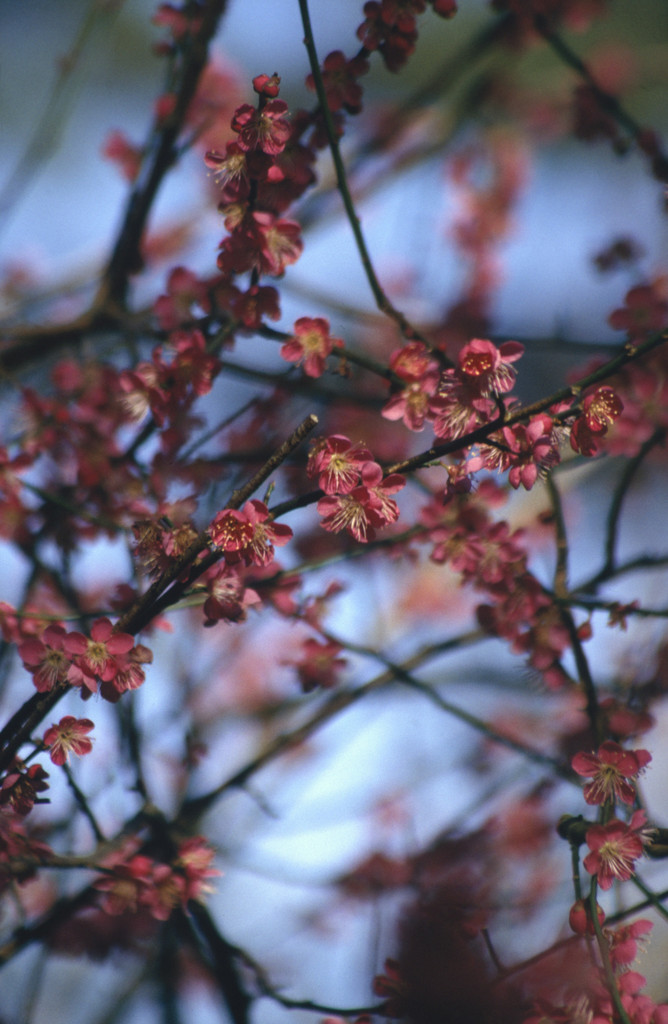
Prunus mume 'Beni-chidori'

RHS Plant Profile
Japanese apricot 'Beni-chidori'
Japanese apricot 'Beni-chidori' RHS

Synonyms

Prunus mume 'Beni-shidare'

Award of Garden MeritPlants for pollinators
Trees

A small deciduous tree producing notable single, deep pink, highly-scented flowers in late winter/early spring that fade to paler pink with age. They are occasionally followed by edible but bitter, yellow fruits

Position

Full sun

Soil Types

Clay, Loam, Sand

Max Height

1.5-2.5 metres

Max Spread

1.5-2.5 metres

Size

Time to Maturity
10–20 years
Max Spread
1.5-2.5 metres
Max Height
1.5-2.5 metres

Growing Conditions

Clay Loam Sand
Moisture
Moist but well–drained or Well–drained
pH
Acid or Alkaline or Neutral

Position

Full sun
Aspect
South–facing or West–facing or East–facing
Exposure
Sheltered
Hardiness
H5

Colour & Scent

Fragrance Flower
Season Stem Flower Foliage Fruit
Spring
Summer
Autumn
Winter

Botanical Details

Family
Rosaceae
Native to GB/Ireland
No
Foliage
Deciduous
Habit
Bushy
Genus
Prunus can be deciduous or evergreen trees or shrubs with showy flowers in spring, and often good autumn foliage colour. Some have edible fruit in autumn, and a few species have ornamental bark
Name Status
Accepted

How to Grow

Cultivation

Grow in any moist but well-drained, moderately fertile soil preferably in full sun or light shade

Propagation

Cultivars are propagated by grafting

Suggested planting locations and garden types

  • City and courtyard gardens
  • Cottage and informal garden
  • Wildlife gardens
  • Flower borders and beds

Pruning

Minimal pruning needed. Remove any dieback promptly

Pests

Can suffer from aphids and caterpillar damage

Diseases

May be susceptible to peach leaf curl, silver leaf, bacterial canker, blossom wilt and honey fungus