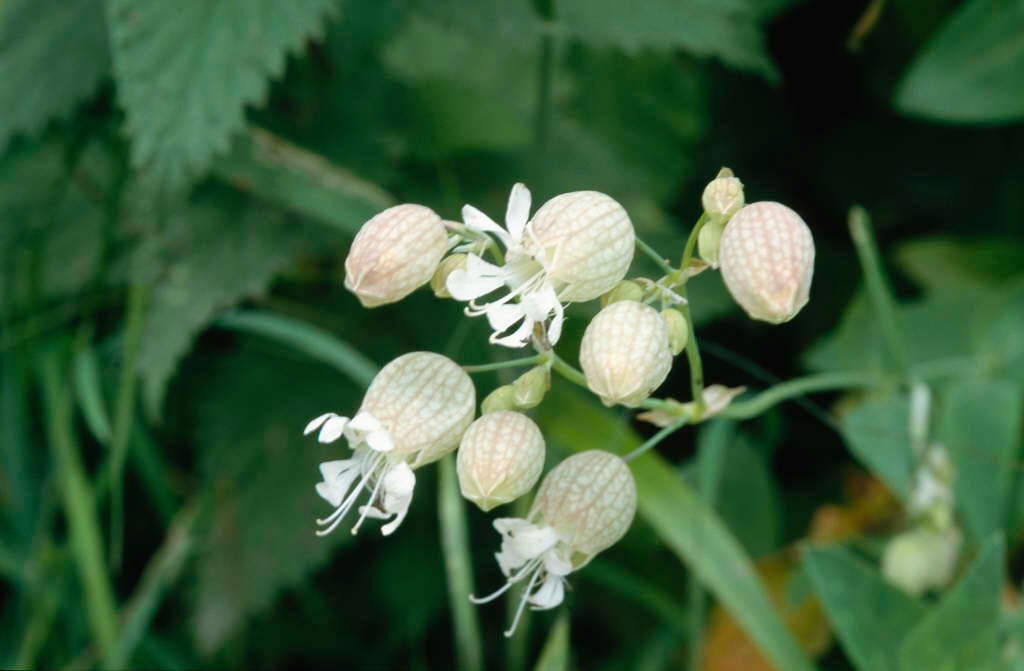
Silene vulgaris

RHS Plant Profile
bladder campion
bladder campion RHS

Other common names

common bladder catchfly, cowbell, maiden's tears, ben, bird's eggs, bull rattle, cow pap, devil's rattlebox, frothy poppy, kiss-me-quick, rattle bay, snappers, spatling poppy, white ben, white bottle

Synonyms

Silene wallichiana
Silene cucubalus

Plants for pollinators
Herbaceous Perennial

A woody-based, upright, semi-evergreen perennial about 60-80cm tall, with oval greyish-green leaves, and lax sprays of white flowers 2.5cm wide, each with a balloon-like inflated calyx, opening in summer

Position

Full sun, Partial shade

Soil Types

Chalk, Loam

Max Height

0.5-1 metres

Max Spread

0.1-0.5 metres

Size

Time to Maturity
2–5 years
Max Spread
0.1-0.5 metres
Max Height
0.5-1 metres

Growing Conditions

Chalk Loam
Moisture
Well–drained
pH
Alkaline or Neutral

Position

Full sun Partial shade
Aspect
South–facing or West–facing
Exposure
Exposed
Hardiness
H6

Colour & Scent

Season Stem Flower Foliage Fruit
Spring
Summer
Autumn
Winter

Botanical Details

Family
Caryophyllaceae
Native to GB/Ireland
Yes
Foliage
Semi evergreen
Habit
Clump forming
Genus
Silene can be annuals, biennials or herbaceous or evergreen perennials, with opposite, untoothed leaves and solitary or clustered flowers with 5, usually notched petals
Name Status
Correct
Plant Range
Temp. Eurasia, Macaronesia, N Africa

How to Grow

Cultivation

Grow in moderately fertile, neutral to alkaline soil in full sun or dappled shade

Propagation

Propagate by seed sown in containers in a cold frame in autumn

Suggested planting locations and garden types

  • Cottage and informal garden
  • Wildflower meadow
  • Wildlife gardens
  • Flower borders and beds

Pruning

Cut down after flowers fade to prolong flowering

Pests

May be susceptible to slugs and snails

Diseases

May be susceptible to powdery mildews in dry soils