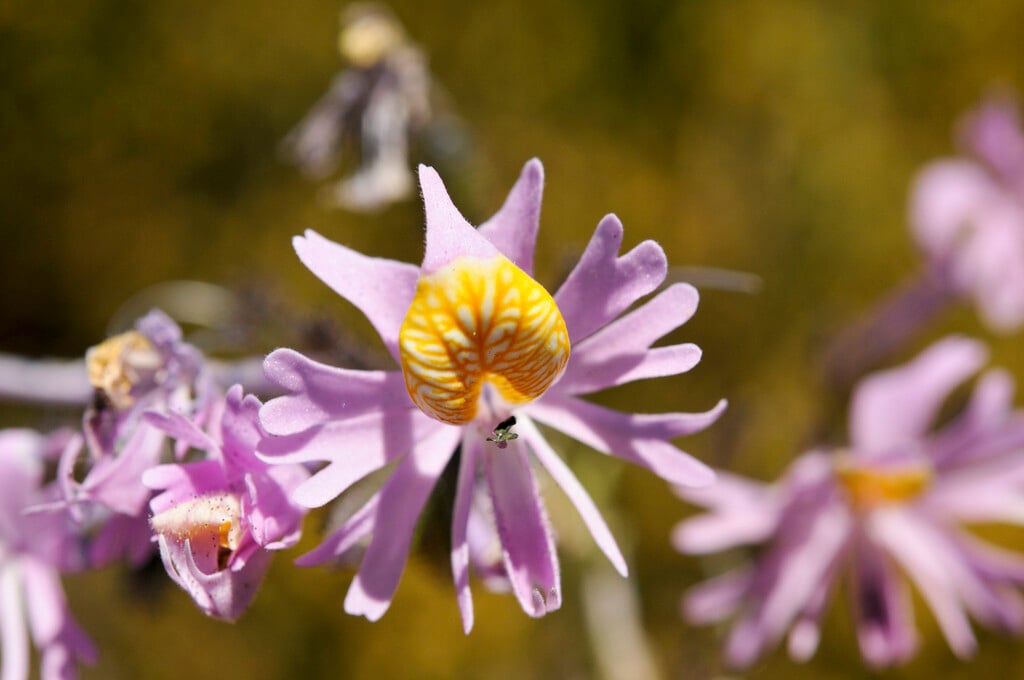
Schizanthus grahamii

RHS Plant Profile
Graham's butterfly orchid

Other common names

notched fringe flower

Synonyms

Schizanthus retusus

Annual Biennial

An upright annual 30-80cm high, with sticky, hairy stems, very finely divided leaves up to 8cm long, and in summer flowers to 3.5cm across which may vary in colour from pink to violet and purple, occasionally tinged orange, and deep yellow on the central lobe of the upper lip, followed by an ellipsoid capsule 10-12mm long

Position

Full sun

Soil Types

Chalk, Loam, Sand

Max Height

0.5-1 metres

Max Spread

0.1-0.5 metres

Size

Time to Maturity
1–2 years
Max Spread
0.1-0.5 metres
Max Height
0.5-1 metres

Growing Conditions

Chalk Loam Sand
Moisture
Moist but well–drained or Well–drained
pH
Acid or Alkaline or Neutral

Position

Full sun
Aspect
South–facing or East–facing or West–facing
Exposure
Sheltered
Hardiness
H1C

Colour & Scent

Season Stem Flower Foliage Fruit
Spring
Summer
Autumn
Winter

Botanical Details

Family
Solanaceae
Native to GB/Ireland
No
Foliage
Deciduous
Habit
Columnar upright
Genus
Schizanthus are showly annuals with pinnately dissected leaves and terminal clusters of orchid-like, 2-lipped flowers in a wide range of colours and often with a contrasting eye, from spring to autumn
Name Status
Correct

How to Grow

Cultivation

In cool temperate regions, grow outside in summer in containers or in a sheltered sunny border in light, fertile, well-drained soil, or in a conservatory or cool greenhouse (ventilate when temperatures rise above 7-10°C) in a coarsely draining, medium-fertility, peat-free, loam-based mix, in full light with shade from hot sun or in bright filtered light; water sparingly in winter and plentifully when in full growth but without overwatering, and apply a dilute high-potash liquid fertilizer every two weeks; unlike other Schizanthus, S. grahamii is better grown on without pinching out

Propagation

Propagate by seed sown at 13-16°C in mid-spring for plants flowering in summer, or in late summer for plants grown for winter flowering under glass, and pot on regularly so that plants are in their final pots by late autumn

Suggested planting locations and garden types

  • City and courtyard gardens
  • Cottage and informal garden
  • Patio and container plants
  • Flower borders and beds
  • Wall side borders
  • Cut flowers

Pruning

No pruning required, but good as cut flowers

Pests

May be susceptible to aphids but generally pest-free

Diseases

May be susceptible to wilts, leafy gall, powdery mildews, crown, foot and root rots, and virus diseases such as tomato spotted wilt but generally disease-free